
Planting
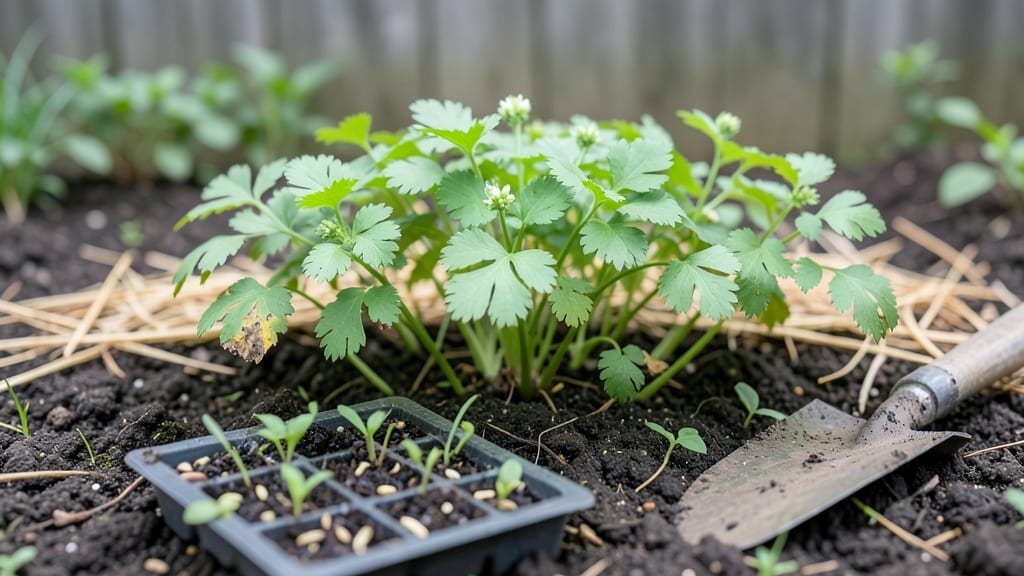
Here are cilantro planting tips—once you master them, those first bright green leaves emerge faster than you’d expect, thanks to cool soil, consistent moisture, and just the right amount of patience. 🌱 sunlight, or it bolts into flower before you can harvest.
The secret isn’t complicated: start seeds indoors 4-6 weeks before your last frost, or sow directly in well-drained soil once temperatures dip below 80°F.
You’ll need a sunny spot (6+ hours of light), loose soil mixed with compost, and patience—cilantro grows best when not crowded, so space seeds 6-12 inches apart. Keep the soil evenly moist but not soggy, and watch for those first leaves in about 2 weeks.
The biggest mistake? Letting the soil dry out or planting too late in hot weather, which sends cilantro into early flowering. With the right timing, you’ll harvest fresh leaves in just 3-4 weeks.
📚 In This Guide
- What you need
- Instructions
- Tips and common mistakes
- Wrapping up and next steps
What you need
- ● Cilantro seeds: Choose organic, non-GMO seeds for best results (about ¼ cup for a small garden or 1 cup for larger plantings).
- ● Containers or garden bed: For containers: 6–12-inch deep pots with drainage holes (3–5 plants per 12-inch pot).
- ● For garden beds: Well-draining soil with partial shade (6+ hours of sunlight daily).
- ● Potting mix or soil: Lightweight, well-draining mix (avoid heavy clay). Add compost (1 part compost to 3 parts soil) for nutrients.
- ● Watering can or hose: With a gentle spray nozzle to avoid disturbing seeds.
- ○ Mulch (optional but recommended): Straw or shredded leaves to retain moisture and suppress weeds.
- ● Hand trowel or small shovel: For planting and soil prep.
- ○ Gloves (optional): To protect hands from soil and sharp seeds.
- ● Spray bottle: For misting seeds during germination.
- ● Pruning shears: To harvest leaves and encourage bushier growth.
- ● Weather: Plant after the last frost (spring or early fall for best results). Cilantro thrives in 50–75°F temperatures.
- ● Sunlight: Partial shade (3–6 hours of sun/day) to prevent bolting (flowering too soon).
- ● Water: Consistent moisture (keep soil damp but not soggy).
Step-by-Step instructions for growing cilantro from seed
Here's my foolproof method for growing cilantro that stays fresh and flavorful—no bolting surprises.
🌱 Step 1: Choose the Right Time and Location
Cilantro thrives in cool weather, so plant seeds 2-4 weeks before your last frost date in spring or 6-8 weeks before the first frost in fall. Avoid summer heat—it bolts quickly when temperatures climb above 75°F. I always pick a spot with partial shade (morning sun, afternoon shade) for the best results.
If you're growing in containers, place them where they get 4-6 hours of sunlight daily. Watch for leaf color—bright green means it's happy; pale or yellowing leaves signal too much sun or water. This is the moment that matters: timing your planting right keeps your cilantro productive for weeks.
💧 Step 2: Prepare Soil and Plant Seeds Correctly
Work 2-3 inches of compost into the top layer of soil to loosen it and improve drainage. Cilantro hates soggy roots, so avoid heavy clay. Scatter seeds ¼ inch deep and ½ inch apart—they're tiny, so I use a toothpick to space them evenly. Cover lightly with soil and mist gently with water until the surface looks evenly damp.
Don't overwater now. You'll know moisture is right when the soil surface looks slightly damp but not glistening. I like to water in the morning so excess moisture evaporates by evening. This prevents fungal issues and keeps seeds from rotting before they sprout.
☀️ Step 3: Maintain Consistent Moisture and Light
Keep the soil evenly moist but never soggy until seedlings emerge, which takes 7-14 days. Once sprouts appear, thin them to 2-3 inches apart to give roots room to grow. I use small scissors to snip unwanted seedlings at soil level—this avoids disturbing the roots of the ones you keep.
Watch for leggy growth (long, thin stems with small leaves). This happens when seedlings don't get enough light. If you see this, move your container to a sunnier spot or add a grow light. Strong cilantro has thick stems and compact spacing between leaves. Real talk: leggy cilantro tastes milder and bolts faster.
✂️ Step 4: Harvest Regularly to Encourage Growth
Start harvesting outer leaves when plants reach 6-8 inches tall. Use clean scissors to snip just above a leaf node (the point where leaves meet the stem). This encourages new growth. I harvest in the morning after dew has dried—leaves stay crisp longer this way.
Don't cut more than ⅓ of the plant at once. You'll see new leaves emerge within a week—that's your signal everything is working. If the plant looks sparse after harvesting, add a light application of balanced fertilizer (10-10-10) to keep it vigorous. This keeps your cilantro productive for 4-6 weeks before it bolts.
🌿 Step 5: Prevent Bolting and Extend the Harvest
To delay bolting, keep soil consistently moist and avoid temperature spikes. If your cilantro starts flowering, harvest the stems quickly—you can still use the leaves, though they may taste slightly bitter. I've found that succession planting (sowing new seeds every 2-3 weeks) gives me fresh cilantro all season long.
Here's the thing—cilantro bolts when it senses heat or long daylight. If you're in a warm climate, grow it in partial shade and harvest frequently. For cooler regions, a simple row cover on hot days can buy you extra weeks of harvest. This is the secret to bold, flavorful cilantro all season.
Tips & tricks for perfect cilantro planting
Here's what I learned after growing cilantro for years—these tricks make all the difference between wimpy plants and bold, flavorful harvests.
Timing Secret: In Step 1, when planting 2-4 weeks before your last frost, mark your calendar for the 75°F threshold—cilantro bolts when it hits this temperature. I've found that starting seeds indoors 4-6 weeks before transplanting gives me a head start on the season. Use a seed-starting kit with a heat mat to maintain ideal germination temps around 65-70°F—this speeds up sprouting from 7-14 days to just 5-7 days.
Soil Strategy: The 2-3 inches of compost in Step 2 isn't just about nutrients—it's about creating the perfect loose, airy environment cilantro loves. I mix in perlite or vermiculite to improve drainage further, especially in containers. Pro tip: Test your soil's moisture level by squeezing a handful—it should hold together but not drip water. This prevents the soggy roots that cause rot.
Light Management: When thinning seedlings in Step 3, focus on spacing them 2-3 inches apart while maintaining their current light exposure. If your seedlings are leggy (long stems, small leaves), they're stretching toward light—this means they need more, not less. Move containers to a sunnier window or add a simple LED grow light for 12-14 hours daily. I place mine 6 inches above the plants to avoid burning tender leaves.
Harvest Hack: For Step 4's harvest, I use a pair of kitchen scissors to snip leaves just above the leaf node. This encourages bushier growth, and I always harvest in the morning when leaves are at their crispest. Here's the thing: Harvesting ⅓ of the plant at a time might seem counterintuitive, but it actually signals the plant to produce more leaves. Think of it like pruning—you're encouraging new growth rather than stressing the plant.
Pro Tips for Cilantro Planting Tips
- Here's what I learned after growing cilantro for years—these tricks make all the difference between wimpy plants and bold, flavorful harvests.
- Timing Secret: In Step 1, when planting 2-4 weeks before your last frost, mark your calendar for the 75°F threshold—cilantro bolts when it hits this temperature.
- Soil Strategy: The 2-3 inches of compost in Step 2 isn't just about nutrients—it's about creating the perfect loose, airy environment cilantro loves.
Frequently asked questions
When is the best time to plant cilantro?
Cilantro thrives in cool weather. Plant seeds outdoors 2–4 weeks before your last frost date in spring or 6–8 weeks before the first fall frost. Avoid hot summers—cilantro bolts (goes to seed) quickly in temperatures above 75°F (24°C). For year-round harvests, use shade cloth or grow cilantro indoors under grow lights.
How deep and far apart should I plant cilantro seeds?
Sow seeds ¼ inch deep in well-draining soil, spaced 4–6 inches apart. For rows, keep them 12–18 inches apart. Thin seedlings to avoid overcrowding—this prevents disease and ensures strong growth. Pro tip: Mix seeds with sand for easier spacing and germination.
Why does my cilantro keep bolting (going to seed) early?
Bolting happens when cilantro senses heat or long daylight. To delay it:
- Plant in partial shade during hot months.
- Harvest leaves frequently to encourage regrowth.
- Choose slow-bolting varieties like ‘Calypso’ or ‘Santo.’
- Avoid over-fertilizing with nitrogen—it speeds up bolting.
Can I grow cilantro in containers or indoors?
Cilantro grows well in containers 6–12 inches deep with drainage holes. Use a lightweight potting mix and place pots in bright, indirect light (4–6 hours daily). For indoors, a sunny windowsill or grow lights work. Just keep soil moist—containers dry out faster.
What can I do if my cilantro leaves taste soapy?
A soapy or bitter taste often means bolting or genetic sensitivity (some people just can’t taste cilantro!). Try these fixes:
- Harvest leaves young and tender (before bolting).
- Use organic cilantro (non-GMO seeds may taste milder).
- Pair cilantro with lemon or lime juice to mask bitterness.
- Try alternatives like parsley, basil, or chives if the flavor is truly off-putting.
Wrapping up and next steps
Growing cilantro from seed is a rewarding journey—packed with fresh flavors and vibrant greens! With the right soil, sunlight, and care, you’ll enjoy a thriving harvest in just a few weeks.
Whether you’re a seasoned gardener or a beginner, these tips make it easy to cultivate bold, flavorful cilantro at home.
Ready to take the next step? Start small—plant a few seeds in a pot or garden bed, and watch your culinary adventures grow! 🌱💚 Happy planting!