
Diseases
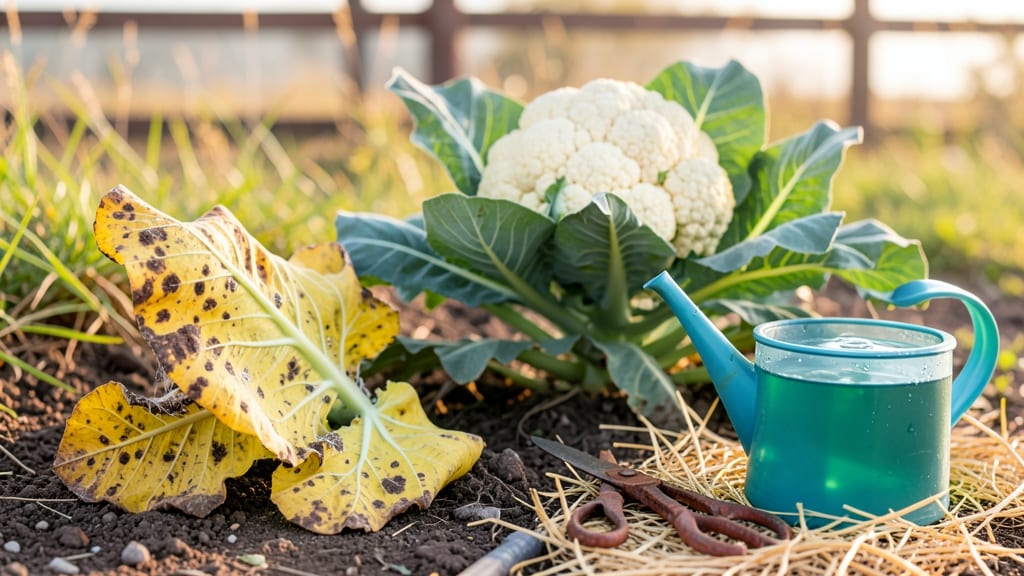
Cauliflower plant diseases can turn your prize heads into sad, mushy messes before harvest—trust me, I’ve seen it all. 🌱 The key to saving your crop is spotting the early signs: yellowing leaves, stunted growth, or weird spots that look like they were painted on with a shaky hand.
Most gardeners panic when they notice these, but the real secret is knowing which disease you’re dealing with before it spreads.
Black rot and clubroot are the usual suspects, but downy mildew and bacterial soft rot can sneak in too. I’ve learned the hard way that the fastest cure isn’t always the fanciest chemical—sometimes it’s as simple as pulling infected plants, rotating crops, and keeping your garden beds clean.
Organic fixes like copper sprays or compost tea work wonders if you catch things early, and resistant varieties can save you years of heartache.
You’ll walk away with a checklist of symptoms, a step-by-step plan to treat what’s already there, and tricks to keep your next crop healthy from day one. No more guessing games—just clear, actionable steps that actually work, even for beginners who’ve lost plants to mystery diseases before.
This guide covers everything from soil prep to post-harvest cleanup, so you can stop diseases before they start. Let’s get your cauliflower back on track—healthy, happy, and ready for the table.
Root Causes of Cauliflower Ailments
Cauliflower plants, like all crops, are vulnerable to diseases due to a mix of environmental, biological, and cultural factors. Understanding these triggers helps gardeners and farmers take proactive steps to protect their plants.
Below, we break down the why behind the most common cauliflower diseases—so you can address the source, not just the symptoms.
Cauliflower thrives in spacious conditions, and when plants are packed too closely, moisture lingers and airflow stalls. This creates the perfect breeding ground for fungal pathogens like **black rot (Xanthomonas campestris) and downy mildew (Peronospora parasitica).
- Why it happens: Dense foliage traps humidity, slowing evaporation and keeping leaves damp for extended periods.
Fungal spores thrive in these moist, stagnant environments, infiltrating plants through natural openings (like stomata) or wounds. - Actionable insight: Space cauliflower plants 18–24 inches apart in rows 2–3 feet apart to allow sunlight and air to circulate. Avoid overhead watering, which can splash spores onto leaves.
Cauliflower roots need consistent moisture, but overwatering or poorly drained soil invites root rot (Phytophthora spp.) and other waterborne diseases. Even fungal infections like clubroot (Plasmodiophora brassicae) worsen in soggy conditions.
- Why it happens**: Waterlogged soil cuts off oxygen to roots, weakening the plant’s defenses.
Pathogens like Phytophthora release zoospores—swimming spores—that infect roots within hours of excess moisture. - Actionable insight: - Test soil drainage before planting: Dig a hole, fill it with water, and time how long it takes to drain. Ideal time: 4–6 hours. - Raise beds or amend heavy clay soil with compost or perlite to improve aeration. - Water at the base (not leaves) and early in the day to allow foliage to dry.
Cauliflower belongs to the Brassicaceae family, which includes cabbage, broccoli, and kale. Planting these crops year after year in the same spot exhausts soil nutrients and allows soil-borne pathogens to build up.
- Why it happens: Diseases like clubroot and **white rot (Sclerotinia sclerotiorum) survive in soil as resting spores for years.
When new cauliflower plants are introduced, these spores germinate and infect fresh roots or stems. - Actionable insight: - Follow a 3–4 year rotation with non-Brassicaceae crops (e.g., legumes, grains, or alliums like onions). - Solarize soil in summer by covering it with clear plastic for 4–6 weeks to kill pathogens. - Use resistant varieties (e.g., ‘Snowball Y Improved’ for clubroot resistance).
Insects like cabbage worms, aphids, and flea beetles don’t just eat leaves—they create entry points for diseases. Chewed foliage and sap-feeding pests (like aphids) spread viral infections (e.g., cauliflower mosaic virus) and attract fungal hitchhikers.
- Why it happens: Open wounds from pests provide direct access for pathogens.
Aphids, for example, excrete honeydew, a sticky residue that fosters sooty mold** (Capnodium spp.), further stressing the plant. - Actionable insight: - Handpick large caterpillars or use row covers early in the season. - Spray neem oil (1 tsp per quart of water) to deter aphids and deter fungal growth. - Introduce beneficial insects like ladybugs or lacewings to control pest populations naturally.
Cauliflower prefers cool, stable temperatures (60–75°F). Extreme heat or sudden shifts disrupt its immune response, making it susceptible to **bacterial soft rot (Erwinia spp.) or powdery mildew (Erysiphe cruciferarum).
- Why it happens:
- Heat stress (above 85°F) causes bolting (premature flowering), weakening the plant’s energy reserves and reducing disease resistance.
- Plant in
Cauliflower requires balanced nutrients, especially calcium, nitrogen, and phosphorus. Deficiencies or excesses (like too much nitrogen) weaken the plant, making it an easy target for diseases.
- Why it happens:
- Excess nitrogen → Lush, soft growth that’s prone to fungal infections like downy mildew.
- Conduct a
Fixing Cauliflower Ailments Naturally
When your cauliflower plants show signs of distress, acting fast with the right organic solutions can save your harvest—and your sanity. Below, we’ve mapped out practical fixes for common diseases, paired with prevention tips to keep your garden thriving. Think of this as your emergency toolkit for a healthy crop!
Cause: Xanthomonas campestris bacteria spreads via contaminated water or tools. Fix It:- 🔥 Prune & Dispose: Snip off infected leaves immediately and do not compost them. Burn or trash to prevent spread.
- 💦 Copper Spray: Mix 1 tsp copper sulfate with 1 gallon of water. Spray foliage at dawn or dusk for 3–4 days. Reapply every 7–10 days until symptoms fade.
- 🌡️ Soil Sterilization: Solarize the soil by covering it with clear plastic for 4–6 weeks in hot weather to kill bacteria.
💡 Prevention Tip:
- Use drip irrigation (never overhead watering) to avoid splashing bacteria.
- Rotate crops—don’t plant brassicas (like cabbage or broccoli) in the same spot for 3+ years.
Cause: Plasmodiophora brassicae fungus thrives in acidic, waterlogged soil. Fix It:
- 👨🍳 Lime the Soil: Test pH (ideal: 6.5–7.0). Amend with pelletized lime (follow package rates) 2–3 months before planting.
- 🌱 Resistant Varieties: Swap infected plants with club-root-resistant cauliflower varieties like ‘Snowball Y Improved’ or ‘Purple of Sicily.’
- 🔪 Root Pruning: If early-stage, trim infected roots and replant in fresh, amended soil.
💡 Prevention Tip:
- Avoid heavy clay soils—raise beds or mix in compost + perlite for drainage.
- Disinfect tools between plants with 70% rubbing alcohol.
Cause: Hyaloperonospora parasitica loves cool, damp conditions. Fix It:
- 🍳 Baking Soda Spray: Mix 1 tbsp baking soda + 1 tsp soap + 1 gallon water. Spray undersides of leaves weekly until mildew disappears.
- 🌿 Neem Oil: Apply 2 tbsp neem oil + 1 tsp soap per gallon of water. Reapply every 5–7 days for 2 weeks.
- ⏰ Adjust Watering: Water early morning only, and space plants for airflow (18–24" apart).
💡 Prevention Tip:
- Crop rotation with non-brassicas (e.g., beans, tomatoes) breaks the fungus’s cycle.
- Use row covers in early spring to prevent spores from landing.
Cause: Aphids weaken plants, making them susceptible to secondary diseases. Fix It:
- 🔪 Blast with Water: Spray infested areas with a hose (not pressure washer) to knock off aphids.
- 🌿 Ladybugs & Lacewings: Release beneficial insects (buy online or at garden centers) for long-term control.
- 🍋 Soap Spray: Mix 1 tbsp castile soap + 1 quart water. Spray directly on aphids daily until gone.
💡 Prevention Tip:
- Plant marigolds or nasturtiums nearby to repel pests naturally.
- Inspect new plants before transplanting—quarantine if pests are spotted.
No matter the issue, these universal fixes boost plant resilience:
- 💪 Strengthen Roots: Feed with compost tea or fish emulsion (diluted) every 2 weeks.
- 🌿 Mulch Wisely: Use straw or grass clippings (not wood chips) to retain moisture without suffocating roots.
- 🌡️ Monitor Weather: Avoid planting cauliflower in humid summers—opt for cooler seasons (spring/fall).
Remember: Early action is key. The moment you spot yellowing, spots, or wilting, grab your tools and get to work. With these organic fixes, your cauliflower will bounce back—and next season, your garden will be disease-proof!
Frequently asked questions
What are the first signs of black rot in cauliflower?
Look for yellow V-shaped lesions on outer leaves that spread inward, often with a dark brown border. These symptoms appear first on lower leaves and progress upward. If you see this pattern, remove infected plants immediately and disinfect your tools with rubbing alcohol to prevent spread.
Can I still harvest cauliflower if it has clubroot?
Infected plants should be removed and destroyed—never compost them. Clubroot (Plasmodiophora brassicae) survives in soil for years, so replanting in the same spot will just reinfect new plants. For next season, choose resistant varieties like ‘Snowball Y Improved’ and amend soil with lime to raise pH.
Why does downy mildew appear on my cauliflower leaves?
This fungus thrives in cool, damp conditions (60–70°F with high humidity). You’ll see grayish-purple fuzz on leaf undersides during morning hours. Improve airflow by spacing plants 18–24 inches apart, water only at soil level in early morning, and apply a baking soda spray (1 tbsp baking soda + 1 tsp soap per gallon of water).
How do I prevent bacterial soft rot from ruining my harvest?
This disease spreads through contaminated water or tools, so always use sterilized pruners and avoid overhead watering. Store harvested cauliflower at 32–40°F with high humidity (90–95%) and use drip irrigation instead of sprinklers. Remove any soft, mushy areas immediately and compost them separately.
Are there chemical-free ways to treat aphids on cauliflower?
Yes! Start by blasting aphids off with a strong stream of water from your hose. For persistent infestations, mix 1 tbsp castile soap + 1 quart water and spray directly on aphids. Release beneficial insects like ladybugs or lacewings, or plant marigolds nearby to repel pests naturally.