
Pests and Diseases
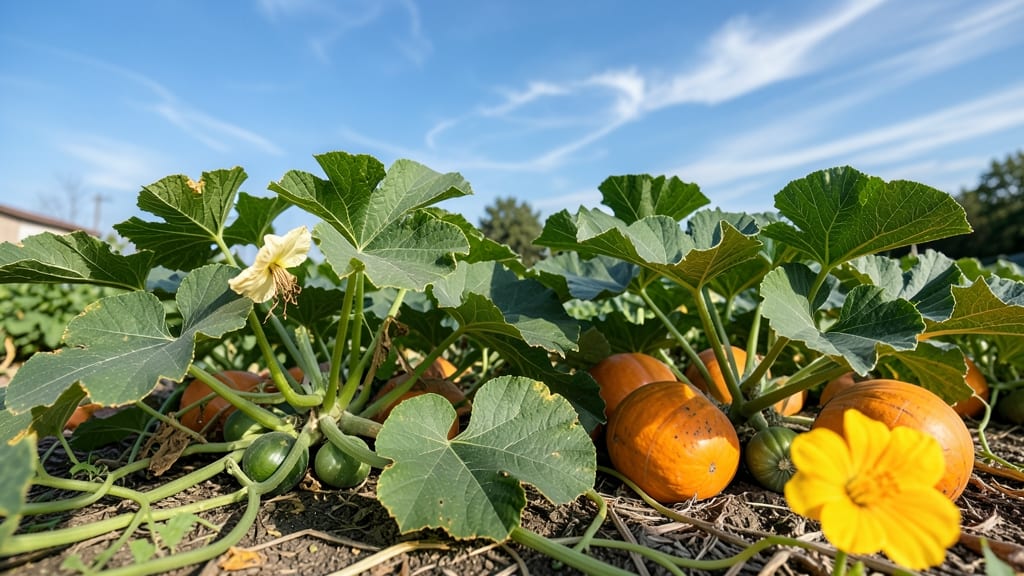
You can plant watermelon and pumpkins together, but they need strategic spacing and shared care to prevent competition for nutrients and sunlight.
These two summer crops share warmth-loving soil needs and thrive in full sun, but their sprawling vines demand careful planning. Watermelons climb while pumpkins sprawl, so giving each 12-15 feet of space (or using trellises for watermelons) prevents root tangling and disease spread.
I’ve found that interplanting with herbs like basil between rows deters pests naturally while keeping the soil healthy for both crops. 🌱 The key is monitoring their growth weekly—pumpkins’ heavy vines can smother watermelon vines if left unchecked.
For small gardens, consider raised beds with watermelons trained vertically along one side and pumpkins confined to the opposite corner. This layout maximizes sunlight exposure while keeping their different growth habits contained.
Just remember: both plants are heavy feeders, so enrich the soil with compost before planting and mulch heavily to retain moisture—especially during their peak fruiting months.
💡 In This Article
- Growing Conditions for Watermelon and Pumpkin Companion Planting
- Optimal Spacing and Layout for Small-Space Gardens
Growing conditions for watermelon and pumpkin companion planting
Both watermelons and pumpkins demand similar growing conditions, creating a natural foundation for companion planting. They thrive in well-draining soil with a pH between 6.0 and 6.8, where organic matter enriches the texture for robust root development.
Watermelons prefer slightly looser soil to accommodate their sprawling vines, while pumpkins benefit from deeper, nutrient-rich soil to support their heavy fruits. The key difference lies in their temperature preferences: watermelons germinate best at 70-90°F, while pumpkins tolerate cooler soil (60-85°F) for sprouting. 🌱
Sunlight requirements are identical—both crops need full sun exposure (6-8 hours daily)—but their growth habits create challenges. Watermelons grow vertically with tendrils that can climb trellises, while pumpkins sprawl horizontally, sending out vines that can reach 10 feet in diameter if unchecked.
This sprawling nature means pumpkins need at least 5 feet of clearance from watermelon plants to prevent shading and vine competition. The shared need for warmth also means planting after the last frost when soil temperatures consistently stay above 60°F.
Watering needs differ subtly: watermelons require 1-2 inches of water weekly with deeper soakings to prevent blossom-end rot, while pumpkins prefer consistent moisture (1-1.5 inches weekly) to develop sweet, dense flesh.
The challenge arises when both plants compete for water in dry spells—mulching with straw or leaves helps retain moisture while suppressing weeds. Overwatering, however, can lead to fungal issues like powdery mildew, which both crops are susceptible to when humidity spikes above 75%.
Nutrient competition is the biggest hurdle when planting these giants together. Both are heavy feeders, requiring high nitrogen early in growth for foliage and phosphorus/potassium later for fruiting.
Side-dressing with compost or balanced fertilizer (10-10-10) every 3-4 weeks helps, but watch for yellowing leaves—a sign of nitrogen deficiency or root competition. Pumpkins’ extensive root systems can outcompete watermelon roots for nutrients, so rotating crops annually prevents soil depletion. 🌿
Pest management also requires coordination. Both plants attract squash bugs and cucumber beetles, but their different growth habits mean pests may target one before the other. Interplanting with nasturtiums or marigolds between rows deters pests naturally by masking plant scents.
Watermelons’ climbing nature makes them less vulnerable to ground-dwelling pests, while pumpkins’ sprawling vines create hiding spots for insects—requiring regular inspections and hand-picking of pests.
Here’s what actually works in practice: Plant watermelons along the north side of a raised bed to maximize sunlight, while confining pumpkins to the south side where their vines won’t overshadow.
Use black plastic mulch under watermelons to warm soil faster and deter weeds, while leaving pumpkins on bare soil to prevent overheating. This layout ensures both get 6+ hours of direct sun while minimizing vine entanglement. 💫