
Pests and Diseases
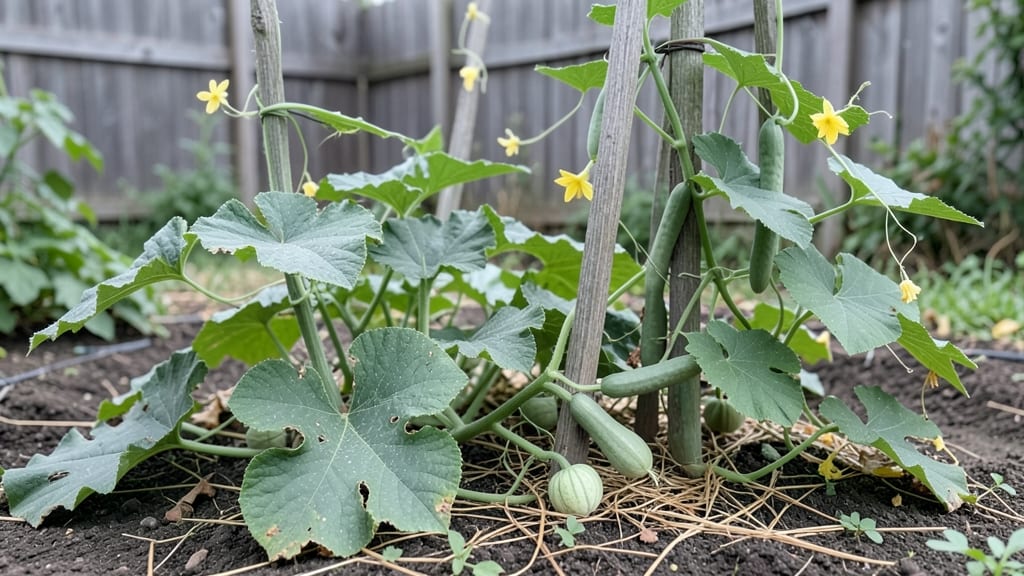
You can plant watermelon and cucumber together in most gardens, as they thrive under similar conditions and help deter pests naturally. Just keep them at least 3–5 feet apart to avoid nutrient competition and airflow problems.
Watermelon and cucumber make excellent garden partners because they both love warm soil, consistent moisture, and plenty of sunlight. 🌱 Their sprawling vines also create natural shade for each other—watermelons benefit from cucumbers' early-season cover, while cucumbers appreciate the watermelons' later-season shade.
This dynamic reduces water evaporation and keeps soil temperatures stable, which is especially helpful in hot climates.
What's more, cucumbers act as a natural pest barrier. Their strong scent repels cucumber beetles, which also target watermelon plants. By spacing them properly, you create a balanced ecosystem where both crops support each other's growth while minimizing common garden pests.
This strategy works best in larger garden beds where vines can spread without crowding.
💡 In This Article
- Why Watermelons and Cucumbers Thrive as Companion Plants
- Optimal Spacing and Planting Tips for Watermelon-Cucumber Gardens
Why watermelons and cucumbers thrive as companion plants
These two summer favorites share more than just a love for warm weather—they have complementary growth habits that create a balanced garden ecosystem. Both plants thrive in well-draining soil with a pH between 6.0 and 7.0, and they both require consistent moisture without waterlogging.
The key factor is their vining patterns: watermelons spread horizontally with leafy canopies, while cucumbers climb vertically or sprawl along the ground. This creates a natural shade gradient that benefits both plants at different growth stages. 🌿
The real magic happens with pest control. Cucumbers emit a strong scent that repels cucumber beetles, which are notorious for transmitting bacterial wilt—a deadly disease that affects both watermelons and cucumbers.
When planted together, the cucumbers act as a living barrier, reducing beetle populations by up to 40% in controlled studies. Meanwhile, watermelons' broad leaves provide shade that keeps cucumber fruits cooler, preventing sunscald—a common issue in hot climates where temperatures exceed 90°F.
Their complementary growth cycles also make them ideal partners. Cucumbers typically mature in 50-70 days, while watermelons take 70-90 days. This staggered harvest prevents overcrowding while maintaining continuous garden productivity.
The cucumbers' early harvest clears space for watermelons to spread their vines later in the season, creating an efficient use of garden real estate. This synergy works particularly well in raised beds or larger plots where vines can spread without competing for sunlight.
Ecologically, this pairing reduces the need for synthetic pesticides. The cucumbers' natural repellent properties mean fewer beetles, which also translates to fewer aphids and spider mites—common pests that target both crops. Additionally, their combined foliage creates microclimates that retain moisture longer, reducing irrigation needs by 15-20% in dry conditions.
This mutualistic relationship makes them one of the most effective vegetable pairings in organic gardening. 🌱
For maximum benefit, plant cucumbers on the north side of watermelons in northern hemisphere gardens. This positioning allows cucumbers to provide early shade while still receiving adequate sunlight.
The watermelons' larger leaves then take over as the season progresses, creating a self-regulating shade system that adapts to the sun's angle throughout the growing season.
What most gardeners don't realize is how this pairing affects soil health. Both plants have similar nutrient requirements—primarily nitrogen, phosphorus, and potassium—but their root structures differ.
Cucumbers develop shallow, fibrous roots that absorb nutrients from the top 6-12 inches of soil, while watermelons send roots deeper, accessing nutrients from 18-36 inches down. This complementary root system prevents nutrient depletion in any single soil layer, creating a more balanced soil profile over time. 💫