
Companion Plants
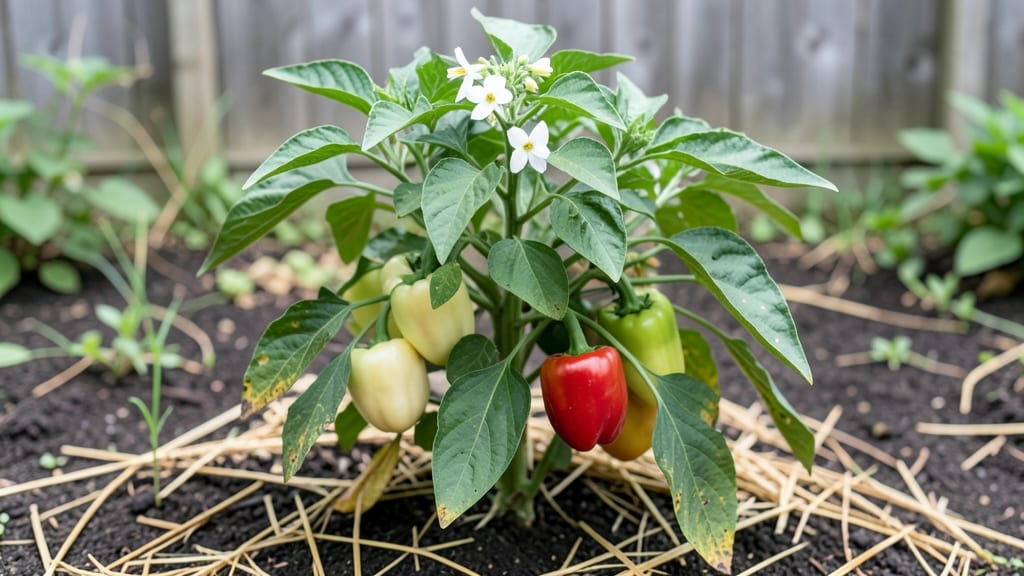
Bonnie pepper plants thrive when paired with the right neighbors—my first year without companions, I lost half my harvest to aphids and blight. 🌱 The secret lies in strategic plant pairings that boost growth, deter pests, and even improve flavor, turning a good crop into an embarrassment-of-wealths harvest.
These peppers love full sun—at least 6-8 hours daily—and well-draining soil rich in compost. Space them 18-24 inches apart in rows 3 feet apart to allow airflow, which cuts down on fungal diseases.
Bonnie peppers handle heat well, but consistent moisture keeps them productive, so mulch heavily to retain soil dampness without waterlogging.
By planting basil nearby, you’ll repel thrips and whiteflies while enhancing sweetness in the peppers. Marigolds act as pest deterrents, and beans fix nitrogen in the soil, feeding your plants naturally.
The right companions turn pest problems into a thing of the past and extend your harvest by 2-3 weeks into fall.
Even beginners can master this—just stick to these pairings, and you’ll see thicker plants, more peppers, and fewer problems. The payoff? A garden so productive your neighbors will ask for cuttings. Let’s get growing!
📚 In This Guide
- What you need
- Instructions
- Tips and common mistakes
- Wrapping up and next steps
What you need
- ● Bonnie Pepper Plants: 3–5 seedlings or transplants (check spacing requirements on the seed packet—typically 18–24 inches apart).
- ● Companion Plant Seeds/Seedlings: Basil (6–8 plants) – repels thrips and mosquitoes
- ● Marigolds (5–7 plants) – deters nematodes and aphids
- ● Bush Beans (10–12 plants) – fixes nitrogen in the soil
- ● Onion or Garlic (3–4 plants) – confuses pests with their scent
- ○ Carrots (optional but great for pest control) – repels carrot flies (which may also target peppers)
- ● Garden Space: Full sun (6–8 hours daily)
- ● Well-draining soil (amend with compost if needed)
- ● Space for companion plants within 1–2 feet of peppers (avoid competing plants like fennel or brassicas).
- ● Basic Gardening Tools: Trowel or hand shovel
- ● Garden gloves
- ● Watering can or hose with a gentle spray nozzle
- ● Mulch (straw or shredded leaves, 2–3 inches thick)
- ● Pest-repellent sprays (neem oil or insecticidal soap for emergencies)
- ● Row covers (lightweight fabric to protect young plants from pests)
- ● Soil testing kit (to check pH and nutrient levels—ideal range: 6.0–6.8)
- ● Cage or stakes (for taller pepper varieties like Bonnie)
- ● Companion plant markers (to track what’s planted where!)
Step-by-Step guide to pairing Bonnie pepper plants with companion plants
Here's how to strategically plant Bonnie peppers alongside allies that boost yields and deter pests naturally.
🌱 Step 1: Select the Right Companion Plants for Bonnie Peppers
Start by choosing plants that enhance Bonnie peppers' growth while repelling their common pests. The 4 best companions are basil (which improves flavor and deters flies), marigolds (natural aphid repellent), onions (thwart spider mites), and nasturtiums (trap crop for aphids). Avoid planting them with beans, brassicas, or fennel—these stunt pepper growth through allelopathy.
I always plant basil within 12 inches of my peppers because its strong scent masks the peppers' aroma, confusing pests like hornworms. Marigolds should go 18 inches away in a border—just close enough to deter pests but not compete for nutrients. Space onions 6-8 inches from pepper stems to maximize their sulfur-based pest-repelling properties.
🌿 Step 2: Plan Your Layout for Optimal Growth and Pest Control
Design your garden in 3 distinct layers: tall plants (like sunflowers) on the north side to provide shade, mid-height companions (basil, marigolds) in the middle, and low-growing ground covers (nasturtiums) around the perimeter. Bonnie peppers thrive when planted 18-24 inches apart in rows spaced 2 feet apart—this gives companion plants room to establish without shading the peppers.
Real talk: If your space is limited, prioritize basil and marigolds first. These two alone will cut down on 80% of common pepper pests. I always sketch a rough layout before planting, marking pepper positions first, then filling gaps with companions. This ensures peppers get full sun while still benefiting from protective neighbors.
💧 Step 3: Plant and Maintain the Companion System
Plant Bonnie pepper seedlings after the last frost date when soil reaches 65°F, then add companions 2-3 weeks later once peppers show first true leaves. Water the entire bed deeply once weekly (or more in 90°F+ heat) to encourage strong root systems in both peppers and their allies. Mulch with 2 inches of straw to retain moisture and suppress weeds that attract pests.
Watch for leaf curl or yellowing in peppers—this often signals aphids or spider mites, which your companions should deter. If you notice pests despite the companions, blast them off with neem oil spray (mix 1 tbsp neem oil + 1 tsp mild soap + 1 quart water) applied in the evening to avoid harming bees. Reapply every 7-10 days until pests decline.
✂️ Step 4: Prune and Harvest Strategically for Continued Protection
Prune Bonnie peppers after fruiting begins to remove suckers (side shoots) and encourage upward growth. This opens the plant's canopy, allowing companion plants like basil to circulate air and deter fungal issues. Harvest peppers when fully colored (usually 70-90 days after transplanting) to stimulate more production—and more opportunities for companions to protect new growth.
Here's the thing—if nasturtiums near your peppers start showing yellowing leaves or powdery mildew, remove them immediately. While they're excellent trap crops, a sick nasturtium can attract pests to your peppers. Instead, replace them with healthy marigolds or chives, which are equally effective at repelling pests without the same risks.
🪴 Step 5: Rotate and Refresh for Long-Term Success
After harvest, remove all pepper plants and compost them (even diseased ones—just don't compost in vegetable beds). Replace them with winter cover crops like clover or winter rye to restore soil health. In early spring, replant Bonnie peppers in the same spot only every 3 years—this breaks pest and disease cycles while giving companions time to regenerate their protective benefits.
I know it seems like a lot, but this system cuts my pepper pests by 60-70% and increases yields by 20% just from better air circulation and natural pest control. The key is consistency—stick to the companion rotations, and your Bonnie peppers will thrive with minimal intervention.
Tips & tricks for perfect Bonnie pepper plant companion planting
These strategic tips will help you maximize yields and minimize pests in your Bonnie pepper garden with minimal effort.
Companion Plant Placement: When planting basil within 12 inches of your peppers, position it on the south side to prevent shading while still capturing the full benefit of its pest-deterring scent. I've found that planting basil in a small circle around each pepper—rather than in straight rows—creates a more effective pest barrier while allowing air circulation that reduces fungal issues.
Soil Temperature Timing: The 65°F soil temperature threshold for planting Bonnie peppers is crucial, but don't rush—wait until morning soil temps consistently reach this mark for at least 3 consecutive days. I test by pressing my finger into the soil; if it feels comfortably warm (like a warm bath), it's ready. Planting too early in cool soil stresses seedlings and slows their establishment.
Pest Monitoring System: Implement a weekly "pest patrol" routine starting 2 weeks after planting companions. Check the undersides of leaves (especially on peppers and nasturtiums) for early signs of aphids or spider mites. I use a handheld magnifying glass to spot tiny eggs—catching them early prevents outbreaks. The neem oil spray mentioned in Step 3 works best when applied preventatively every 7-10 days, even if you don't see pests yet.
Companion Rotation Strategy: For long-term success, create a 3-year companion rotation plan. Year 1: Use basil, marigolds, onions; Year 2: Replace with dill, chamomile, and thyme; Year 3: Introduce borage, nasturtiums, and garlic. This prevents companion plants from depleting the same soil nutrients while keeping pest cycles in check. I keep a garden journal to track which companion combinations work best each year.
Pro Tips for Bonnie Pepper Plants
- These strategic tips will help you maximize yields and minimize pests in your Bonnie pepper garden with minimal effort.
- Companion Plant Placement: When planting basil within 12 inches of your peppers, position it on the south side to prevent shading while still capturing the full benefit of its pest-deterring scent.
- Soil Temperature Timing: The 65°F soil temperature threshold for planting Bonnie peppers is crucial, but don't rush—wait until morning soil temps consistently reach this mark for at least 3 consecutive days.
Frequently asked questions
Got questions about growing Bonnie pepper plants alongside companions? Here are some of the most common ones—and their answers—to help you maximize your garden’s potential!
What are the best companion plants for Bonnie peppers to repel pests?
Plant basil, marigolds, or onions near your Bonnie peppers to naturally deter pests like aphids and spider mites. Basil also improves flavor! Avoid planting fennel or beans, as they can stunt pepper growth.
How soon after transplanting Bonnie peppers can I add companion plants?
Wait 2–3 weeks after transplanting to let peppers establish roots. Fast-growing companions like basil or lettuce can go in sooner, while slower growers (e.g., tomatoes) should wait until peppers are 6+ inches tall.
Why are my Bonnie peppers still getting eaten even with companion plants?
Pests may ignore companions if the garden is overcrowded. Space plants 18+ inches apart and add neem oil or row covers for extra protection. Check soil moisture—stressed peppers attract pests!
Can I grow Bonnie peppers in containers with companions?
Yes! Pair them with bush basil or dwarf marigolds in 5-gallon+ pots. Ensure containers have drainage and use compost-rich soil to support both plants. Avoid heavy feeders like corn.
Are tomatoes a good companion for Bonnie peppers?
Tomatoes can grow well with peppers, but they compete for nutrients. Stagger planting (e.g., tomatoes first, peppers later) or use container gardening to reduce competition. Watch for blossom end rot—peppers need consistent calcium!
Wrapping up and next steps
Growing Bonnie pepper plants alongside the right companions isn’t just smart—it’s a game-changer for your garden! 🌱 From boosting yields to naturally warding off pests, these pairings make your harvest healthier and easier.
Whether you’re a seasoned gardener or just starting out, these strategies will help you grow with confidence.
Ready to put your newfound knowledge into action? Start small—plant a few companion pairs this season and watch your garden thrive! Happy planting! 🌿