Planting
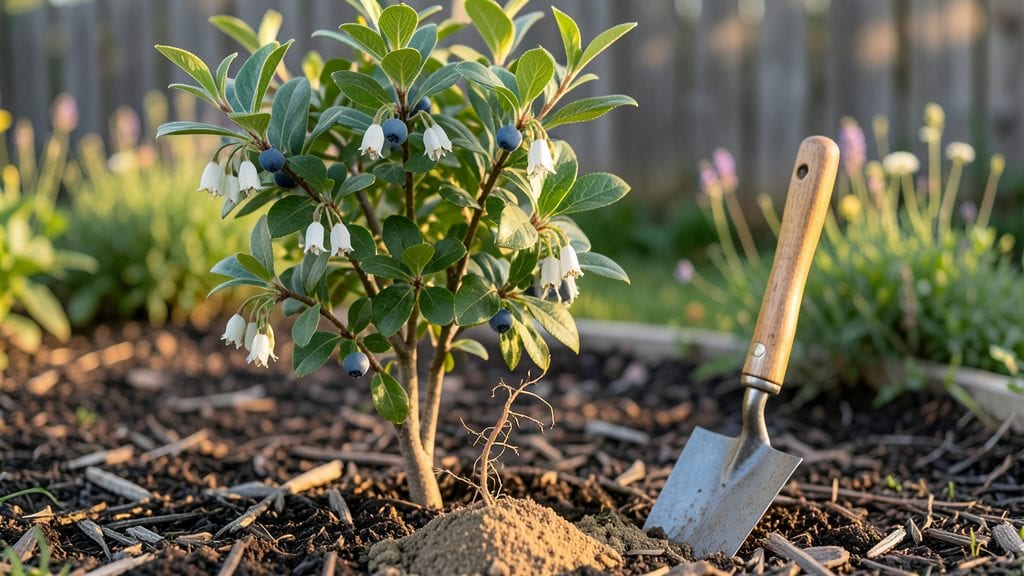
Here are some blueberry planting tips you won’t want to miss—acidic soil and cool roots are the foundation of a thriving harvest, and timing is everything to avoid stunted bushes or empty buckets. but once you nail those basics, they thrive with minimal fuss.
You’ll need well-draining, acidic soil (aim for pH 4.5–5.5), a sunny spot with at least 6 hours of light, and patience—blueberries take 2–3 years to bear fruit but reward you with decades of harvests if planted right.
The key steps? Amend your soil with peat moss or sulfur, space plants 4–6 feet apart, and keep them consistently moist (but not soggy) for the first year.
📚 In This Guide
- What you need
- Instructions
- Tips and common mistakes
- Wrapping up and next steps
What you need
- ● Blueberry plants: 3–5 plants (choose Northern Highbush, Southern Highbush, or Rabbiteye varieties based on your climate zone).
- ● Well-draining soil: Mix of peat moss, compost, and sandy loam (pH 4.5–5.5 for optimal growth).
- ● Organic mulch: Pine needles or shredded bark (2–3 inches thick) to retain moisture and acidify soil.
- ● Garden tools: Trowel or spade
- ● Pruning shears (sterilized)
- ● Garden gloves
- ● Watering can or hose with a gentle spray nozzle
- ● Fertilizer: Acid-loving plant fertilizer (e.g., cottonseed meal or sulfur-coated urea).
- ● Drip irrigation or soaker hose: For consistent moisture (especially in dry climates).
- ● Soil pH test kit: To monitor acidity levels (aim for 4.5–5.5).
- ● Bird netting: Protects ripening berries from pests.
- ● Blueberry plant cages or trellises: Supports sprawling varieties like Rabbiteye.
- ● Compost tea: Boosts soil microbes for healthier plants.
- ● Shade cloth (30–50% coverage): For young plants in hot climates.
Step-by-step guide to planting blueberries for year-round harvests
Planting blueberries isn’t just about digging a hole—it’s about creating the perfect acidic environment they thrive in.
Select and Prepare the Planting Site
Blueberries demand acidic soil with a pH between 4.5 and 5.5, which most garden soils lack. Before planting, test your soil—if it’s alkaline (pH above 6.0), amend it with sulfur or peat moss at least 2-3 months before planting. I’ve found that mixing 3-4 inches of peat moss or pine bark fines into the top 12 inches of soil works best for long-term acidity.
Choose a location with full sun exposure—at least 6-8 hours daily—and well-draining soil. Avoid low spots where water pools, as blueberries hate soggy roots. If your yard has heavy clay, consider planting in large raised beds filled with a 50/50 mix of peat moss and sand to improve drainage while maintaining acidity.
Plant Blueberry Bushes at the Right Depth and Spacing
Dig a hole twice as wide as the root ball but only as deep—planting too deep suffocates the roots. Gently loosen the roots if they’re circling the pot, then place the bush in the hole so the top of the root ball sits slightly above soil level. This prevents water from pooling around the stem, which causes rot.
Space southern highbush varieties 4-6 feet apart and northern highbush or rabbiteye types 6-8 feet apart. Mulch heavily with 3-4 inches of pine needles or wood chips (never cedar—it’s toxic) to retain moisture and acidify the soil over time. Water deeply right after planting to settle the soil and eliminate air pockets around the roots.
Establish a Fertilization and Watering Routine
Blueberries need regular feeding with an acid-loving fertilizer (like one formulated for azaleas or blueberries) in early spring and again after harvest. Avoid high-nitrogen fertilizers—they encourage leafy growth at the expense of fruit. Instead, use a balanced 10-10-10 or 12-12-12 formula with sulfur added to maintain soil acidity.
Water deeply 2-3 times per week during the first growing season to encourage deep root growth. Once established, blueberries are drought-tolerant but produce better fruit with consistent moisture. You’ll know you’re watering correctly when the soil feels damp 2-3 inches down—never soggy. In containers, check moisture daily, as potted blueberries dry out faster.
Prune and Protect for Long-Term Health
Prune in late winter or early spring before new growth begins. Remove dead, diseased, or crossing branches, then thin out older wood to improve airflow. I cut back one-third of the oldest canes each year to encourage new, productive growth. Avoid heavy pruning in fall—it stresses the plant before winter dormancy.
Watch for birds and pests—blueberries are a magnet for both. Use bird netting when fruit begins to ripen, and apply neem oil or insecticidal soap early in the season to deter aphids and spider mites. If you notice yellowing leaves, it’s often a sign of iron deficiency—sprinkle iron sulfate lightly around the base and water it in.
Tips & tricks for perfect blueberry planting
Mastering blueberry cultivation comes down to understanding their unique needs—especially when it comes to soil chemistry and long-term care. Here's what I've learned after years of trial and error to ensure your bushes thrive.
Soil pH Precision: Testing your soil's pH before planting is non-negotiable. Most garden soils fall outside the ideal 4.5-5.5 range, and simply adding sulfur or peat moss isn't enough—you need to amend the soil 2-3 months in advance to allow the pH to stabilize. I recommend using a soil test kit with a pH meter for accuracy. If your soil tests above 6.0, you'll need to apply sulfur more aggressively, following package instructions for your specific soil type. The goal is gradual adjustment, not a sudden shock to the system.
Root Ball Positioning: When planting, the top of the root ball must sit slightly above soil level—this is critical for preventing rot. Many gardeners make the mistake of planting too deep, which suffocates the roots and creates a moisture trap. After placing the bush in the hole, backfill with your amended soil mixture, pressing gently to eliminate air pockets. The root flare (where roots meet the stem) should be clearly visible above the soil line once finished.
Mulching Strategy: The 3-4 inches of pine needles or wood chips you'll use for mulching serves a dual purpose: retaining moisture and gradually acidifying the soil. I've found that pine needles work particularly well because they slowly decompose and release organic acids. Avoid cedar mulch completely—it contains compounds that are toxic to blueberries. Replenish the mulch layer annually in early spring to maintain its benefits throughout the growing season.
Watering Technique: During the first growing season, watering deeply 2-3 times per week is essential for establishing strong root systems. Use a moisture meter to check that the soil remains damp 2-3 inches down—this prevents both underwatering and overwatering. For container-grown blueberries, monitor moisture daily as they dry out much faster. The key is consistent moisture without waterlogging, which can lead to root rot.
Pro Tips for Blueberry Planting Tips
- Mastering blueberry cultivation comes down to understanding their unique needs—especially when it comes to soil chemistry and long-term care.
- Soil pH Precision: Testing your soil's pH before planting is non-negotiable.
- Root Ball Positioning: When planting, the top of the root ball must sit slightly above soil level—this is critical for preventing rot.
Frequently asked questions
Got questions about growing your own blueberry bushes? You’re not alone! Here are answers to the most common queries to help you plant with confidence and avoid pitfalls.
When is the best time to plant blueberries?
Plant blueberry bushes in early spring (March–April) or late fall (October–November) for the best results. This timing allows roots to establish before summer heat or winter frost. Avoid planting in extreme heat or cold—your young bushes will thank you!
Can I grow blueberries in pots or containers?
Blueberries thrive in containers if you use acidic, well-draining soil (pH 4.5–5.5) and a pot at least 12–18 inches deep. Opt for self-watering containers to maintain moisture. Just ensure your pot has drainage holes and replant every 3–5 years to refresh the soil.
Why aren’t my blueberries ripening?
If your blueberries stay small or fail to ripen, check these common issues:
- Insufficient sunlight: Blueberries need 6+ hours of sun daily.
- Wrong soil pH: Test your soil—blueberries crave acidic conditions (pH 4.5–5.5). Amend with sulfur or peat moss if needed.
- Over-fertilizing: Too much nitrogen = leafy growth, no fruit. Use a balanced, acidic fertilizer instead.
Do blueberry bushes need pollination?
Most blueberries are self-pollinating, meaning you don’t need a second bush for fruit. However, planting two varieties nearby (like ‘Duke’ and ‘Bluecrop’) can boost yields by attracting more pollinators like bees. Plus, cross-pollination can lead to sweeter berries!
How do I prune blueberry bushes for maximum fruit?
Prune in late winter or early spring to shape your bush and encourage new growth. Remove:
- Dead or diseased wood.
- Overcrowded branches (aim for an open center).
- Old canes (over 5–6 years old) to redirect energy to younger, fruit-bearing branches.
Use clean, sharp shears and avoid heavy pruning—blueberries produce fruit on second-year wood.
Wrapping up and next steps
Growing blueberries is a rewarding journey that combines patience, care, and a little know-how! 🌱 By selecting the right variety, preparing the soil with acidity and nutrients, and mastering planting, pruning, and harvesting techniques, you’ll soon enjoy a bountiful harvest of juicy, antioxidant-rich berries.
Whether you’re a seasoned gardener or a beginner, these tips will set you up for success—so grab your gloves and get planting!
Ready to take the next step? Start small with a few plants, experiment with different varieties, and watch your blueberry patch thrive. Happy gardening! 🌿