
Trees
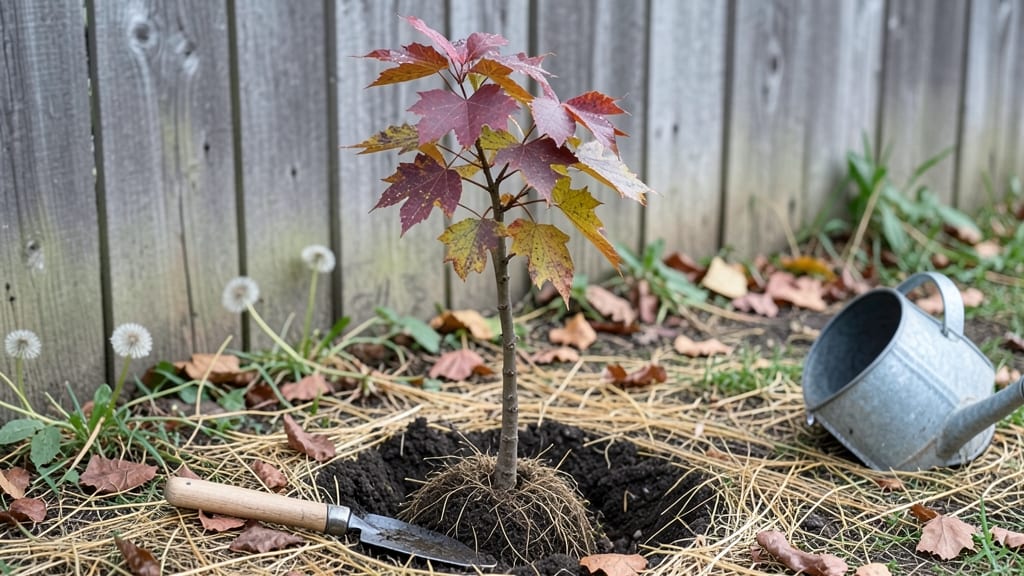
Planting trees in fall occurs between mid-September and early November in most regions, allowing roots to establish before winter dormancy while avoiding late-season frost risks. Cooler temperatures and consistent moisture create ideal conditions for young trees to thrive.
Timing matters because fall's milder weather helps young roots grow without the stress of summer heat or winter cold. 🌳 Most nurseries recommend planting after leaves change color but before the ground freezes—this window gives trees 6-8 weeks to adapt before dormancy.
I've seen firsthand how trees planted in late fall often outperform spring plantings because they're less vulnerable to drought once established.
Regional differences play a huge role: in USDA Zones 5-7, aim for early to mid-October, while Zones 8-10 can extend planting until December in frost-free areas. The key is checking your local frost dates—planting too late means roots won't have time to harden before winter.
For drought-prone areas, consider planting in early fall to take advantage of residual summer moisture.
💡 In This Article
- Fall Tree Planting Timing by Climate Zone
- Preparing Soil and Site for Fall Tree Planting
Fall tree planting timing by climate Zone
Understanding your climate zone is the first step to successful fall planting. The U.S. Department of Agriculture's USDA Plant Hardiness Zone Map divides North America into 13 zones based on average annual minimum temperatures.
For fall planting, zones 3-6 (cold climates) typically have the narrowest window—late September to mid-October—while zones 7-9 (temperate) can extend until late November. The key is planting 4-6 weeks before the first hard frost, giving roots time to establish before winter dormancy begins.
Frost dates create the most critical boundary. In Zone 5, where winters average -10°F to -20°F, planting after October 15 risks exposing roots to freezing before they harden. Meanwhile, Zone 9 (mild winters, 20°F to 30°F lows) allows planting until December 1 in frost-free microclimates.
Rainfall patterns also matter: regions with consistent autumn moisture (like the Pacific Northwest) can plant later, while drought-prone areas (e.g., Zone 7b in Texas) should plant by mid-October to avoid summer drought stress.
Soil temperature is another silent factor. Roots need the ground to stay above 40°F for active growth. In Zone 4, where soils can drop to 32°F by November, planting after October 1 slows root development.
Use a soil thermometer to verify—ideal planting occurs when soil temps hover between 50°F and 60°F. This explains why Zone 8 gardens can plant until November 30, while Zone 6 must finish by October 20.
Exceptions exist for drought-prone or urban areas. In Zone 7a's high desert regions, planting in early September captures residual summer moisture. Urban heat islands can extend planting 2-3 weeks later due to delayed frost.
Always check your local Cooperative Extension Service for hyper-local adjustments—some areas recommend planting 30 days earlier than the general rule.
Tree species also influence timing. Fast-rooting varieties like red maple or green ash thrive with late-October plantings, while slow-rooting oak or walnut need the full 6-week window. Container-grown trees adapt faster, allowing 2-3 weeks later planting than bare-root stock.
This flexibility helps gardeners in transition zones (e.g., Zone 6b-7a) bridge the gap between early and late planting.
Here's a quick reference for common zones:
- Zones 3-5 (Cold): Late September to October 15—prioritize frost dates
- Zones 6-7 (Temperate): Mid-September to November 1—soil temp critical
- Zones 8-10 (Mild): October 1 to December 1—watch for first frost
- Drought Areas: Early September to October 15—capture summer moisture
What most people overlook is how wind exposure affects planting windows. In Zone 52 weeks earlier planting than sheltered ones. Always scout your yard—this small adjustment can mean the difference between a thriving tree and winter dieback. 🌬️