
Planting
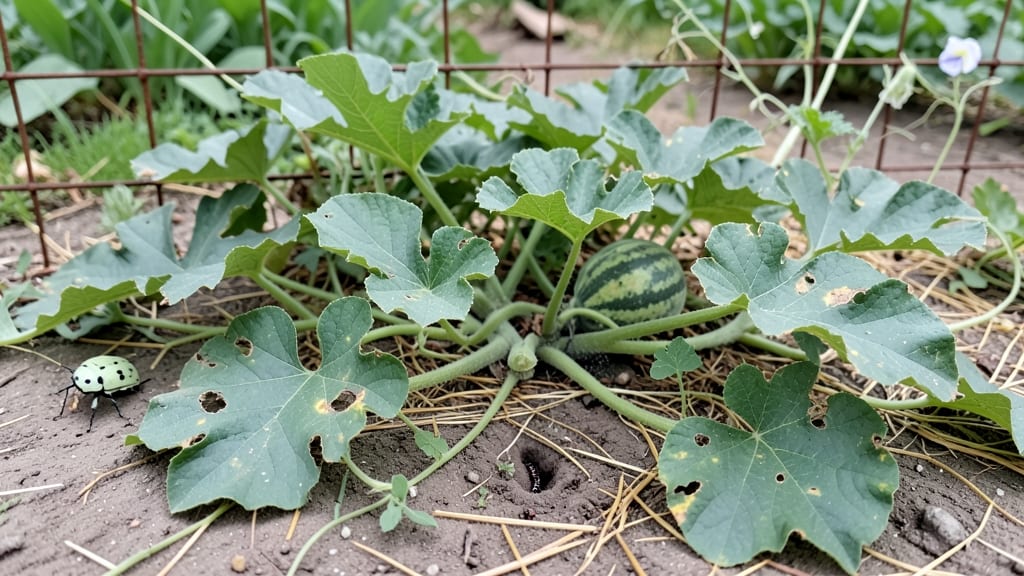
Watermelon plant pests can turn your lush vines into a battleground before you even get to harvest. 🌱 I’ve watched cucumber beetles skeletonize leaves and aphids turn blossoms sticky overnight—both can wipe out a crop if you don’t catch them early.
The good news? Most problems have simple, organic fixes that work before you need to reach for harsh chemicals.
Cucumber beetles, aphids, and powdery mildew are the top troublemakers, but they all leave clues. Beetles chew jagged edges on leaves, aphids cluster on new growth, and mildew looks like dusty white film.
The key is acting fast—once these pests get a foothold, your plants struggle to recover. I’ve found that a mix of preventive tactics and quick responses keeps my melons thriving every season.
You’ll learn to spot pests before they cause damage, use companion plants like radishes to deter beetles, and apply homemade sprays that actually work. Within a week of treatment, you’ll see healthier leaves, more blossoms, and fewer pests.
The best part? These methods protect your soil and future harvests without the chemical trade-offs.
Whether you’re growing in a backyard plot or containers, these strategies adapt easily. Let’s get your watermelons back on track—before the pests take over completely.
Root Causes Behind Plant Attacks
Watermelon plants face a relentless onslaught from pests due to a mix of environmental, biological, and agricultural factors. Understanding why these critters target your crops—and how your gardening habits might invite them—is the first step to reclaiming your harvest. Let’s break down the key triggers behind these uninvited guests.
Healthy soil is the foundation of a pest-resistant watermelon plant. When soil lacks nutrients, structure, or beneficial microbes, plants become stressed and more vulnerable to attacks. Here’s how it happens:
- Nutrient Deficiencies:
Plants deficient in nitrogen, phosphorus, or potassium weaken their natural defenses. For example, nitrogen deficiency (yellowing leaves) makes plants less able to produce defensive compounds like phenolics, which repel insects like aphids and cucumber beetles.
- Compacted or Waterlogged Soil:
Poor drainage creates the perfect breeding ground for fungal pests (like Fusarium wilt) and soil-dwelling insects (e.g., root-knot nematodes). Compacted soil also restricts root growth, making plants easier targets for chewing pests.
- Lack of Beneficial Microbes:
Soil without mycorrhizal fungi or Bacillus bacteria can’t support plant immunity. These microbes help plants absorb nutrients and fight off pathogens—when they’re missing, pests move in.
Actionable Fix: Test your soil and amend it with compost, organic matter, and microbial inoculants like mycorrhizal fungi or beneficial nematodes (e.g., Steinernema carpocapsae).
Pests thrive when conditions align perfectly for their survival—and often, those conditions also stress your watermelons. Heat, humidity, and erratic weather create the ideal storm (literally) for infestations.
- High Humidity:
Moist environments accelerate fungal growth (e.g., powdery mildew) and attract sap-sucking pests like whiteflies and spider mites. Stagnant air also slows down natural predators (e.g., ladybugs), letting pests multiply unchecked.
- Extreme Heat Stress:
Watermelons wilt under 90°F+ temperatures, making them easier prey for cucumber beetles and striped cucumber beetles, which bore into stems and spread bacterial wilt. Heat also dries out soil, concentrating pests in remaining moisture pockets.
- Sudden Rain or Flooding:
Heavy rain washes away natural predators (like ground beetles) and creates puddles where slugs and cutworms thrive. Flooding also drowns beneficial microbes, leaving roots exposed to root maggots.
Actionable Fix:
- Use shade cloth (30–50%) to moderate heat stress.
- Improve airflow with pruning and spaced planting.
- Install drip irrigation to avoid wetting foliage (which attracts fungal pests).
Stressed watermelons send out chemical distress signals that pests literally smell from miles away. Whether from overcrowding, improper watering, or disease, stress makes your plants a buffet.
- Overcrowding:
Plants competing for sunlight and nutrients produce volatile organic compounds (VOCs) that attract pests like aphids and thrips. Crowded vines also trap moisture, fostering fungal infections.
- Irregular Watering:
Drought-stressed plants release jasmonic acid, a chemical that lures herbivores. Conversely, overwatering creates soggy conditions for root rot and wireworms.
- Disease or Damage:
Once a plant is infected (e.g., with downy mildew), pests like leafminers and hornworms zero in on weakened tissue. Even physical damage (e.g., from hail) triggers a stress response that pests exploit.
Actionable Fix:
- Space plants 3–4 feet apart for airflow and sunlight.
- Water deeply 2–3 times per week (not daily shallow watering).
- Remove and destroy infected leaves immediately to stop the signal.
Even the best-intentioned gardener can unknowingly create a pest paradise. From poor sanitation to monoculture planting, these mistakes roll out the welcome mat.
- Monoculture Planting:
Growing only watermelons (or other cucurbits) in the same spot year after year depletes soil nutrients and attracts specialized pests like squash vine borers. Pests also have a built-in food source with no breaks.
- Ignoring Garden Debris:
Leaving old vines, weeds, or crop residues provides shelter for overwintering pests (e.g., cucumber beetle eggs) and fungal spores. Even "clean" mulch can harbor hidden threats.
- Overusing Synthetic Chemicals:
Pesticides kill beneficial insects (e.g., parasitic wasps) faster than pests, creating a vacuum that pests rush to fill. Some chemicals also stress plants, making them more susceptible to secondary attacks.
Actionable Fix:
- Rotate crops annually (e.g., plant legumes or grasses in watermelon beds).
- Remove all plant debris after harvest and compost it away from the garden.
- Use targeted organic sprays (e.g., neem oil) and handpick pests to preserve natural predators.
Quick Fixes for Watermelon Plant Pests
When pests invade your watermelon patch, acting fast is key to saving your harvest. Below, we’ll match common culprits to practical, organic solutions—plus prevention tips to keep your plants thriving. No harsh chemicals needed!
Signs: Curled leaves, sticky residue (honeydew), or ants trailing up the stems (they love aphids’ honeydew).
How to Treat It: 🔥 Blast Them Off Use a strong stream of water from your hose to knock aphids off leaves. Do this in the early morning so plants dry quickly—preventing fungal growth.
🍳 Homemade Spray Mix 1 tsp mild liquid soap (like Castile) + 1 quart water in a spray bottle. Test on a small leaf first, then spray directly on aphids (avoid blooms). Reapply every 3–4 days.
👨🍳 Attract Predators Plant marigolds, dill, or fennel nearby to lure ladybugs, lacewings, and parasitic wasps—nature’s pest control!
💡 Pro Tip: If honeydew attracts sooty mold, wipe leaves with a damp cloth and improve airflow by pruning crowded vines.
Signs: Jagged leaf holes, yellowing vines, or wilting plants (they spread bacterial wilt).
How to Fix It: 🥘 Row Covers to the Rescue Cover young plants with floating row covers (lightweight fabric) until flowers appear. Remove covers during pollination (hand-pollinate if needed).
🔪 Handpick & Trap Check leaves daily—drop beetles into soapy water. Place yellow sticky traps near plants to catch adults.
🌡️ Neem Oil Barrier Spray neem oil (1 tbsp per quart water + drop of soap) on leaves every 5–7 days. It disrupts their life cycle and deters eggs.
✨ Prevention: Rotate crops yearly and plant radishes or nasturtiums as sacrificial traps.
Signs: Fine webbing on undersides of leaves, bronzed or speckled foliage.
How to Treat It: 💦 Water Stress = Their Favorite Mites thrive in dry heat. Deep-water plants at the base weekly to keep humidity up.
🌿 Horticultural Oil Spray Mix 1 tbsp horticultural oil + 1 quart water, spray evenly on both leaf sides. Repeat every 5–7 days for 2 weeks.
🎯 Encourage Mite-Eaters Release predatory mites (Phytoseiulus persimilis) or attract lacewings with dandelions or yarrow.
🔥 Pro Tip: If mites return, reduce overhead watering—they hate damp leaves!
Signs: Clean-cut stems at soil level, plants suddenly wilting or falling over.
How to Stop Them: 🏗️ Collar Barriers Wrap cardboard collars (3–4 inches tall) around stems at planting. Cutworms can’t climb smooth surfaces.
🌙 Flashlight Patrol Shine a light at dusk—cutworms uncurl when disturbed. Pick them off by hand and drop in soapy water.
🥗 Trapping with Beer Bury a small cup filled with beer near plants. The smell attracts cutworms, who drown overnight.
💡 Prevention: Till soil before planting to expose eggs, or use diatomaceous earth around the base (reapply after rain).
Signs: White, powdery coating on leaves, stunted growth.
How to Treat It: 🌧️ Improve Airflow Prune crowded vines and space plants 12–18 inches apart. Use trellises to elevate plants.
🍓 Baking Soda Spray Mix 1 tsp baking soda + 1 tbsp oil + 1 quart water. Spray weekly (especially undersides).
🌿 Copper Fungicide (Organic Option) Use copper-based sprays (like Copper Soap) every 10–14 days for severe cases.
✨ Prevention: Water at the base (never overhead) and remove infected leaves immediately.
Final Reminder: 🌱 Prevention is easier than cure!
- Rotate crops yearly.
- Inspect plants weekly (early detection = less damage).
- Keep your garden healthy—strong plants resist pests better!
With these organic, no-fuss fixes, your watermelons will stay pest-free and bursting with sweetness! 🍉✨
Frequently asked questions about watermelon plant pests
What are the most destructive pests for watermelon plants?
The top troublemakers are cucumber beetles (they spread bacterial wilt), aphids (which excrete honeydew causing sooty mold), and powdery mildew (a fungal disease that weakens vines). Spider mites and cutworms also cause significant damage if left unchecked. Early detection is key—check leaves daily for tiny holes, sticky residue, or white powdery coatings.
How can I tell if my watermelon plants have bacterial wilt?
Look for sudden wilting even when soil is moist, yellowing vines, and jagged leaf edges from beetle feeding. Cut open a stem—if it’s brown and mushy inside, that’s bacterial wilt. The disease spreads rapidly, so remove infected plants immediately and sterilize tools with rubbing alcohol to prevent contamination.
Are there natural predators that help control watermelon pests?
Ladybugs and lacewings devour aphids, while parasitic wasps target cucumber beetle eggs. Plant marigolds, dill, or fennel nearby to attract these beneficial insects. You can also buy predatory mites (Phytoseiulus persimilis) to combat spider mites. A healthy garden ecosystem does half the work for you!
Can I still harvest watermelons if pests are present?
Yes, but focus on mature fruits that are already on the vine. Check for physical damage—if the rind is intact and the melon is fully ripe (thumping sounds solid when tapped), it’s safe to eat. Avoid fruits near heavy beetle infestations, as they may harbor bacterial wilt. Always wash harvested melons thoroughly before cutting.
Why do my watermelon plants get pests every year?
Monoculture planting (growing watermelons in the same spot yearly) depletes soil nutrients and leaves pest populations unchecked. Rotate crops annually with non-cucurbit plants like legumes or grasses. Also, overwintering pests (like cucumber beetle eggs) hide in garden debris—remove all plant residues after harvest and till soil in fall to expose hidden eggs.