
Pruning
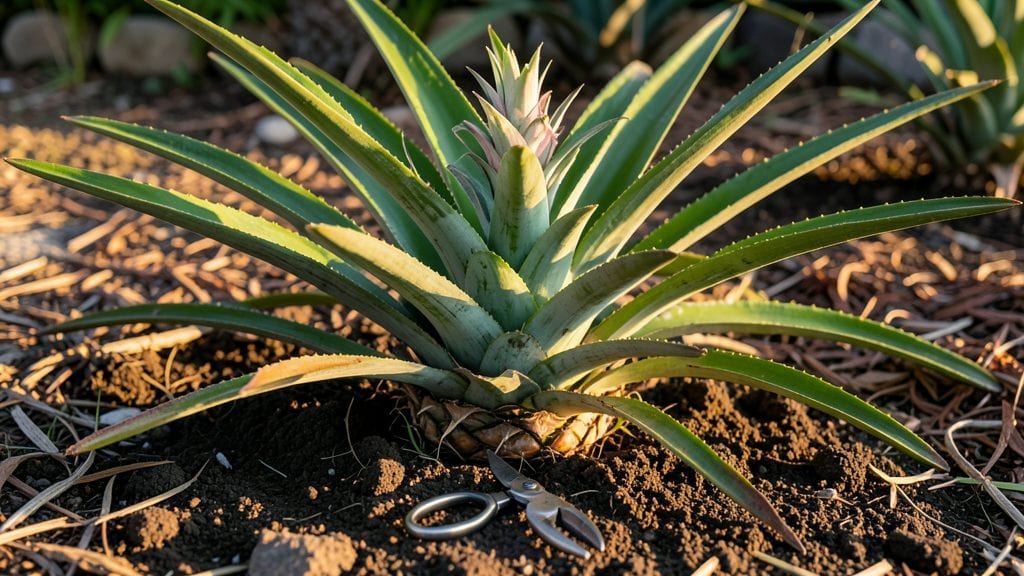
Trimming pineapple plants after fruiting unlocks the secret to year-round growth and bigger harvests. 🌱 I learned the hard way—my first pineapple plant produced one fruit, then slowly died back.
Cutting it back properly that winter turned it into a thriving, multi-stemmed plant that now gives me two harvests a year.
The right tools and timing make all the difference. You’ll need sharp pruning shears, rubbing alcohol for sterilizing, and a clear day to work. Cut back the old fruit stalk at its base once it turns brown and dry—usually 2-3 months after harvesting.
Then remove any yellow or dead leaves, but leave the healthy green ones to keep photosynthesizing.
What you’ll end up with is a bushier plant that produces offsets faster and grows more vigorous. Those offsets are essentially baby pineapple plants, and with proper care, they’ll fruit in their own right within 18-24 months. The plant itself stays compact, productive, and looks shockingly lush year after year.
This method works for both container-grown and in-ground pineapples, though container plants respond even faster. The key is consistency—trim after each harvest, and you’ll never look back. Ready to turn that single-stemmed plant into a productive powerhouse?
📚 In This Guide
- What you need
- Instructions
- Tips and common mistakes
- Wrapping up and next steps
What you need
- ● Sharp pruning shears or scissors: Choose a pair with sterilized, stainless-steel blades (e.g., Felco or Fiskars) to avoid damaging the plant or spreading disease. Size recommendation: 5-7 inches for precision.
- ● Rubbing alcohol (70% isopropyl) or hydrogen peroxide (3%): For sterilizing tools before and after trimming. Quantity: 1 small bottle (4 oz).
- ○ Gloves (optional but recommended): Wear nitrile or latex-free garden gloves to protect your hands from sap and sharp edges.
- ● Disinfectant spray (e.g., diluted bleach solution or neem oil spray): To clean cuts and prevent fungal/bacterial infections. Mix: 1 part bleach to 9 parts water (or 1 tsp neem oil per 1 quart water).
- ● Pineapple plant: A healthy, mature plant (at least 18-24 months old) with visible pups (offshoots) or overgrown leaves.
- ● Rooting hormone: Speeds up pup growth when propagating (e.g., Clonex or Dip 'N Grow).
- ● Small pots (3-4 inches in diameter): For transplanting pups (use well-draining cactus/succulent mix).
- ● Cinnamon powder or activated charcoal: Sprinkle on cuts to prevent rot and promote healing.
- ● Plant markers: Label pups if propagating for future reference (e.g., bamboo markers or popsicle sticks).
- ● Hose with gentle spray nozzle: For rinsing off sap or cleaning tools post-trimming.
Step-by-step instructions for trimming pineapple plants
Here's the straightforward method I use to keep my pineapple plants thriving and productive.
✂️ Step 1: Identify and Remove Dead or Yellowing Leaves
Start by examining your pineapple plant for any leaves that have turned brown, yellowed, or feel dry and crispy to the touch. These are dead or dying and need removal to redirect energy to healthy growth. Use clean, sharp pruning shears or scissors to cut these leaves at the base, about ½ inch above the soil line.
I always work from the bottom up—this prevents debris from falling onto fresh cuts. If you're unsure whether a leaf is dead, gently tug on it. If it comes away easily, it's ready to go. Don't worry about leaving a few brown spots on the leaves; the plant will focus on the healthy ones.
✂️ Step 2: Trim Overly Long or Damaged Leaves
Next, look for leaves that are excessively long, curling, or showing signs of damage from pests or weather. These leaves can drain energy from the plant. Use your pruning shears to trim these leaves back to about ⅓ of their length, cutting just above a leaf node or a healthy section of the plant.
This step encourages the plant to produce new, stronger leaves and redirects energy toward fruit production. I like to make clean cuts at a slight angle to prevent water from pooling on the leaf stumps, which could lead to rot. Avoid cutting into the main stem—this can harm the plant's center.
✂️ Step 3: Prune Off Old Flower Stems After Harvesting
Once your pineapple plant has produced fruit and the flower stem has withered, it's time to remove it. Use your pruning shears to cut the stem off at the base, about ¼ inch above the soil line. This step is crucial because leaving the old stem can attract pests and diseases.
After removing the old flower stem, inspect the plant for any remaining small flower buds or side shoots. These can also be trimmed off to encourage the plant to focus its energy on regrowing healthy leaves and preparing for future fruiting. This is the time to give your plant a little TLC—it's worked hard and earned a break!
🌱 Step 4: Encourage New Growth with Strategic Trimming
To promote bushier growth and more potential fruiting sites, you can trim back the very top of the pineapple plant. Look for the highest healthy leaf and cut just above a leaf node, about 2-3 inches below the tip. This encourages the plant to produce side shoots, which can eventually grow into new pineapple plants.
Here's the thing—this step is optional but highly effective if you want to propagate your pineapple plant. After trimming, keep an eye out for new shoots emerging from the base of the plant. These can be carefully separated and replanted to create new plants. Just be patient; new growth can take a few weeks to appear.
💧 Step 5: Post-Trimming Care for Optimal Recovery
After trimming, it's important to give your pineapple plant some extra care to ensure it recovers well. Water the plant deeply, making sure the water reaches the roots. You'll know it's enough when water starts to drain out of the bottom of the pot or container.
Place your pineapple plant in a location with bright, indirect light for a few days to allow it to recover from the trimming. Avoid direct sunlight immediately after pruning, as this can stress the plant further. Once new growth appears—usually within 2-4 weeks—you can gradually reintroduce it to its usual light conditions.
Tips & tricks for perfect pineapple plant trimming
These simple but game-changing strategies will help you maximize your pineapple plant's productivity and keep it thriving year-round.
Tool Preparation: Before you begin, make sure your pruning shears or scissors are clean and sharp. I've learned the hard way that dull tools can crush leaves and create jagged cuts that invite disease. A quick wipe with rubbing alcohol between cuts also prevents spreading any potential pathogens from dead leaves to healthy ones.
Timing is Everything: The best time to trim your pineapple plant is in the morning when temperatures are cooler and humidity is higher. This gives the plant time to recover before the heat of the day. I always aim for early spring or after harvest when the plant has stored energy reserves to support new growth. Avoid trimming during extreme heat or cold.
Propagate with Purpose: When you're ready to propagate those new shoots from Step 4, wait until they've developed at least 3-4 leaves and are about 4-6 inches tall. This gives them enough energy reserves to establish roots. To separate them, gently twist or cut them at the base and let the cut ends callus over for a day before planting in well-draining soil. I've found that keeping the new plants in a warm, humid environment with a plastic bag over them speeds up root development.
Seasonal Adjustments: During the winter months, when growth naturally slows, reduce your trimming to only removing dead or damaged leaves. Pineapple plants are tropical and don't handle cold well, so avoid heavy pruning during cooler seasons. In warmer months, you can be more aggressive with your trimming to encourage bushier growth and more fruiting sites.
Pro Tips for Trimming Pineapple Plant
- These simple but game-changing strategies will help you maximize your pineapple plant's productivity and keep it thriving year-round.
- Tool Preparation: Before you begin, make sure your pruning shears or scissors are clean and sharp.
- Timing is Everything: The best time to trim your pineapple plant is in the morning when temperatures are cooler and humidity is higher.
Frequently asked questions
Got questions about trimming your pineapple plant? You’re not alone!
Whether you're a first-time grower or looking to refine your technique, these FAQs cover the most common concerns—from timing and tools to troubleshooting. Let’s dive in!
When is the best time to trim a pineapple plant?
Trim your pineapple plant after it produces its first fruit (the "mother plant") and begins sending out pups (offshoots). This usually happens 12–18 months after planting. Avoid trimming during extreme heat or cold—aim for spring or early summer for optimal regrowth.
How do I know if I’ve trimmed too much?
If you’ve cut more than 1/3 of the plant’s foliage or damaged the crown (the top cluster of leaves), regrowth may be slow or stunted. Signs of over-trimming include yellowing leaves, weak pups, or no new growth after 4–6 weeks. Play it safe: trim conservatively and monitor closely!
How long does it take for a trimmed pineapple plant to recover?
Recovery time varies, but expect 4–8 weeks for new growth to appear. The plant may look dormant at first, but it’s redirecting energy to pups and regrowth. Keep soil moist (but not soggy) and fertilize lightly with a balanced 10-10-10 mix to speed up recovery. Patience is key!
Can I trim a pineapple plant without pups?
Yes! Even if your plant hasn’t produced pups, you can prune dead or yellow leaves to encourage airflow and health. Avoid cutting healthy green leaves—they’re essential for photosynthesis. Focus on removing only damaged or brown foliage to keep the plant thriving.
Will trimming my pineapple plant make the fruit bigger?
Not directly—but trimming encourages more energy toward pups, which can yield larger, healthier fruit in subsequent harvests. The "mother plant" may produce a smaller fruit after trimming, but the pups often grow bigger and more robust when given proper care. Think of it as an investment!
What should I do with the trimmed-off leaves?
Don’t toss them! Use trimmed leaves for compost or mulch, or propagate them to grow new pineapple plants. Simply let the leaf bases dry slightly, then plant them in soil—roots will form in 2–4 weeks. It’s a zero-waste hack for expanding your garden!
Wrapping up and next steps
Trimming your pineapple plant isn’t just about aesthetics—it’s the secret to healthier growth, bigger harvests, and year-round productivity. 🌱 By mastering the right techniques and timing, you’ll encourage stronger roots, more vibrant foliage, and juicier fruit.
Whether you’re a seasoned gardener or just starting, every snip brings you closer to a bountiful harvest.
Ready to transform your pineapple patch? Start small: pick one plant to practice on, gather your tools, and follow the steps with confidence. Soon, you’ll be reaping the sweet rewards of your hard work—and maybe even sharing your expertise with fellow plant lovers! 🍍✨