
Pruning
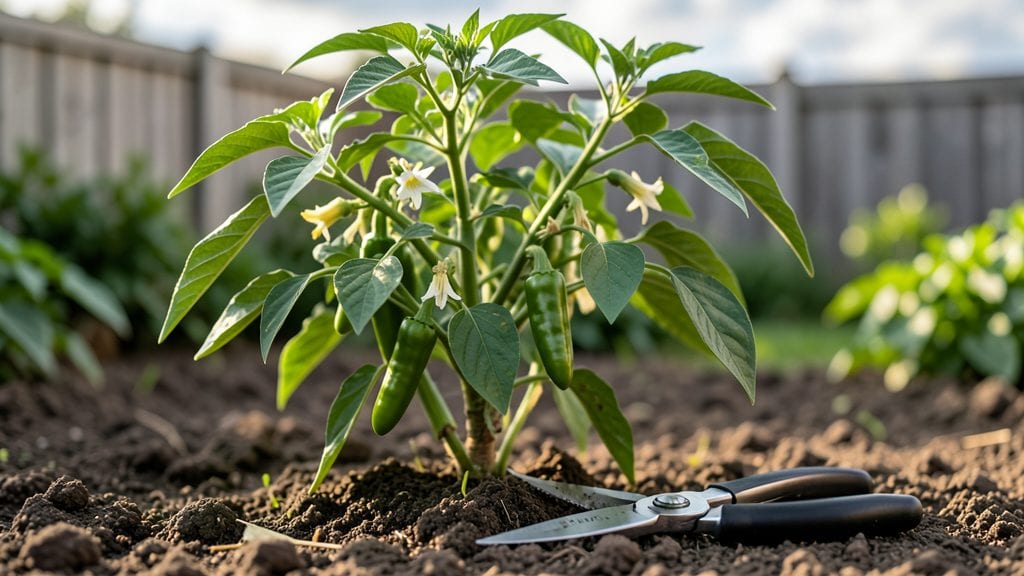
Trimming jalapeno plants isn’t just about keeping them tidy—it’s how you unlock bigger yields and hotter peppers all season long. 🌿 I learned this the hard way after letting my first batch grow wild, only to end up with a few sad, overcrowded peppers instead of a bush bursting with heat.
The right cuts make all the difference, and once you master them, your plants will reward you with thick, spicy harvests.
You only need three basic cuts to transform your jalapenos: removing suckers (those little shoots between the main stem and branches), trimming dead or yellowed leaves, and pruning back overgrowth to improve airflow.
Grab a sharp pair of pruning shears, a glove (jalapenos sting when cut), and disinfectant for your tools—that’s it. The process takes about 15 minutes per plant, and you’ll see immediate results in just a few weeks.
What you’ll end up with is a bushier, more productive plant that focuses its energy on fruit instead of wild growth. The peppers stay hotter (since heat builds with proper pruning) and more abundant, while the plant resists disease better.
By late summer, you’ll be harvesting dozens of peppers where you once had only a handful—and the flavor? Even more intense.
This method works for container-grown jalapenos just as well as in-ground plants, and the timing is simple: start pruning when plants are 6-8 inches tall, then repeat every 4-6 weeks through summer.
Whether you’re growing in Texas heat or a cooler climate, these cuts keep your plants happy and hungry for more sun—and more peppers.
📚 In This Guide
- What you need
- Instructions
- Tips and common mistakes
- Wrapping up and next steps
What you need
- ● Clean, sharp pruning shears or scissors – Opt for bypass pruners (blade opens like a pair of scissors) to avoid crushing stems. Budget pick: Felco F-2 pruners.
- ● Gloves – Wear thick gardening gloves (nitrile or leather) to protect against thorns and spicy sap.
- ● Disinfectant (70% isopropyl alcohol or hydrogen peroxide) – Wipe tools between cuts to prevent disease spread.
- ● Compost bin or bag – For discarded plant debris (avoid composting diseased parts).
- ● Watering can or hose – Keep plants hydrated before and after trimming.
- ○ Staking material (optional but helpful) – Bamboo stakes or tomato cages to support new growth after pruning.
- ● Plant growth regulator (e.g., seaweed extract) – Apply post-pruning to encourage bushier growth.
- ● Pruning sealant – Helps larger cuts heal faster (e.g., tree wound pruning paste).
- ● Label markers – If saving seeds or propagating cuttings, label varieties.
- ● Sunglasses – Protects eyes from irritating jalapeño sap if you’re sensitive.
Step-by-step guide to trimming jalapeno plants for bigger harvests
Here's how I boost yield and heat intensity with just three strategic cuts—no fancy tools needed.
✂️ Step 1: Remove Suckers for Stronger Growth
Suckers are those little shoots that grow in the crotch between the main stem and branches. They steal energy from your fruit production. I remove them when they're about 2 inches tall—any taller and they'll start competing with your peppers for nutrients. Use clean, sharp pruning shears or your fingers to pinch them off at the base.
This ensures all the plant's energy goes into developing existing peppers rather than supporting new, unnecessary growth. I always check for suckers every 7-10 days during the growing season. If you wait too long, the sucker will grow too large and become harder to remove without damaging the main plant.
✂️ Step 2: Prune Lower Leaves for Airflow
Start by removing any yellow or diseased leaves—these are entry points for pests and diseases. Then, trim off the bottom 6-8 inches of foliage when the plant reaches about 18-24 inches tall. This improves airflow around the plant, which reduces humidity and prevents fungal diseases like powdery mildew.
Here's the thing—don't go overboard. You want to maintain a good balance of leaves to keep the plant photosynthesizing effectively. I leave enough foliage so the plant still looks lush but with better light penetration to the lower peppers. This step is especially important in humid climates where fungal issues are more common.
✂️ Step 3: Trim Back Overgrown Branches
When your jalapeno plant gets too leggy or branches start crossing each other, it's time to prune. Focus on removing any branches that are growing inward or rubbing against each other. These can create wounds that invite disease. I also trim back any branches that are growing too long and thin—they won't produce much fruit anyway.
For each branch you trim, cut back to a leaf node that's growing outward. This encourages new growth in a more open, upward direction. I usually do this pruning in the late afternoon when the plant is less stressed from the heat of the day. This gives the plant time to recover overnight before facing another hot day.
⏰ Step 4: Harvest and Prune Mature Peppers
Regular harvesting is key to keeping your jalapeno plant productive. When peppers reach 3-4 inches long and turn from green to their mature color (red, yellow, or orange depending on the variety), it's time to pick them. Use pruning shears or your fingers to gently twist the pepper off the stem—don't pull too hard, or you might damage the plant.
After harvesting, check the plant for any peppers that have turned soft or mushy. These need to be removed immediately to prevent them from spreading disease to the rest of the plant. I also take this opportunity to trim any branches that have finished fruiting for the season. This redirects the plant's energy toward producing new flowers and fruit for the next harvest cycle.
Tips & tricks for perfect jalapeno plant trimming
Here's what nobody tells you about maximizing your jalapeno harvest—these tricks make all the difference between a decent yield and a bumper crop of fiery peppers.
The Sucker Timing Secret: The 2-inch height for sucker removal is critical—any taller and you risk damaging the main stem. I use my fingernail to test: if the sucker is thicker than my nail width, it's time to remove it. This keeps the plant's energy focused on existing peppers rather than supporting new growth. Confession: I skipped this step for years and wondered why my plants never produced well.
Leaf Pruning Precision: When trimming the bottom 6-8 inches of foliage at 18-24 inches tall, focus on removing only the oldest leaves. The plant needs enough surface area to photosynthesize, but those lower leaves often get shaded and don't contribute much. I make a habit of checking for yellowing leaves first—these are the first to go, as they're already compromised and can harbor pests.
Branch Trimming Strategy: For Step 3, always cut back to an outward-facing leaf node—this creates a natural growth pattern that opens up the plant. I use a small notepad to track which branches I've trimmed; this prevents over-pruning and helps me maintain the plant's natural structure. The late afternoon timing is key too—plants are less stressed after the heat of the day, so they recover more quickly.
Harvesting Insight: The 3-4 inch size guideline is perfect for peak heat intensity. Smaller peppers are milder, while larger ones often lose some of their signature kick. I harvest every 3-4 days during peak season to encourage continuous production. When removing finished branches, I cut just above a leaf node to promote new growth from that point—it's like giving the plant a fresh start.
Pro Tips for Trimming Jalapeno Plants
- Here's what nobody tells you about maximizing your jalapeno harvest—these tricks make all the difference between a decent yield and a bumper crop of fiery peppers.
- The Sucker Timing Secret: The 2-inch height for sucker removal is critical—any taller and you risk damaging the main stem.
- Leaf Pruning Precision: When trimming the bottom 6-8 inches of foliage at 18-24 inches tall, focus on removing only the oldest leaves.
Frequently asked questions
Got questions about trimming your jalapeño plants? You’re not alone—pruning can feel tricky, but these answers will help you grow like a pro! Whether you're a first-time gardener or a seasoned hot pepper enthusiast, here’s what you need to know.
When is the best time to trim jalapeño plants?
Trim your jalapeños early and often—start when plants are 6–8 inches tall and keep pruning throughout the growing season. Focus on removing suckers (shoots between the main stem and branches) and dead or yellowing leaves. Avoid heavy pruning late in the season, as it can stress plants before harvest.
How do I know which parts to cut?
Look for three key areas:
- Suckers: Small shoots growing where the stem meets a branch—pinch these off to redirect energy to fruit production.
- Lower leaves: Trim yellow or diseased leaves to improve airflow and prevent pests.
- Overgrown branches: Cut back leggy or crowded growth to encourage bushier, more productive plants.
Use clean, sharp scissors or pruners to avoid damaging the plant.
Will trimming reduce my jalapeño yield?
Not if done right! Pruning increases yield by focusing the plant’s energy on fruit production instead of excessive foliage. However, over-trimming (especially late in the season) can stress plants and reduce harvests. Stick to the 3-key-cut method for best results.
Can I use pruned jalapeño stems for anything?
Don’t waste those cuttings—they’re perfect for:
- Rooting in water to grow new plants (place stems in water until roots form, then transplant).
- Adding to compost piles for nutrient-rich soil.
- Drying and crushing for homemade hot sauces or seasoning blends.
Every part of the plant has potential!
What if my jalapeños get pests after pruning?
Pruning improves airflow, which reduces pest risks, but you might still spot aphids, spider mites, or whiteflies. Act fast:
- Spray plants with neem oil or insecticidal soap.
- Introduce beneficial insects like ladybugs.
- Remove heavily infested leaves immediately.
Keep an eye on your plants post-prune to catch issues early!
Wrapping up and next steps
Trimming your jalapeño plants isn’t just about keeping them tidy—it’s the secret to bigger yields, hotter peppers, and healthier growth! 🌱 By mastering the three key cuts (apical, suckers, and overcrowded branches), you’ll encourage more energy toward fruit production while reducing pests and disease risks.
With the right tools, timing, and technique, you’re well on your way to a thriving garden.
Ready to harvest the heat? Start by putting your new skills into action—grab those pruners and give your plants the care they deserve! And if you’re eager to learn more, explore advanced pruning tips or share your progress with fellow gardeners. Happy growing! 🌶️✨