
Pruning
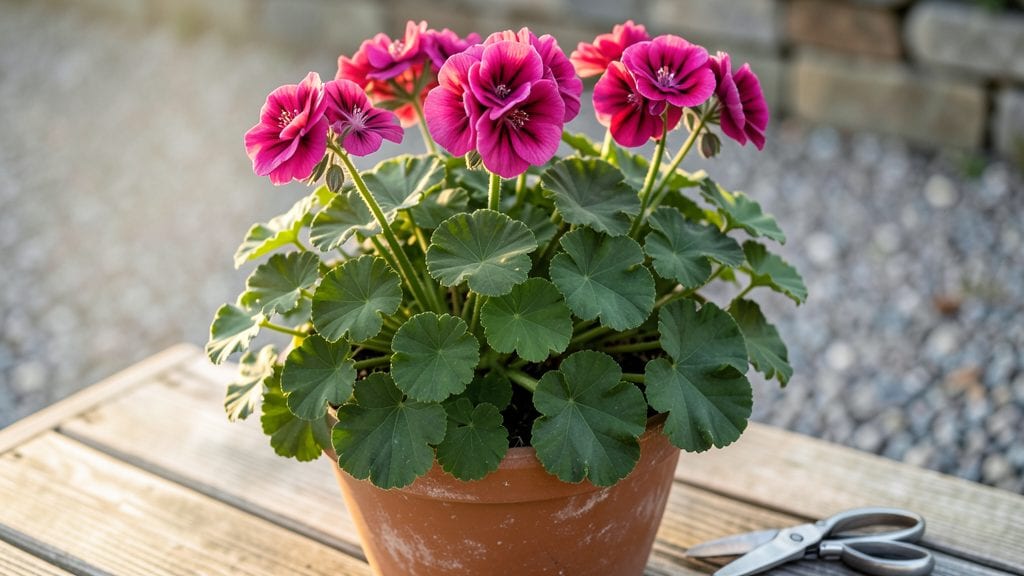
Trimming geranium plants three times a year turns leggy, sparse stems into bursting, bushy mounds of color that bloom from spring until frost. I learned the hard way that skipping cuts means fewer flowers and more bare stems—my first geraniums looked like sad twigs by midsummer.
The secret isn’t just when to trim, but how: pinching back growth at the right spots forces the plant to branch out, creating a fuller shape and more blooms.
You’ll only need sharp pruning shears, a pair of gloves, and a sunny morning to work. The three key cuts happen in early spring (just as new growth starts), mid-summer (after the first flush of blooms), and late summer (to prep for fall).
Each time, you’re shaping the plant’s future—more flowers, stronger stems, and even better resistance to pests like aphids that love weak growth. The tools cost less than $10, and the process takes 10-15 minutes per plant.
What you’ll end up with is a geranium that looks like it belongs in a garden center display—vibrant, compact, and covered in blooms from May through October.
The first cut in spring wakes up dormant buds, the mid-summer trim extends the flowering season, and the late-summer refresh keeps the plant from getting woody. Even if you’ve killed geraniums before, this method works for beginners because it’s forgiving—just avoid cutting into old wood (the brown, bare stems).
Works for both zonal geraniums (the classic bedding types) and ivy geraniums (the trailing varieties), though the cutting angles differ slightly. The same principles apply whether you’re trimming in a container on a patio or in a garden bed.
Once you master the three cuts, you’ll never let a geranium go to seed again—promise.
📚 In This Guide
- What you need
- Instructions
- Tips and common mistakes
- Wrapping up and next steps
What you need
- ● Sharp bypass pruners (clean, sterilized, and razor-sharp—dull tools crush stems!)
- ● Hand pruners (for smaller stems or delicate trimming)
- ● Garden gloves (nitrile or leather to protect from thorns and sap)
- ● Disinfectant (70% isopropyl alcohol or bleach solution) (1 part bleach to 9 parts water)
- ● Rubbing alcohol or hydrogen peroxide (for cleaning tools between cuts)
- ● Newspaper or cardboard (to lay down and protect surfaces)
- ● Pruning saw (for thick, woody stems—though geraniums rarely need this!)
- ● Plant food or compost (to refresh soil after trimming)
- ● Spray bottle with water (to mist cuttings or plants post-prune)
- ● Notebook & pen (to jot down pruning notes or dates)
- ● Rooting hormone (if propagating from cuttings)
- ● A sunny day (avoid trimming in extreme heat or wet conditions)
- ● 10–15 minutes per plant (depending on size and overgrowth)
- ● Patience! Take your time—rushed cuts can stress your geraniums.
Instructions for trimming geranium plants to keep them lush and blooming
Here’s how to maintain healthy, vibrant geraniums with three simple, timed cuts that prevent legginess and encourage nonstop flowers.
Pinch Back Early Spring Growth for Bushier Plants
Start the first trim in early spring, just as new growth begins to sprout from the base. Using clean, sharp pruners, snip off the top inch of each stem right above a leaf node—this is where new side branches will form. I pinch back about one-third of the plant’s height to encourage fuller growth.
This is the moment that matters: you’re shaping the plant’s structure for the entire season. Avoid cutting into woody stems—focus only on soft, green growth. If you see leggy stems stretching toward the light, that’s your cue to trim sooner rather than later.
Deadhead Regularly to Prolong Blooming Season
Throughout the growing season, remove spent flowers every 2-3 days by pinching or cutting just above the next set of leaves. Geraniums bloom prolifically, but deadheading prevents seed formation and redirects energy into new buds. I use my fingers to gently twist off faded blooms—no tools needed unless the stem is tough.
Watch for clusters of flowers that start to droop or turn brown. These are your targets. If you skip this step, the plant will focus on producing seeds instead of vibrant new blooms. A well-maintained geranium can keep flowering continuously from spring to frost if you stay on top of deadheading.
Trim Back in Late Summer for a Fresh Fall Flush
In late summer, when growth slows and flowers become sparse, give your geraniums a harder cut. Reduce the plant by half its height, cutting back to just above a leaf node or set of leaves. This might seem drastic, but it stimulates a final burst of growth and flowers before winter.
After trimming, water deeply to help the plant recover. You’ll notice new shoots emerging within 10-14 days. This is the time to also remove any yellow or diseased leaves—geraniums are tough, but they’ll reward you with a second round of blooms if you give them this fresh start.
Light Winter Pruning to Shape and Clean Up
In late fall or early winter, before the first hard freeze, trim back any remaining dead or damaged stems. Cut back to 2-3 inches above the soil line to keep the plant compact. This also makes it easier to move geraniums indoors if you’re overwintering them.
Don’t worry if the plant looks bare—geraniums are resilient. The goal here is to remove anything that might harbor pests or disease over winter. Store trimmed stems in a dry place if you’re propagating from cuttings, or simply compost them to keep your garden tidy.
Tips & tricks for perfectly trimmed geranium plants
These simple strategies will help you keep your geraniums thriving and blooming beautifully all season long.
Tool Prep Matters: Always use clean, sharp pruners to make precise cuts without damaging stems. I sterilize my tools with rubbing alcohol between plants to prevent spreading disease. Dull blades can crush stems and create entry points for infections, so sharpen your pruners regularly. For the early spring pinch in Step 1, clean tools are especially important since you're shaping the plant's foundation.
Visual Cues for Timing: In Step 2, when deadheading every 2-3 days, look for flower buds that are just starting to open below the spent blooms. These are your indicators that it's time to trim again. I've found that geraniums often bloom in cycles of about 5-7 days between deadheading sessions, so setting a reminder every few days helps maintain that rhythm.
Late Summer Recovery Strategy: After the dramatic half-height cut in Step 3, I recommend applying a balanced fertilizer (10-10-10) at half strength when you water deeply. This gives the plant the nutrients it needs to recover quickly and produce that fresh fall flush of blooms. The new shoots typically appear within 10-14 days, but giving them a little extra food helps them grow stronger.
Winter Pruning Insight: When doing the light winter pruning in Step 4, focus on creating an open center that allows air circulation. This prevents fungal issues during overwintering. I like to trim back to about 2-3 inches above the soil line, which also makes it easier to see the base of the plant when checking for new growth in spring.
Pro Tips for Trimming Geranium Plants
- These simple strategies will help you keep your geraniums thriving and blooming beautifully all season long.
- Tool Prep Matters: Always use clean, sharp pruners to make precise cuts without damaging stems.
- Visual Cues for Timing: In Step 2, when deadheading every 2-3 days, look for flower buds that are just starting to open below the spent blooms.
Frequently asked questions
Got questions about keeping your geraniums lush and blooming? Here are some of the most common ones—plus quick answers to help you trim like a pro!
When is the best time to trim geraniums for maximum blooms?
Trim geraniums three times a year for best results: early spring (just before new growth), mid-summer (after the first flush of blooms), and late summer/early fall (to encourage winter hardiness). Avoid heavy pruning in late fall if you’re in a cold climate—wait until spring instead.
How much can I cut back my geraniums without harming them?
You can safely trim up to ⅓ of the plant’s height in one session. For woody geraniums (like Pelargonium), avoid cutting into old, bare stems—focus on the top ⅓ of the plant. Over-trimming can stress the plant, so err on the side of caution if you’re unsure!
What if my geraniums stop blooming after trimming?
If your geraniums refuse to rebloom, they might need more light or balanced fertilizer. Deadhead spent blooms regularly, and avoid cutting into flower buds. If the issue persists, check for pests (like spider mites) or root-bound pots—geraniums thrive when slightly root-restricted but not crowded.
Can I propagate geraniums from trimmings?
Stem cuttings
root easily in water or soil. Snip a 3–4 inch section just below a leaf node, remove lower leaves, and place in water or moist potting mix. Keep in bright, indirect light until roots form (usually 2–4 weeks). Perfect for free plants—and sharing with friends!
Do I need to trim geraniums before winter?
For tender geraniums (like Pelargonium), trim back by half before bringing indoors or overwintering. For hardy geraniums (like Cranesbill), a light trim in late fall helps remove dead foliage, but avoid heavy cuts—these plants often bloom from old wood. Mulch well to protect roots!
Wrapping up and next steps
Trimming your geraniums isn’t just about keeping them tidy—it’s the secret to vibrant, long-lasting blooms that brighten your garden all year! With just three strategic cuts—spring, mid-summer, and fall—you’ll encourage bushier growth, prevent legginess, and enjoy a nonstop floral show. Remember, the key is confidence and consistency, not perfection.
Ready to transform your geraniums into blooming powerhouses? Grab your shears, pick a sunny day, and give it a try—your garden (and future self) will thank you! 🌸 For extra inspiration, snap a before-and-after photo and share your progress with fellow plant lovers.