
Pruning
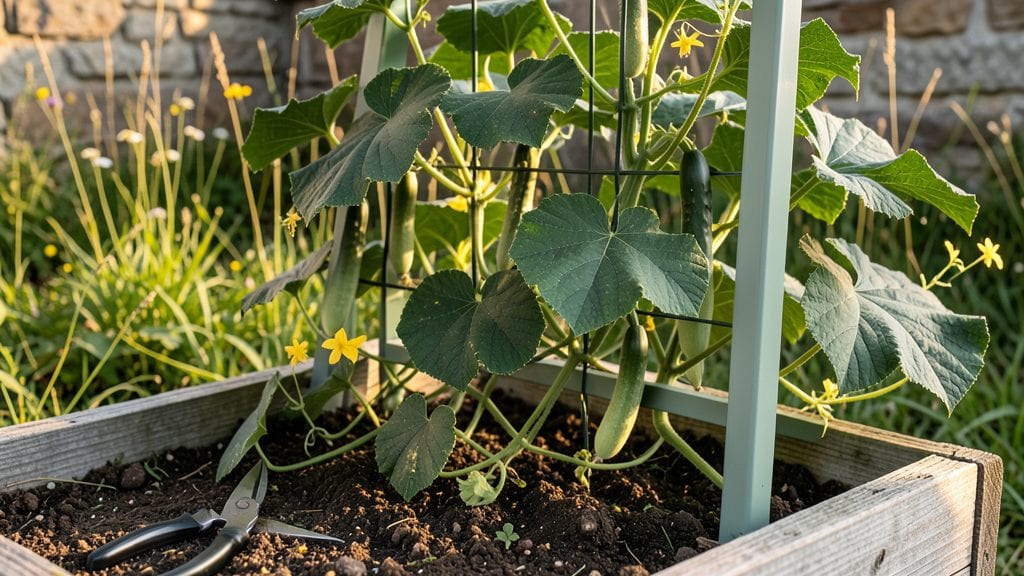
Trimming cucumber plants isn't just about keeping them tidy—it’s the secret to bushier vines and more cucumbers all season. 🌱 I used to let my plants sprawl wild, thinking they’d produce more, but after one disastrous harvest, I learned the hard way that pruning actually directs energy where it matters.
The right cuts mean stronger stems, better air flow, and fewer diseases, which translates to bigger, tastier fruit.
You only need a few simple tools: sharp pruning shears (or clean scissors in a pinch), gloves to protect your hands, and about 10 minutes once a week during peak growth.
The key is knowing what to trim—those little side shoots called "suckers" (they steal energy from fruit production) and any yellow or diseased leaves (they’re just dead weight). I focus on keeping the main vine strong while encouraging new growth where it counts.
After just a few weeks of proper trimming, my plants went from scraggly to thriving, with cucumbers appearing faster and lasting longer. The air circulation keeps pests away, and the vines stay sturdy enough to support heavy fruit without snapping.
It’s not complicated—just strategic cuts at the right time, and you’ll see the difference in your harvest.
Works for both bush and vining varieties, whether you’re growing in the ground or containers. The biggest mistake? Waiting too long or over-trimming—so start early and go easy. Once you get the rhythm, you’ll wonder how you ever grew them any other way.
📚 In This Guide
- What you need
- Instructions
- Tips and common mistakes
- Wrapping up and next steps
What you need
- ● Pruning shears or scissors: Sharp, clean, and sterilized (rubbing alcohol works!). Choose bypass pruners (for clean cuts) or small garden shears (for thicker stems). Size: 5-7 inches for precision.
- ○ Gloves: Heavy-duty gardening gloves (to protect from thorns and dirt). Optional: Nitrile gloves if handling diseased plants.
- ● Disinfectant: 70% isopropyl alcohol or a 10% bleach solution (1 part bleach to 9 parts water) to sterilize tools between cuts.
- ● Garden twine or plant ties: (3–5 feet) to support vines if training them vertically. Material: Jute or soft plastic.
- ● Garden hose or spray bottle: For rinsing tools and cleaning sap off blades after trimming.
- ● Compost bin or bag: To collect pruned debris and recycle nutrients.
- ● Hand pruners with a magnifying lens: For tricky spots or small plants.
- ● Knee pad or small stool: For comfort if bending frequently.
- ● Plant growth hormone (e.g., rooting powder): If you plan to propagate cuttings.
- ● Labeling tags: To mark pruned areas if tracking plant progress.
- ● Sunhat and sunscreen: Because even cucumber pros need to stay safe under the sun! 😎
Step-by-Step guide to pruning cucumber plants for better growth
Here’s how to shape your cucumber vines for stronger plants and bigger harvests—no fancy tools needed.
🌿 Step 1: Identify and Remove Suckers
Suckers are the small shoots that grow in the crotch between the main stem and a leaf or branch. These compete with your fruit for energy, so pinch them off early. Start when vines are about 12 inches tall—that’s when suckers begin appearing. Use your thumb and forefinger to gently squeeze the sucker at its base until it snaps cleanly.
I always check the undersides of leaves first—suckers often hide there. If you miss one, it’ll grow into a weak side vine that steals nutrients from your main plant. Remove suckers consistently every 5-7 days during active growth. You’ll know you’re doing it right when the main stem looks thick and sturdy, not crowded with tiny offshoots.
✂️ Step 2: Prune Weak or Crowded Vines
Focus on removing any vines that are growing toward the ground or crossing over others. These shaded stems won’t produce fruit and can spread disease. Use clean pruning shears to cut just above a leaf node (the bump where leaves grow). Never leave stubs—this invites rot and pests.
I prune on a dry morning after dew has evaporated. The plant’s sap flows more slowly then, so cuts heal faster. Aim to leave 3-4 main vines per plant—these will bear the most fruit. If a vine looks pale or yellow, it’s not getting enough light, so trim it back immediately. Strong vines have a deep green color and grow upright.
🌱 Step 3: Encourage Airflow and Light Penetration
Thin out leaves that grow too close together, especially near the base of the plant. Aim for 6-12 inches of space between leaves to let sunlight and air reach the center. Remove any yellow or diseased leaves first—they’re a magnet for pests. I use my fingers to gently pull leaves away from the stem, then twist them off at the base.
This step is crucial for preventing powdery mildew, a common cucumber problem. A well-ventilated plant stays healthier and produces more fruit. You’ll notice a difference within 1-2 weeks: the remaining leaves will look brighter, and new growth will be bushier. If you see leaves touching the soil, trim them immediately—they’ll rot and spread disease.
⏰ Step 4: Time Your Pruning for Maximum Yield
Do most of your pruning in the morning so wounds have all day to heal. Avoid trimming after 4 PM—the plant won’t have time to recover before nightfall. Focus on shaping the plant during its exponential growth phase (usually 4-8 weeks after planting). Once flowers appear, reduce pruning to just removing suckers and diseased leaves.
Here’s the thing—cucumbers are heavy feeders, so they need strong stems to support fruit. If you see a vine sagging under a cucumber’s weight, it’s a sign you’ve pruned too aggressively. Leave at least 2-3 strong vines per plant to bear the harvest. You’ll know your timing is right when you see more flowers and fewer suckers as the season progresses.
Tips & tricks for perfectly pruned cucumber plants
These simple strategies will transform your cucumber plants from scraggly to thriving—no gardening degree required.
The 12-Inch Rule: When your cucumber vines hit that 12-inch mark (Step 1), that's your cue to start hunting for suckers. I've found that checking the undersides of leaves is where most suckers hide—this is where they get the least sunlight and often go unnoticed. Use your thumb and forefinger to pinch them off cleanly at the base. This might feel counterintuitive at first, but trust me, those few seconds spent now will save you from a plant that's all leaves and no cucumbers later.
Morning Magic: The instructions mention pruning on dry mornings, and there's a reason for that. Cucumber sap flows more slowly in the morning, so cuts heal faster and the plant is less stressed. I've noticed that plants pruned in the morning bounce back within hours, while afternoon pruning often results in wilted vines that take days to recover. If you must prune later, wait until at least 4 PM—anything after that and you're asking for trouble.
Leaf Spacing Secret: That 6-12 inch spacing between leaves (Step 3) isn't just arbitrary—it's about creating a microclimate where air can circulate. I've seen powdery mildew completely wiped out by simply opening up the plant's canopy. Here's what I do: start at the base and work your way up, removing any leaves that are touching each other. You'll know you've done it right when you can see sunlight hitting the center of the plant—this is when you'll start seeing more flowers and less foliage.
Visual Vine Health Check: Strong cucumber vines should be deep green and growing upright. If you see pale or yellow vines (Step 2), that's your plant's way of saying "I need more light!" I've learned the hard way that leaving these vines can actually reduce your overall yield. Cut them back immediately to redirect the plant's energy to the healthier growth. You'll know you're on the right track when you see more flowers appearing within 1-2 weeks—that's when you know your pruning is paying off.
Pro Tips for Trimming Cucumber Plants
- These simple strategies will transform your cucumber plants from scraggly to thriving—no gardening degree required.
- The 12-Inch Rule: When your cucumber vines hit that 12-inch mark (Step 1), that's your cue to start hunting for suckers.
- Morning Magic: The instructions mention pruning on dry mornings, and there's a reason for that.
Frequently asked questions
Got questions about trimming cucumber plants? You’re not alone! Here are answers to the most common queries—from timing to techniques—to help you grow like a pro.
When is the best time to trim cucumber plants?
Trim your cucumber plants early in the morning when the vines are still cool and turgid (firm). Avoid trimming after heavy rain or during extreme heat, as this can stress the plant. Focus on trimming before vines get too long (typically 12–18 inches) to encourage bushier growth and better air circulation.
How often should I trim cucumber vines?
Check your plants weekly for trimming needs, especially during peak growing season (late spring to summer). Remove only the tips of vines or lateral shoots (side branches) that exceed 12 inches. Over-trimming can reduce yield, so prioritize selective pruning—focus on weak or crowded growth over aggressive cuts.
What if I don’t trim my cucumber plants?
Skipping trims won’t kill your plants, but you’ll likely see smaller yields and more disease risks. Without pruning, vines grow long and sprawling, leading to shady, crowded spots that trap moisture and attract pests. Plus, energy goes to excessive vine growth instead of fruit production. Think of it as giving your plant a haircut—it stays healthier and happier!
Can I trim cucumber plants after they start flowering?
Yes, but be gentle! Once flowers appear, prioritize trimming only the tips of vines (not lateral shoots) to avoid removing potential fruit. Focus on deadheading spent flowers and thinning crowded vines to redirect energy to existing blooms. Avoid heavy pruning—this can delay fruiting or stress the plant during its productive phase.
What should I do with the cuttings after trimming?
Don’t toss those trimmings! Use them in one of these ways:
- Compost them—they’ll break down quickly and add nutrients to your soil.
- Mulch your garden—chopped vines suppress weeds and retain moisture.
- Propagate new plants—if the cuttings have nodes (bumps), root them in water or soil for free starts!
How do I tell if I’m over-trimming?
Watch for these red flags:
- Stunted growth—fewer leaves or vines than expected.
- Slow recovery—trimming spots take weeks to heal.
- Fewer flowers/fruit—the plant redirects energy to regrowth instead of blooming.
Wrapping up and next steps
Trimming your cucumber plants is a simple yet powerful way to boost their health, productivity, and flavor! 🌱 By mastering the art of pruning—removing suckers, thinning vines, and directing energy—you’ll enjoy bushier growth, more abundant harvests, and fewer pests.
Whether you’re a seasoned gardener or just starting, these techniques make all the difference.
Now that you’re armed with the know-how, grab those pruners and get to work! 🌿 Start with just one plant, observe how it responds, and build confidence as you go. Happy trimming—and here’s to a bountiful, vine-strong season ahead!