
Planting
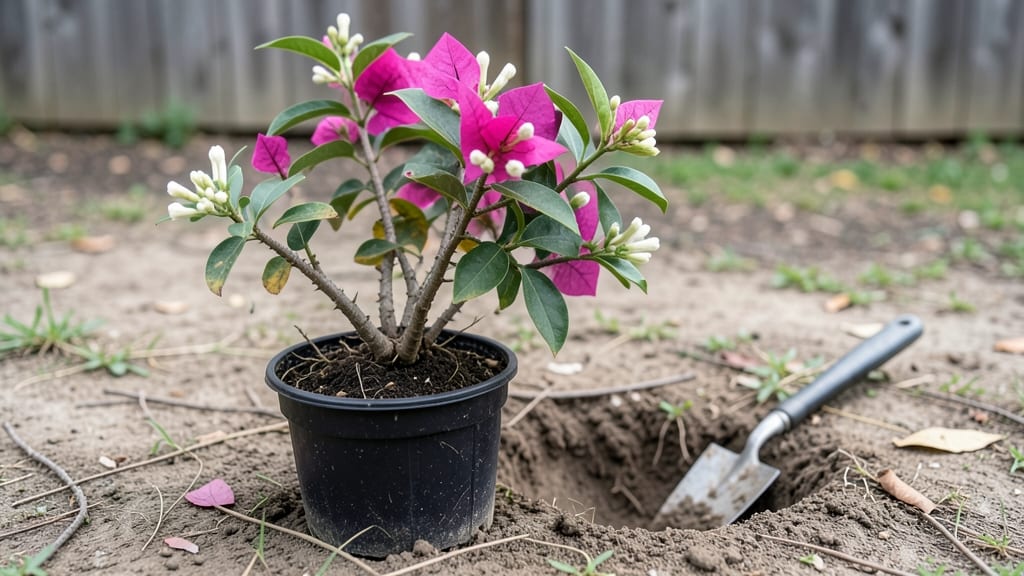
Transplanting a bougainvillea plant successfully starts with timing—spring or early fall when temperatures hover between 55°F and 75°F and the plant isn’t flowering.
I’ve transplanted mine three times, and the difference between a thriving bush and a sad, wilted mess comes down to these few key moments: when you dig, how you handle the roots, and what you do the first week after. The payoff?
A plant that bounces back with bold new growth and those signature purple-pink blooms within weeks.
You’ll need sharp pruners, a 5-gallon pot (or hole in the ground) with drainage, and a mix of cactus soil and perlite—bougainvilleas hate soggy roots.
The real secret is trimming back one-third of the plant before moving it; this reduces stress and lets the plant focus on root recovery instead of supporting old growth. My first mistake? Skipping the pruning step and ending up with a leggy, half-dead plant for months. Don’t make that mistake.
After transplanting, keep the soil moist but not soggy—think damp sponge, not swamp. I water mine every 2-3 days for the first two weeks, then taper off as new leaves appear. The first sign of success? Bright green leaves and tiny new shoots within 3-4 weeks.
If the plant drops leaves, it’s not dead—just adjusting. Bougainvilleas are tougher than they look, and with the right care, they’ll reward you with nonstop blooms all season long.
This method works for both container-grown bougainvilleas and in-ground transplants, whether you’re moving it across your yard or into a larger pot. The key is patience—rushing leads to shock, but a slow, careful approach guarantees vibrant growth. Let’s get your bougainvillea settled in the right way.
📚 In This Guide
- What you need
- Instructions
- Tips and common mistakes
- Wrapping up and next steps
What you need
- ● Healthy bougainvillea plant: Choose a plant in active growth (spring or early summer) with 3–5 sturdy stems and vibrant foliage.
- ● New planting container or garden spot: For pots: A well-draining container 12–18 inches wide with drainage holes (terracotta or fabric pots ideal).
- ● For ground planting: A sunny, sheltered location with at least 6–8 hours of sunlight daily and 6+ inches of loose, well-draining soil.
- ● High-quality potting mix: A cactus/succulent blend (e.g., 50% potting soil + 50% perlite/sand) to prevent root rot.
- ● Pruning shears or sharp scissors: Sterilized to avoid disease (rubbing alcohol wipe works!).
- ● Gloves: Garden or work gloves to protect hands from thorns.
- ● Watering can or hose with gentle spray: For post-transplant hydration (avoid soaking!).
- ○ Mulch (optional but recommended): 2–3 inches of organic mulch (e.g., bark or straw) to retain moisture and regulate soil temp.
- ● Root stimulator: A mild liquid rooting hormone (e.g., mycorrhizal fungi) to boost recovery.
- ● Slow-release fertilizer: A balanced 10-10-10 or bloom-specific fertilizer (apply 4–6 weeks post-transplant).
- ● Shade cloth: 30–50% coverage for 1–2 weeks post-transplant if moving outdoors in hot climates.
- ● Support stakes or trellis: If your bougainvillea is tall or sprawling (e.g., bamboo stakes + soft ties).
- ● Plant food (fish emulsion or seaweed extract): For a nutrient boost after 2–3 weeks.
Instructions for transplanting bougainvillea plants
Here’s how to relocate your bougainvillea with minimal stress and maximum success—key to keeping those vibrant blooms coming.
Choose the Right Time and Location
Transplant bougainvillea during its dormant season—late winter or early spring before new growth begins. This timing ensures the plant can establish roots without competing with active foliage. Select a sun-drenched spot with at least 6-8 hours of direct sunlight daily, as bougainvillea thrives in full sun and wilts under shade.
Dig your new planting hole twice as wide as the root ball but no deeper. Bougainvillea roots spread horizontally, so ample width encourages vigorous growth. If transplanting into a container, choose a pot 2-3 inches larger in diameter than the current one, with drainage holes to prevent root rot. The key is replicating the plant’s natural, well-draining environment.
Prepare the Plant and Soil
Water the bougainvillea thoroughly 1-2 days before transplanting to hydrate the roots and reduce shock. Trim back one-third of the foliage to reduce stress and redirect energy toward root establishment. Use clean, sharp pruning shears to make clean cuts just above a leaf node—this encourages bushier growth down the line.
Amend the soil with 1 part compost or well-rotted manure to 3 parts native soil to improve drainage and fertility. Bougainvillea despises soggy roots, so avoid heavy clay soils. If your garden soil is dense, mix in sand or perlite to create a loose, airy medium. The goal is a fast-draining mix that mimics its native Mediterranean habitat.
Carefully Remove and Transplant
Dig around the root ball 6-8 inches from the plant’s base, using a spade to loosen the soil without tearing roots. Gently lift the bougainvillea from the ground, supporting the root ball with one hand to prevent breakage. If roots are circling tightly, loosen them gently with your fingers—this prevents girdling and encourages outward growth.
Place the bougainvillea in the prepared hole, ensuring the top of the root ball sits level with the surrounding soil. Fill the hole with amended soil, pressing lightly to eliminate air pockets but avoiding compaction. Water deeply to settle the soil and eliminate gaps. Mulch around the base with 2-3 inches of organic mulch, keeping it 6 inches away from the trunk to prevent rot.
Post-Transplant Care for Recovery
Keep the soil consistently moist but not soggy for the first 4-6 weeks after transplanting. Water deeply every 2-3 days until new growth appears, then gradually reduce frequency as roots establish. Bougainvillea is drought-tolerant once settled, but young plants need steady moisture to recover from the shock.
Apply a balanced, water-soluble fertilizer at half strength 4-6 weeks after transplanting to support new growth. Avoid heavy fertilization immediately—too much nitrogen encourages leafy growth at the expense of flowers. Prune lightly to shape the plant only after it shows signs of recovery, usually within 6-8 weeks. Watch for new shoots emerging from the base; this is your sign the transplant was successful.
Monitor and Adjust for Long-Term Success
Inspect the bougainvillea weekly for signs of stress, such as yellowing leaves or wilting. If leaves appear pale, it may need more sunlight or fertilizer. If they’re crispy, it’s underwatered; if they’re mushy, it’s overwatered. Adjust your care routine accordingly—bougainvillea is resilient but signals its needs clearly.
Once fully established (typically 8-12 weeks post-transplant), resume regular care: prune in late winter, fertilize lightly in spring, and water deeply but infrequently. The vibrant blooms you love will return stronger than ever, proving the transplant was worth the effort.
Tips & tricks for stress-free bougainvillea transplanting
Transplanting bougainvillea successfully hinges on understanding its delicate balance between stress reduction and root establishment. Here’s how to navigate the process with precision and confidence.
Timing is Everything: The dormant season window—late winter or early spring—is non-negotiable for bougainvillea. I’ve learned this the hard way after transplanting during active growth, which resulted in stunted recovery. The plant’s energy should focus entirely on root regeneration, not supporting new foliage. If you miss this window, wait until next dormant season rather than forcing an out-of-season transplant.
Root Ball Integrity Matters: When loosening the root ball in Step 3, resist the urge to rush. Gently tease apart any circling roots with your fingers—this prevents girdling that can strangle the plant’s future growth. I’ve seen bougainvilleas recover beautifully when roots are handled carefully, but even a single torn root can set back establishment by weeks. Think of it as untangling delicate fishing line rather than digging aggressively.
Soil Preparation Secret: The 1:3 compost-to-soil ratio in Step 2 is your foundation for success, but don’t overlook the texture. I recommend sifting your native soil before mixing to eliminate large clumps that could create air pockets around roots. For container transplants, add a handful of perlite to the amended soil mix—this extra drainage layer mimics the plant’s Mediterranean origins and prevents the compacted soil that leads to root rot.
Post-Transplant Hydration Strategy: Those first 4-6 weeks of consistent moisture are critical, but here’s the nuance: water deeply every 2-3 days means saturating the soil to a depth of 6-8 inches—not just dampening the surface. I use a screwdriver to check moisture levels; if it comes out clean, water again. Overwatering is just as damaging as underwatering, so always allow the top inch of soil to dry slightly between waterings. This balance prevents both root suffocation and dehydration.
Pro Tips for Transplanting Bougainvillea Plant
- Transplanting bougainvillea successfully hinges on understanding its delicate balance between stress reduction and root establishment.
- Timing is Everything: The dormant season window—late winter or early spring—is non-negotiable for bougainvillea.
- Root Ball Integrity Matters: When loosening the root ball in Step 3, resist the urge to rush.
Frequently asked questions
Got questions about transplanting your bougainvillea? You’re not alone! Here are some common concerns and quick answers to help you relocate your plant with confidence.
When is the best time to transplant bougainvillea?
The ideal time is during the early spring or late fall, when temperatures are mild (50–75°F). Avoid extreme heat or frost—bougainvillea is sensitive to cold and thrives best with a gradual transition. If you must transplant in summer, do it early in the morning or late afternoon to minimize stress.
Can I transplant bougainvillea while it’s flowering?
It’s best to wait until after flowering season (spring or fall) to transplant. Moving a blooming bougainvillea can shock the plant, causing it to drop flowers or even stop producing new ones. If you’re in a hurry, trim back some blooms to redirect energy toward root establishment—but expect a temporary pause in flowering.
How do I prepare the new location for my bougainvillea?
Choose a spot with full sun (6+ hours daily) and well-draining soil—bougainvillea hates soggy roots. Amend heavy or clay soil with sand, perlite, or compost to improve drainage. Dig a hole twice as wide as the root ball but no deeper. A slight mound at the base helps prevent water pooling.
What should I do if my bougainvillea’s leaves turn yellow after transplanting?
Yellowing leaves often signal transplant shock or overwatering. Let the soil dry out slightly between waterings (stick your finger 2 inches deep—if it’s damp, wait). Avoid fertilizing for 4–6 weeks post-transplant. If yellowing persists, check for root rot (mushy, black roots) and adjust care accordingly.
Can I transplant bougainvillea into a container?
Bougainvillea thrives in containers with fast-draining mix (cactus/succulent soil + perlite). Use a pot with drainage holes and size it 1–2 inches larger than the root ball. Repot every 2–3 years to refresh soil. Just ensure it gets plenty of sunlight—containers dry out faster, so monitor moisture closely.
How long does it take for bougainvillea to recover after transplanting?
Most bougainvilleas show signs of recovery in 4–6 weeks, with new growth appearing in 6–8 weeks. Patience is key—avoid pruning or fertilizing until you see fresh leaves. If the plant looks completely dormant after 2 months, it may need more sun or better drainage. Keep an eye out for pests or disease during this time!
Wrapping up and next steps
Transplanting your bougainvillea doesn’t have to be stressful—with the right timing, tools, and care, you’ll set your plant up for thriving growth and stunning blooms! 🌸 Remember to choose a sunny spot, prepare the soil, and handle the roots gently to minimize shock.
Whether you’re moving it to a larger pot or a new garden bed, patience and attention to detail will pay off in vibrant, healthy foliage.
Now that you’re ready, take the next step—mark your calendar for the ideal transplanting window (early spring or late summer) and gather your supplies. Before you dig in, observe your bougainvillea’s needs and adjust your approach based on its size or health.
Happy gardening, and enjoy the beauty of your blooming masterpiece!