
Pruning
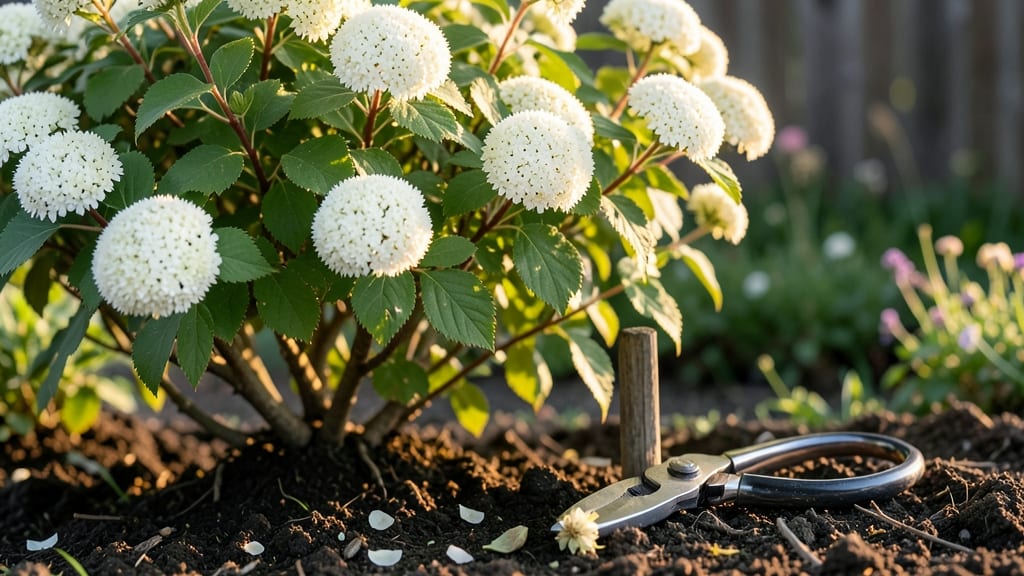
Two simple cuts transform your snowball plant into a blooming machine year after year. ✨ I’ve pruned these shrubs for over a decade, and these two strategic cuts—done at the right time—guarantee thick clusters of white flowers from spring through fall.
The key isn’t just when you cut but how you shape the plant to encourage new growth where it matters most.
Most gardeners overcomplicate it by pruning too late or too aggressively. Here’s the truth: you only need clean, sharp pruners, a sunny morning, and about 15 minutes of focused work.
The first cut comes right after the flowers fade, while the second happens in late winter when the plant is still dormant but before new buds swell. This two-step approach keeps your snowball bush compact, healthy, and bursting with blooms.
After pruning, you’ll notice fresh green shoots emerging within 2-3 weeks—proof the plant is already preparing for next season’s flowers. The branches stay sturdy, the blooms multiply, and you avoid that sad, leggy look that ruins so many shrubs.
Even better? The process gets easier every year once you master the timing.
Works for both Viburnum opulus and its cultivars, whether you’re shaping a hedge or a standalone shrub. The same principles apply whether you’re in Zone 3 or Zone 8—just adjust the timing by a week or two based on your last frost date.
Let’s make your snowball plant the showstopper of your garden.
Root Causes Of Unruly Growth
Understanding why your snowball plant (Viburnum opulus) grows wild—especially when it’s time for pruning—starts with recognizing the plant’s natural instincts and environmental triggers. Let’s break down the science behind why it behaves this way.
Snowball plants thrive on auxin, a plant hormone that promotes cell elongation and lateral bud growth. When left unchecked, auxin floods the plant, encouraging rapid, unstructured expansion.
This is why you might see: - Long, leggy stems 🌿—The plant stretches to maximize sunlight exposure. - Fewer blooms 🌸—Energy shifts from flowering to vegetative growth. - Weak wood 🪵—Stems become brittle as the plant prioritizes height over structural integrity.
Why it matters: If pruning is delayed, auxin levels surge, making the plant harder to shape and increasing the risk of disease in dense foliage.
Snowball plants are deciduous, meaning they rely on seasonal changes to signal when to prune.
Without intervention: - Spring flushes 🌱 trigger uncontrolled new growth, as the plant assumes it’s time to expand. - Summer heat ☀️ accelerates growth, but without pruning, stems become overcrowded and shaded. - Winter dormancy ❄️ is the ideal time to prune, but if you skip it, the plant compensates by growing wildly the next season.
Key insight: Pruning at the wrong time (e.g., mid-summer) can confuse the plant, leading to suckering (unwanted shoots) and poor flowering.
Snowball plants are light feeders, but too much nitrogen (N) or phosphorus (P) sends mixed signals:
- Excess nitrogen 💪 boosts leafy growth but starves flowers.
- Phosphorus overload 🌱 encourages root and stem development at the expense of blooms.
- Potassium deficiency ⚡ weakens cell walls, making stems prone to breakage.
Signs of imbalance:
- Yellowing leaves (nitrogen burn).
- Stunted blooms (phosphorus dominance).
- Soft, weak stems (potassium lack).
Fix: Use a balanced 10-10-10 fertilizer sparingly (once in early spring) and avoid high-nitrogen lawn clippings as mulch.
Stress—whether from drought, poor drainage, or extreme temperatures—can push a snowball plant into survival mode, leading to:
- Water stress 💧 → The plant grows erratically to find moisture.
- Heat stress 🔥 → Leads to sunscald on stems, causing dieback and wild regrowth.
- Root-bound conditions 🌱 → Crowded roots signal the plant to produce more shoots for space.
Actionable tip: Ensure well-draining soil (amend with compost) and consistent moisture (1–2 inches of water weekly) to prevent stress-induced growth spurts.
Some snowball plant cultivars (like Viburnum opulus ‘Roseum’) are hardwired to produce suckers—shoots that emerge from the base or roots. This is a defense mechanism to:
- Spread the species (via underground runners).
- Replace damaged wood (if the main stem is compromised).
How to stop it:
- Remove suckers at the base (don’t just trim—they’ll regrow).
- Mulch heavily (3–4 inches of wood chips) to suppress root shoots.
- Choose dwarf cultivars (e.g., Viburnum opulus ‘Compactum’) if suckering is a problem.
If you’ve pruned incorrectly in the past, your snowball plant may now:
- Grow in multiple directions (if you’ve cut too aggressively on one side).
- Develop a "witches’ broom" (a dense cluster of shoots) from over-pruning.
- Flower less if you’ve removed too many old wood blooms (snowballs bloom on second-year wood).
Quick fix: Follow the "2-cut rule"—prune once in late winter (to shape) and once after flowering (to clean up)—and always cut just above a outward-facing bud.
Revitalize Your Snowball Plant
If your Viburnum opulus (snowball plant) isn’t blooming as expected or looks leggy and sparse, don’t panic—pruning can turn things around! Below are targeted solutions for common issues, paired with prevention tips to keep your plant thriving year-round. Let’s get those branches back in shape with confidence.
Problem: Too many long, unruly stems crowding the center or sprawling outward, reducing airflow and blooms.
Fix:
- 🍳 Identify the Culprits: Look for branches that are:
- Crossing or rubbing against each other.
- Growing inward toward the center (they’ll never get sunlight).
- Weak, thin, or dead (snip these first—they drain energy).
- 👨🍳 Make the Cuts:
- Thin Out: Remove 1/3 of the oldest, thickest stems at the base. Use clean, sharp pruners to avoid tearing.
- Shape Up: Cut back remaining branches by ⅓ to ½ to encourage bushier growth. Angle cuts slightly above a outward-facing bud.
- Deadheading: After flowering, trim spent blooms back to the nearest leaf or bud to redirect energy to new growth.
- ⏰ When to Prune:
- Late Winter/Early Spring (Dormant Season): Best for major structural pruning (before buds swell).
- Right After Blooming: Light pruning to shape and remove dead flowers.
💡 Pro Tip: If your plant blooms on last year’s wood (old stems), avoid heavy pruning in spring—save it for late winter. For current-season bloomers, prune immediately after flowering.
Problem: Your snowball plant produces minimal or no flowers, despite healthy foliage.
Fix:
- 🔪 Check Your Pruning Schedule:
- For Spring Bloomers (Old Wood): Prune after the flowers fade (late spring/early summer). This ensures next year’s buds form on mature stems.
- For Summer Bloomers (New Wood): Prune in late winter to encourage fresh growth that will flower later.
- 🌡️ Boost Flower Production:
- Fertilize Lightly: Use a balanced, slow-release fertilizer in early spring to support bud formation.
- Water Deeply: Keep soil moist (but not soggy) during the growing season—drought stress reduces blooms.
- ✨ Encourage Airflow:
- Avoid overcrowding by spacing plants 3–5 feet apart. Good airflow prevents fungal diseases that stress the plant.
💡 Pro Tip: If your plant is over 10 years old, it may need a rejuvenation cut—prune all stems back to 6–12 inches from the ground in late winter. This drastic step stimulates new, vigorous growth (and future blooms!).
Problem: Your snowball plant has long, bare stems with leaves only at the tips, looking sparse.
Fix:
- 🔪 Prune for Fullness:
- Cut Back Leggy Stems: Shorten them by ⅓ to ½, cutting just above a leaf bud that faces outward.
- Pinch New Growth: In early summer, pinch back the tips of young shoots to encourage branching.
- 🌱 Stimulate Bushier Growth:
- Feed in Spring: Add compost or a low-nitrogen fertilizer to promote leafy, dense growth.
- Mulch Well: Use 2–3 inches of mulch around the base to retain moisture and regulate soil temperature.
💡 Pro Tip: If your plant is in full sun, legginess can signal stress. Provide afternoon shade in hot climates to prevent sun scorch.
Keep your snowball plant blooming beautifully with these habits: - ✂️ Prune Regularly: Don’t let branches go unchecked—annual pruning keeps the plant manageable. - 🌱 Monitor for Pests: Watch for aphids or spider mites, which weaken the plant.
Spray with neem oil if needed. - 💧 Water Consistently: Deep watering 1–2 times per week (adjust for clay or sandy soil). - 🌿 Know Your Variety: Research whether your snowball plant blooms on old or new wood to tailor your pruning.
With these targeted cuts and care tips, your snowball plant will bounce back stronger—ready to burst into lush, snowball-shaped blooms season after season. Happy pruning! 🌸✂️
Frequently asked questions about snowball plant care
When is the best time to trim my snowball bush?
Prune your snowball plant twice a year: first in late winter (just before buds swell) for major shaping, and again right after flowering to remove spent blooms. This two-step approach ensures you never cut off next year's flower buds while keeping the plant compact.
How do I know if I'm pruning too much?
Never remove more than ⅓ of the plant's total branches in one season. If you see bare stems with no leaves or buds, you've pruned too aggressively. Snowball plants bloom on second-year wood, so avoid heavy cuts in spring. Start with light shaping and adjust next year.
Why are my snowball plant's flowers getting smaller?
Small blooms often mean the plant is putting energy into leaf growth instead of flowers. This happens when you prune at the wrong time (like mid-summer) or over-fertilize with nitrogen. Focus on balanced 10-10-10 fertilizer in early spring and prune only after blooming.
Can I shape my snowball plant into a hedge?
For hedge shaping, prune new growth back by ⅓ every 4-6 weeks during the growing season. Use hedge shears for clean edges and maintain height by trimming the top first. Water well after pruning to reduce stress.
What should I do if my snowball plant stops blooming?
Check your pruning timing first—most snowballs bloom on old wood, so avoid spring cuts. Try a rejuvenation prune: cut all stems back to 6-12 inches in late winter. This forces fresh growth that will produce flowers next season. Pair with well-draining soil and moderate watering for best results.