
Shrubs
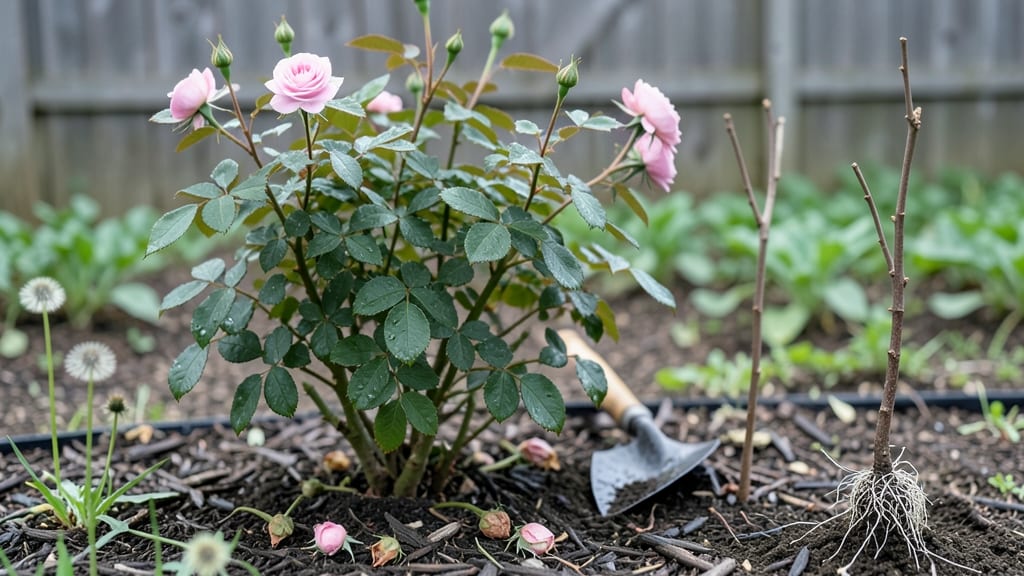
The right rose planting distance ensures your bushes thrive—crowding them too close means lost blooms and weak stems fighting for survival. I learned this the hard way when my first roses grew into tangled, disease-prone messes—until I finally measured the space between them properly.
The right distance isn’t just about looks; it’s about airflow, sunlight access, and long-term health that keeps your roses thriving for years.
Most gardeners overlook how variety affects spacing—shrub roses need 3 to 4 feet of room, while climbers can stretch 6 to 8 feet apart. Soil quality and sunlight exposure matter too: rich, well-draining soil lets roots spread naturally, while poor soil forces competition.
I’ve found that even in small gardens, proper spacing prevents crowded canes, which is where fungal diseases like black spot love to hide.
When you get the spacing right, your roses reward you with stronger stems, more blooms, and fewer pests. The first year might feel slow, but by season two, you’ll see the payoff—full, fragrant bushes that outperform overcrowded neighbors.
And the best part? You’ll spend less time pruning and more time admiring your garden’s centerpiece.
This works for both beginner gardeners and seasoned growers—just adjust for your climate and rose type. Let’s get those plants in the ground the right way!
📚 In This Guide
- What you need
- Instructions
- Tips and common mistakes
- Wrapping up and next steps
What you need
- ● Rose plants: Choose healthy, disease-resistant varieties (bare-root or container-grown). Quantity depends on your garden size—aim for 3-6 plants per 100 sq. ft. for optimal spacing.
- ● Garden trowel or spade: For digging holes (6" wider and deeper than the root ball).
- ● Measuring tape or ruler: To ensure precise rose planting distance (check spacing guidelines for your rose type).
- ● Compost or well-aged manure: 2-3 cups per plant to enrich the soil.
- ● Balanced fertilizer (10-10-10 or similar): 1-2 tablespoons per hole.
- ● Mulch (pine bark, straw, or shredded leaves): 2-3 inches to retain moisture and suppress weeds.
- ● Watering can or hose with a gentle spray nozzle: For post-planting hydration.
- ● Epsom salt (magnesium sulfate): 1 tablespoon per hole for extra blooms (great for clay soil).
- ● Copper fungicide: To prevent fungal diseases in humid climates.
- ● Plant supports (stakes or cages): For climbing or tall roses.
- ● Soil pH test kit: Roses prefer slightly acidic soil (pH 6.0-6.5).
- ● Garden gloves: To keep your hands clean and protected.
Instructions for planting roses with perfect spacing
Here's how to space roses for maximum airflow, vibrant blooms, and long-term health.
Measure and Mark Planting Locations
Use a tape measure to mark planting spots based on the rose variety. For standard roses, space plants 3-4 feet apart in all directions. Climbing roses need 4-6 feet between canes, while shrub roses thrive with 2-3 feet of clearance. I like to use wooden stakes or spray paint to mark the center of each hole—this keeps me from drifting off course while digging.
Dig a hole twice as wide as the root ball but no deeper. The top of the root ball should sit 1-2 inches above ground level when planted. This slight elevation prevents water from pooling around the base. If your soil is heavy clay, consider amending the hole with 2-3 inches of compost mixed into the bottom to improve drainage.
Position Roses for Optimal Airflow
Place each rose so its strongest canes face outward, away from the center of the planting circle. This creates an open, vase-like shape that encourages airflow and sunlight penetration. For climbing roses, position the graft union 6-12 inches above ground level—this prevents it from being buried, which can cause suckering and weak growth.
I always step back and visualize the mature plant. If two canes will eventually touch, I adjust the spacing slightly wider. Roses left too close compete for nutrients and become susceptible to fungal diseases from poor airflow. You’ll see healthier foliage and more abundant blooms when spacing is right.
Backfill and Water Deeply
Fill the hole with native soil, tapping it gently every 2 inches to remove air pockets. Avoid compacting the soil too firmly—roots need room to spread. Once the hole is half-filled, water the rose deeply to settle the soil around the roots. This step prevents gaps that can dry out or suffocate new growth.
After backfilling completely, create a 2-inch-high berm of soil around the base to direct water toward the roots. Water again until the soil 6 inches deep feels evenly moist. Mulch with 2-3 inches of organic mulch (like shredded bark) to retain moisture and suppress weeds, but keep it 6 inches away from the stem to prevent rot.
Prune for Structure and Health
Trim any broken or damaged canes back to a healthy bud. For hybrid teas and floribundas, cut the main stems back by one-third to encourage bushier growth. Remove all leaves below the graft union—these will grow into wild, unwanted suckers. I like to sterilize my pruners with rubbing alcohol between cuts to prevent disease spread.
Step back again and assess the shape. The goal is an open center with outward-facing canes. Pruning now reduces transplant shock and sets the stage for strong, disease-resistant growth. You’ll notice new shoots emerging within 4-6 weeks—this is your sign the rose is establishing itself.
Monitor and Adjust Over Time
Check spacing again after the first growing season. Roses left too close will develop crowded canes, increasing disease risk. Thin out competing stems to maintain 3-4 feet of clearance between plants. Prune in early spring to remove any crossing branches—these rub together and create wounds where pests can enter.
If you notice leaves yellowing or wilting, it’s often a sign of poor airflow. Trim back overgrown canes immediately to restore circulation. Healthy roses should have bright green leaves and no visible signs of powdery mildew or black spot by mid-summer. With proper spacing, you’ll enjoy fuller blooms and fewer garden headaches year after year.
Tips & tricks for perfect rose spacing
Proper spacing isn't just about fitting plants in—it's the foundation for roses that thrive. Here's what I've learned after years of trial and error in my own garden.
Visualize the mature plant: Before you dig, step back and imagine how your roses will look in two years. For standard roses, that 3-4 feet spacing might feel generous now, but it prevents crowded canes that lead to fungal diseases. I sketch a rough layout on graph paper first—it helps me see potential issues before I plant. This simple step has saved me from having to dig up roses later when they outgrow their space.
Soil preparation matters more than you think: That 2-3 inches of compost in clay soil isn't optional—it's crucial for drainage. I've seen roses planted in unamended clay struggle with root rot because water pools around the base. For sandy soils, work in 2 inches of organic matter instead to help retain moisture. The key is creating a well-draining environment where roots can breathe and water doesn't pool around the stem.
Pruning during planting sets the stage: When you cut back those hybrid teas by one-third, you're not just tidying up—you're encouraging the plant to develop a strong, bushy structure. I make my first cut just above a healthy outward-facing bud. This might seem counterintuitive when you're eager to see blooms, but trust me, it prevents weak growth and makes future pruning easier. You'll notice new shoots emerging within those 4-6 weeks as the rose establishes itself.
Mulching technique makes all the difference: That 2-3 inches of organic mulch should be applied carefully—keep it 6 inches away from the stem to prevent rot. I use shredded bark because it breaks down slowly and improves soil structure over time. The 2-inch-high berm around the base directs water right where it needs to go, preventing runoff that can dry out the roots. This small detail has kept my roses looking lush even during dry spells.
Pro Tips for Rose Planting Distance
- Proper spacing isn't just about fitting plants in—it's the foundation for roses that thrive.
- Visualize the mature plant: Before you dig, step back and imagine how your roses will look in two years.
- Soil preparation matters more than you think: That 2-3 inches of compost in clay soil isn't optional—it's crucial for drainage.
Frequently asked questions
Got questions about spacing your roses for the perfect garden? Here are some common ones—and their answers—to help you grow a thriving rose patch!
How close can I plant roses together?
Most roses need 3 to 4 feet of space between plants for airflow and sunlight. Climbing roses may need 4 to 6 feet since they grow taller. Crowding roses can lead to disease and poor blooms—so give them room to shine!
Can I plant roses too far apart?
Yes! While roses thrive with proper spacing, planting them too far apart (over 5 feet) can make maintenance harder and reduce visual impact. Aim for a balanced look—close enough to create a lush display but far enough to prevent competition for nutrients.
What if my roses are already too close?
If your roses are planted too tightly, thin them out by carefully digging up and transplanting the weakest plants. If space is limited, prune nearby plants to reduce competition, but avoid overcrowding—healthy roses need room to breathe!
Do rose spacing rules change for different types?
Yes! Bush roses need 3–4 feet, climbers 4–6 feet, and ground cover roses can be planted 2–3 feet apart. Check your rose’s tag for specific needs—some varieties are more compact or vigorous than others.
Will proper spacing really affect my roses’ blooms?
Good airflow
reduces fungal diseases (like black spot), and sunlight access boosts blooms. Overcrowded roses struggle, leading to fewer flowers. Spacing right = happier, healthier roses with more stunning blooms!
Wrapping up and next steps
Mastering the rose planting distance is your secret weapon for a thriving garden!
Whether you’re planting hybrid teas, climbers, or shrub roses, proper spacing ensures strong roots, fewer diseases, and stunning blooms all season. 🌹 Now that you’ve got the spacing rules down, it’s time to roll up your sleeves and plant with confidence—your future roses will thank you!
Ready to take the next step? Mark your garden layout, gather your tools, and start digging! For extra success, consider this beginner-friendly guide to rose care after planting.