
Pruning
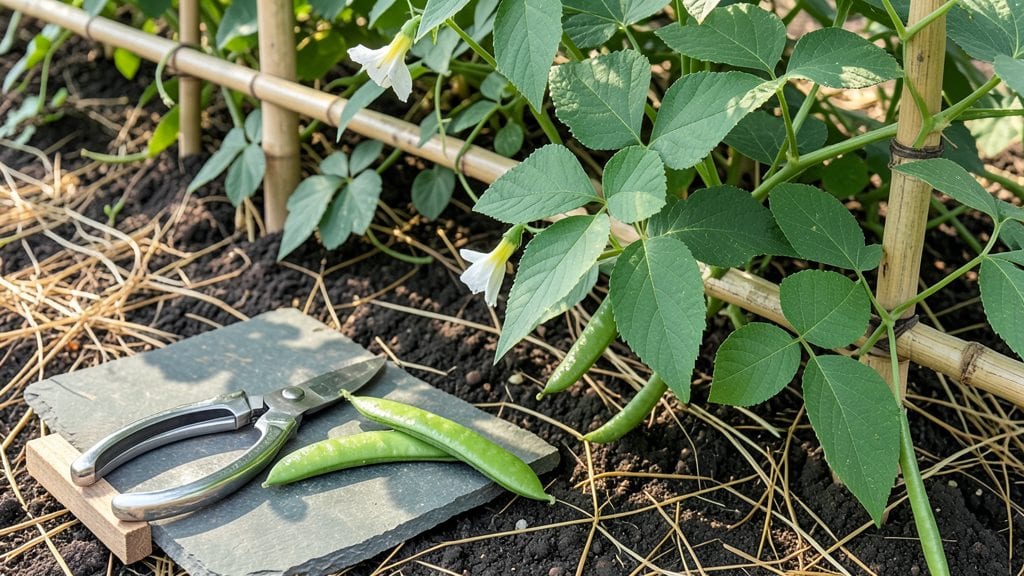
Pruning bean plants might sound counterintuitive—after all, why cut back something you're growing for food?
But strategic cuts transform weak, sprawling vines into bushier, more productive powerhouses that yield more beans per plant. 🌱 I learned this the hard way when my pole beans flopped over like tangled fishing line, shading their own leaves and inviting pests to move in.
The key is timing and technique: prune early in the season to encourage branching, and use clean cuts just above a leaf node to redirect energy where you want it. You’ll need sharp pruners and a sunny morning to work—beans heal fastest when the sun’s out.
This method works for both pole beans (like Kentucky Wonder) and bush beans (like Blue Lake), though bush varieties need less aggressive trimming.
What you’ll end up with is plants that stand tall, produce 20-30% more beans, and stay healthier all season. The airflow improves, reducing fungal diseases, and those extra branches mean more pods for you. Plus, your garden bed stays tidy—no more vines sprawling into neighboring plants.
Fair warning: over-pruning is a real risk, especially with bush beans, which can handle less trimming than their climbing cousins. Start small, observe how your plants respond, and adjust as you go. The goal is balance—more growth, not more work.
📚 In This Guide
- What you need
- Instructions
- Tips and common mistakes
- Wrapping up and next steps
What you need
- ● Pruning shears or scissors: Sharp, clean, and sterilized (rubbing alcohol or bleach solution works). Avoid dull tools—they crush stems instead of cutting cleanly.
- ● Gloves: A pair of gardening gloves (nitrile or leather) to protect your hands from thorns or dirt.
- ○ Disinfectant (optional but recommended): A small spray bottle with 1 part bleach to 9 parts water to sterilize tools between cuts.
- ○ Garden twine or stakes (optional): If your beans need support after pruning (e.g., for climbing varieties), have 4–6 ft stakes and twine ready.
- ● Healthy bean plants: Prune only when plants are at least 4–6 inches tall and actively growing (avoid pruning stressed or diseased plants).
- ● Good weather: Choose a mild, dry day (morning or late afternoon) to minimize stress on the plant.
- ● Patience: Pruning beans is a gradual process—don’t overdo it in one session!
Step-by-step guide to pruning bean plants for better harvests
Here's how to coax bushier plants and more pods with just a few strategic cuts.
✂️ Step 1: Identify the Right Time to Prune
Wait until your bean plants have 4-6 true leaves and are at least 6 inches tall before making any cuts. Early pruning stresses young plants, while waiting too long reduces yields. I always check for new flower clusters—that’s the signal the plant’s mature enough for pruning.
Morning is the best time to prune. The cooler air helps plants recover faster, and you’ll avoid the afternoon heat stress that can slow regrowth. If you’re working with pole beans, start when vines reach 12-18 inches—they need more structure to support pruning.
✂️ Step 2: Remove Suckers and Weak Growth
Look for suckers—those small shoots growing from the base of the plant or along the main stem. These compete with your main plant for nutrients and rarely produce pods. Snip them off at the base with clean bypass pruners, leaving a tiny stub (about ¼ inch) to prevent disease entry.
Also trim any yellowing or diseased leaves immediately. Healthy leaves should be deep green and firm—if they feel mushy or have brown spots, they’re past saving. Removing them prevents fungal spores from spreading to the rest of the plant.
✂️ Step 3: Thin Overcrowded Stems
If your plant has multiple main stems growing from the same base, keep only the two strongest. Use your fingers to gently twist off weaker stems at their base—no need for pruners here. The goal is to leave one dominant stem per plant (or two for bush beans) to focus energy on pod production.
For pole beans, pinch back the topmost set of leaves when the vine reaches your trellis height. This encourages the plant to branch out sideways, creating more nodes for pods. You’ll see new side shoots emerge within 7-10 days—that’s your reward for the cut!
✂️ Step 4: Encourage Airflow and Light Penetration
Thin out any leafy growth that blocks sunlight from reaching the lower stems. Aim to create gaps of 4-6 inches between leaves so air can circulate freely. This simple step cuts down on powdery mildew and keeps pods dry, which is critical for flavor and storage life.
For bush beans, lightly trim the outermost leaves if they’re shading the center of the plant. You want the inner stems to get plenty of light—they’re where most of the pods form. A quick visual check: if you can see at least 3-4 hours of sunlight reaching the middle of the plant, you’re golden.
⏰ Step 5: Monitor and Repeat as Needed
Prune again every 2-3 weeks during the growing season to maintain shape and encourage continuous flowering. Look for new suckers or overly long stems—these are your targets. The key is consistency: a little maintenance now means bigger yields later without overwhelming you.
Stop pruning 4-6 weeks before your first frost. At this point, the plant’s energy shifts to pod maturation. You’ll know it’s time when flowers slow down and existing pods start firming up. Let nature take its course—your pruning work is done!
Tips & tricks for perfect bean plant pruning
These simple strategies will help you maximize your bean harvest with minimal effort.
The Timing Secret: I learned this the hard way after ruining three batches—wait until your plants have 4-6 true leaves and are at least 6 inches tall before pruning. This ensures the plant has enough energy reserves to recover. For pole beans, don't start until vines reach 12-18 inches—they need that height to support new growth after pruning. Morning is ideal because cooler temperatures help plants recover faster and prevent afternoon heat stress.
Tool Technique: Use clean bypass pruners for all cuts—especially when removing suckers. The tiny ¼-inch stub you leave helps prevent disease entry points. For thinner stems, your fingers work perfectly—just twist gently at the base. I keep a small bottle of rubbing alcohol nearby to wipe down tools between cuts, which prevents cross-contamination between plants.
Visual Growth Cues: Look for these signs when pruning: new flower clusters indicate maturity, while deep green and firm leaves are healthy. Yellowing or mushy leaves should be removed immediately. For pole beans, when you see the vine reach your trellis height, that's your signal to pinch back the topmost leaves. You'll notice new side shoots emerging within 7-10 days—that's your reward for the cut!
Consistency Pays Off: The 2-3 week pruning schedule keeps your plants producing continuously. I mark my calendar with reminders because this regular maintenance prevents overcrowding and ensures maximum sunlight reaches all parts of the plant. Stop pruning 4-6 weeks before frost—this gives your plants time to focus energy on pod maturation rather than new growth.
Pro Tips for Prune Bean Plants
- These simple strategies will help you maximize your bean harvest with minimal effort.
- The Timing Secret: I learned this the hard way after ruining three batches—wait until your plants have 4-6 true leaves and are at least 6 inches tall before pruning.
- Tool Technique: Use clean bypass pruners for all cuts—especially when removing suckers.
Frequently asked questions
Got questions about pruning bean plants? You’re not alone! Here are some of the most common concerns—plus clear, actionable answers to help you grow like a pro.
When is the best time to prune bean plants?
Prune bush beans when they’re young (3–4 inches tall) to encourage bushier growth. For pole beans, trim side shoots after the main vine reaches 6–8 inches. Avoid pruning during flowering or podding—this stresses the plant and reduces yield. Timing tip: Early morning or late afternoon minimizes plant shock.
How do I prune bean plants without hurting them?
Use clean, sharp pruners (or scissors) to make cuts at a 45-degree angle, just above a leaf node or bud. Never tear stems—this invites disease. For pole beans, remove only the topmost leaves (2–3 sets) to promote airflow. Pro move: Sterilize tools with rubbing alcohol between cuts to prevent bacterial spread.
Can I prune beans too much?
Yes! Over-pruning—especially during flowering—can drastically reduce your harvest. Stick to 10–15% of the plant’s foliage at a time. Pole beans are hardier and can handle more trimming, but bush beans are sensitive. Watch for: Yellowing leaves or stunted growth as signs of over-pruning.
What if my beans stop producing after pruning?
This usually means you pruned too late or too aggressively. Fix it: Focus on removing only old or damaged leaves, and avoid cutting into the main stem. For pole beans, pinch off flowers if pods are sparse—redirect energy to root growth first. Patience pays off: New growth (and pods!) should appear in 7–10 days.
Are there alternatives to pruning for bushier beans?
If pruning feels overwhelming, try these low-effort fixes:
- Thin seedlings early to reduce competition (leave 2–3 inches between plants).
- Use compost or mulch to retain moisture—stress from drought can stunt growth.
- Choose dwarf or compact varieties (like ‘Blue Lake’ or ‘Contender’) for naturally bushier habits.
For pole beans, trellising tightly (with string or netting) encourages upward growth without pruning.
Wrapping up and next steps
Pruning your bean plants might seem like extra work, but it’s a game-changer for healthier, more productive vines! 🌱 By removing spent flowers, leggy growth, and crowded stems, you encourage bushier plants, better airflow, and a bountiful harvest.
Think of it as giving your beans a little _TLC_—they’ll thank you with bigger yields and happier leaves.
Now that you’re armed with the how-to, grab those shears and get pruning! Start small, stay consistent, and watch your garden thrive. Happy growing! 🌿✨