
Transplanting
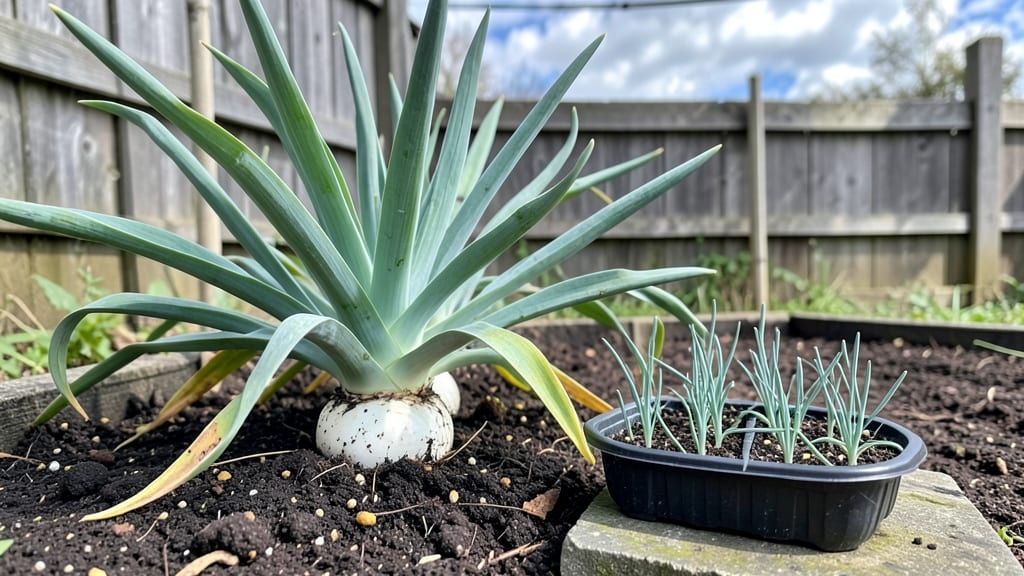
Planting wild leeks transforms your shady garden corner into a lush, edible forest floor. 🌿 I’ve watched these hardy perennials spread under my oak trees, their grass-like blades popping up year after year with almost no effort.
The key isn’t just planting them—it’s recreating the damp, rich soil they thrive in, where layers of decaying leaves and organic matter do the heavy lifting.
You’ll need a spot with dappled shade and soil that stays moist but drains well—think woodland understory, not sunbaked prairie. Wild leeks multiply through both seeds and divisions, so start with a clump or collect seeds from mature plants.
Plant them shallow, just an inch deep, and space them 6–12 inches apart to mimic their natural crowding. The first year is all about establishing roots, but by spring two, you’ll see dense patches ready for harvesting.
What you end up with is a self-sustaining ground cover that’s both beautiful and useful—tender young shoots for spring salads, mature leaves for cooking, and a habitat for beneficial insects.
The plants spread slowly but steadily, filling in gaps naturally. By next fall, you’ll have a thriving patch that needs almost no maintenance beyond occasional weeding.
Perfect for woodland gardens, shade borders, or even container growing in cooler climates. The secret isn’t forcing them to grow—it’s letting them thrive in conditions that feel like home. Here’s how to get started without overcomplicating it.
📚 In This Guide
- What you need
- Instructions
- Tips and common mistakes
- Wrapping up and next steps
What you need
- ● Wild leek bulbs or seeds: 10–20 bulbs (for immediate greens) or seed packets (for long-term growth). Pro tip: If harvesting wild bulbs, dig carefully to preserve roots!
- ● Well-draining soil: Mix equal parts topsoil, compost, and sand (or use pre-amended forest soil if available). Aim for a pH of 6.0–7.5.
- ● Shovel or trowel: A garden fork (for bulb planting) or a small hand trowel (for seeds).
- ● Mulch: 2–3 inches of leaf litter, straw, or wood chips to retain moisture and mimic wild conditions.
- ● Watering can or hose: With a fine spray nozzle for gentle watering.
- ● Compost tea or fish emulsion: For a nutrient boost (especially if soil is poor).
- ● Row covers or shade cloth: To protect young plants from pests or harsh sun.
- ● Label markers: Wild leeks can look like onions—keep track of your rows!
- ● Gloves: Wild leeks contain allicin (like garlic), which can irritate skin.
Step-by-Step instructions for planting wild leeks
Wild leeks thrive when you mimic their natural woodland habitat—here’s how to create the perfect layered soil environment.
🌱 Step 1: Choose the Right Location and Prepare the Soil
Wild leeks love partial shade with dappled sunlight—think 4-6 hours of morning sun followed by afternoon shade. Avoid full sun, which dries out their delicate roots. Test your spot by observing how sunlight moves across the area throughout the day.
Clear the planting area of weeds and debris, then loosen the top 6 inches of soil with a garden fork. Wild leeks prefer moist, well-draining soil rich in organic matter. If your soil is heavy clay or sandy, amend it with 2-3 inches of compost mixed into the top layer. You’ll know it’s ready when it crumbles easily between your fingers.
🪴 Step 2: Layer the Soil for Optimal Growth
Wild leeks grow best in layered soil that mimics their forest floor habitat. Start by spreading a 2-inch layer of coarse wood chips (like hardwood or cedar) over the prepared soil. This mimics the leaf litter of their natural environment and helps retain moisture while preventing weeds.
Next, scatter a thin layer of leaf mold or well-aged compost over the wood chips—about ½ inch thick. This adds nutrients without compacting the soil. Press lightly with your hands to settle the layers, but avoid packing it down. The goal is a loose, airy structure that allows roots to spread easily.
🌿 Step 3: Plant Wild Leek Roots or Seeds
If using crowns or roots, dig small trenches 1-2 inches deep and space them 6-8 inches apart. Gently place each crown in the trench, ensuring the top of the root is just below the soil surface. Cover lightly with soil, leaving the crown exposed—this prevents rot while allowing new shoots to emerge quickly.
For seeds, scatter them thinly over the prepared soil (they’re tiny, so don’t overcrowd). Press them into the top ¼ inch of soil and mist lightly with water. Wild leek seeds germinate slowly—expect sprouts in 4-6 weeks, especially in cooler weather. Keep the soil consistently moist but not soggy during this time.
💧 Step 4: Water and Mulch for Year-Round Regrowth
Water deeply once a week (or more in hot, dry weather) to encourage deep root growth. Wild leeks are drought-tolerant once established, but young plants need steady moisture. Water in the early morning to reduce evaporation and fungal risks. You’ll know they’re thriving when you see lush, dark green foliage by late spring.
Top off the planting area with another 1-inch layer of wood chips or straw mulch to protect the soil and retain moisture. Mulch also suppresses weeds and keeps the roots cool in summer. Refresh the mulch layer twice a year—once in early spring and again after harvest—to maintain the ideal growing conditions.
⏰ Step 5: Maintain and Harvest for Long-Term Growth
Wild leeks are perennial, meaning they’ll regrow year after year with minimal care. In early spring, you’ll see new shoots emerge—this is your cue to avoid heavy foot traffic around the plants. They’re most tender at this stage, perfect for harvesting leaves as needed.
To harvest, simply snip individual leaves at the base with clean scissors. Never take more than ⅓ of the plant at once, or you’ll stunt its regrowth. In late summer or early fall, you can dig up the entire plant if needed, but leaving some roots in the ground ensures a bountiful return next season. With proper care, your wild leeks will multiply and spread naturally over time.
Tips & tricks for perfect wild leek planting
Wild leeks might seem finicky, but these simple tricks will help you recreate their ideal woodland environment right in your garden.
Location is Everything: In Step 1, when choosing your spot, pay attention to the 4-6 hours of morning sun requirement. I always test my location by observing how sunlight moves across the area throughout the day—this helps me avoid planting in areas that get scorched in the afternoon. A north-facing spot or one with dappled shade from nearby trees works best. Trust me, this small detail makes all the difference in preventing dried-out roots.
Soil Texture Secrets: The instructions mention loosening the top 6 inches of soil, but here's what nobody tells you—your soil should feel like a damp sponge when you squeeze it. If it's too dense after loosening, add an extra ½ inch of compost to improve drainage. I've found that wild leeks struggle in compacted soil, so take the time to break up any clay clumps with your garden fork. This creates the perfect airy environment their delicate roots need to thrive.
Layering Technique: When building your soil layers in Step 2, resist the urge to pack them down. The goal is a loose, airy structure that mimics forest floor debris. I like to think of it like making a giant lasagna—each layer has its own purpose. The 2-inch wood chip layer acts like insulation, while the ½-inch compost layer provides nutrients without compacting. Press lightly with your hands, but don't overdo it—you want roots to spread easily through these layers.
Germination Patience: If you're planting seeds, remember that the 4-6 week germination time is normal—don't rush it! I've learned the hard way that keeping the soil consistently moist (but not soggy) during this time is crucial. Use a spray bottle for gentle watering, and consider covering the area with a lightweight row cover if your climate tends to dry out quickly. This simple step can double your success rate with wild leek seeds.
Pro Tips for Planting Wild Leeks
- Wild leeks might seem finicky, but these simple tricks will help you recreate their ideal woodland environment right in your garden.
- Location is Everything: In Step 1, when choosing your spot, pay attention to the 4-6 hours of morning sun requirement.
- Soil Texture Secrets: The instructions mention loosening the top 6 inches of soil, but here's what nobody tells you—your soil should feel like a damp sponge when you squeeze it.
Frequently asked questions
Got questions about planting wild leeks? You’re not alone!
Here are answers to common concerns—from timing to troubleshooting—to help you grow this hardy, flavorful perennial with confidence.
When is the best time to plant wild leeks for year-round harvests?
Plant wild leeks in early spring (March–April) or early fall (September–October) for optimal root establishment. Avoid extreme heat or frost, as young plants are sensitive. Spring planting gives roots time to anchor before summer, while fall planting lets them grow slowly through winter for an early spring harvest. Pro tip: If transplanting in summer, shade seedlings and water deeply to reduce stress.
Can I grow wild leeks in containers, or do they need a garden bed?
Yes! Wild leeks thrive in 5+ gallon containers with well-draining soil and partial shade. Use a mix of compost, peat moss, and perlite to mimic their woodland habitat. Just ensure pots have drainage holes—root rot is their biggest enemy. For containers, harvest more frequently to encourage regrowth, as space is limited. Bonus: Move pots to sunnier spots in winter for extra greens!
How do I protect wild leeks from pests like deer or slugs?
Deer and slugs love wild leeks, but you can outsmart them! Use physical barriers like chicken wire (for deer) or copper tape (for slugs). Plant near garlic or chives—their strong scent deters pests. For slugs, handpick them at dawn or use beer traps (yes, really!). Warning: Avoid chemical pesticides; wild leeks absorb toxins easily.
What if my wild leeks aren’t regrowing after harvest?
Don’t panic! Wild leeks often go dormant after heavy harvesting. Let the plant rest for 2–3 weeks before cutting again. If the base bulb is still firm, it’s alive—just give it time. For stubborn cases, fertilize lightly with compost tea in spring and ensure it gets moist but not soggy soil. Over-harvesting is the #1 killer—leave at least 3–4 leaves per stalk. Fix: Trim damaged leaves to encourage new growth.
Are there non-toxic look-alikes I should avoid when foraging?
Wild leeks (also called ramps) can be confused with toxic plants like Death Camas or Wild Onion (which has a bulb-shaped base, unlike leeks’ flat, white roots). Always crush a leaf—if it smells garlicky, it’s safe! For planted leeks, stick to certified organic sources to avoid contamination. When in doubt, consult a local foraging guide or app like iNaturalist. Safety first!
Wrapping up and next steps
Planting wild leeks is a rewarding way to add a perennial, nutrient-packed green to your garden with minimal effort—once you unlock their layered soil secrets! Whether you’re foraging, dividing clumps, or starting from seed, these hardy plants thrive with patience and the right conditions. 🌱
Ready to take the next step? Start small—try transplanting a few clumps this season and watch them multiply. Soon, you’ll have a self-sustaining harvest of wild leeks for salads, soups, or sautés. Happy gardening!