
Pruning
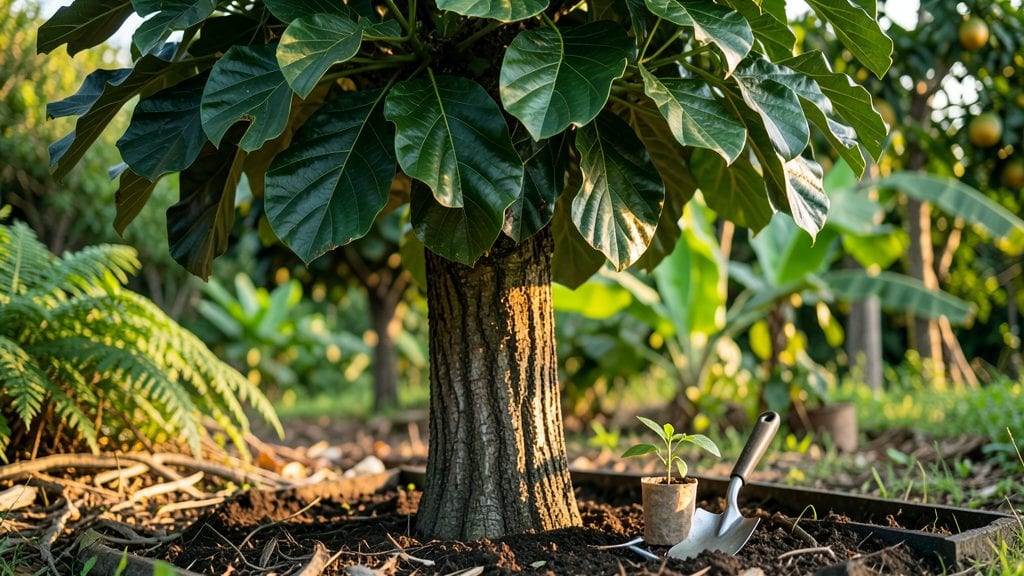
Planting a jackfruit tree means you could be harvesting your own tropical giant fruit in just 2-3 years—if you nail the early steps. 🌿 I’ve watched these trees go from a 6-inch sapling to a 20-foot monster in my subtropical yard, and the key starts with the right soil and timing.
Most people rush the prep work, then wonder why their tree struggles. Don’t be one of them.
The secret isn’t complicated: jackfruit thrives in well-draining, slightly acidic soil (think 6.0–6.5 pH) mixed with compost, and it hates soggy roots. If you’re in zones 10–11, direct sowing in spring works best—just dig a hole twice as wide as the root ball and 12 inches deep.
For cooler climates, start seeds indoors 4–6 weeks before last frost, then transplant when soil hits 65°F.
Within a year, you’ll see 6–10 feet of growth if you water deeply 2–3 times a week (more in summer) and mulch heavily to keep roots cool.
The first few years are about patience—no fruit yet, but the leaves will be shockingly lush and broad, signaling you’re on the right track. That’s when the real magic begins.
Container growing? Possible, but only for dwarf varieties in 15+ gallon pots—expect slower growth and smaller fruit. For full-size trees, give them 30–40 feet of space and a sunny spot with 6+ hours of direct light daily. Here’s where most gardeners trip up—so let’s fix that.
📚 In This Guide
- What you need
- Instructions
- Tips and common mistakes
- Wrapping up and next steps
What you need
- ● Jackfruit seed or sapling: 1 high-quality seed (or a young sapling from a nursery). Choose seeds from ripe, organic jackfruit for best results.
- ● Well-draining soil: 5+ gallons of a mix of topsoil (60%), compost (30%), and perlite/sand (10%) to prevent root rot.
- ● Pot or planting hole: For seedlings: A 5-gallon container with drainage holes.
- ● For outdoor planting: A hole twice as wide and deep as the root ball.
- ● Organic fertilizer: 1 cup of balanced fertilizer (10-10-10) or compost tea to kickstart growth.
- ● Watering can or hose: With a gentle spray nozzle for hydration.
- ● Mulch: 2–3 inches of straw or wood chips to retain moisture and regulate soil temperature.
- ● Garden trowel or shovel: For digging and transplanting.
- ● Pruning shears: Small, sharp pair for trimming excess roots or branches.
- ○ pH testing kit (optional but helpful): To ensure soil pH is between 6.0–7.5 (jackfruit thrives in slightly acidic to neutral soil).
- ● Gloves: Heavy-duty to protect hands from thorns and rough bark.
- ● Climate: Jackfruit loves tropical or subtropical zones (USDA 10–12). Temperatures should stay above 50°F (10°C) year-round.
- ● Sunlight: Full sun (6+ hours daily) for optimal growth.
- ● Water access: Regular watering (especially in dry climates) until established. Mature trees tolerate drought but grow faster with consistent moisture.
- ● Space: Mature jackfruit trees can reach 60–100 feet tall—plant at least 30 feet from structures or other trees.
Step-by-Step instructions for planting a jackfruit tree
Here's how to get your tropical giant off to a strong start—with minimal fuss.
🌱 Step 1: Choose and Prepare Your Planting Site
Jackfruit thrives in full sun with at least 6 hours of direct light daily, so pick the warmest, most sheltered spot in your yard. The soil should drain well—jackfruit roots despise soggy conditions. If your native soil is heavy clay, amend it with 3-4 inches of compost mixed into the top 12 inches of earth. This improves aeration and nutrient availability.
Here's the thing—jackfruit trees grow 50-100 feet tall in the tropics, so give it space. Plant at least 20 feet from structures, power lines, or other trees unless you're happy with pruning later. Dig a hole twice as wide as the root ball but no deeper—this encourages roots to spread horizontally rather than settling in a tight pocket.
🪴 Step 2: Plant the Sapling at the Right Depth and Support It
Remove the sapling from its container and gently loosen the roots if they're circling. Place it in the hole so the top of the root ball sits level with the surrounding soil—burying too deep suffocates the trunk, while planting too high stresses the plant. Backfill with native soil mixed with a handful of slow-release fertilizer (look for one with balanced NPK like 10-10-10).
Tamp the soil lightly around the base with your hands or a board to eliminate air pockets, then water deeply until moisture reaches 6 inches down. I like to add 3-4 inches of mulch (wood chips or straw) around the base but keep it 6 inches away from the trunk to prevent rot. A young jackfruit benefits from a stake and tie system—drive a 4-foot wooden stake into the ground at a 45-degree angle behind the tree and secure the trunk with soft ties to prevent wind damage.
☀️ Step 3: Water Consistently and Monitor for Early Stress
Jackfruit saplings need deep watering 2-3 times per week for the first 6 months, ensuring moisture reaches 12 inches down. You'll know you're doing it right when the soil feels damp but not soggy at that depth. Overwatering is the fastest way to kill a young tree—roots need oxygen, not a swamp. After the initial planting shock (usually 2-4 weeks), you'll see new leaves emerge—this is your signal the tree is settling in.
Watch for yellowing leaves, which usually means either overwatering or nutrient deficiency. If the soil feels dry at the surface but the lower layers stay wet, you're watering too often. If leaves curl or drop, it's often underwatering or low humidity. In hot climates, I mist the leaves lightly in the afternoon to mimic tropical conditions—just don't overdo it, or you'll invite fungal issues.
✂️ Step 4: Prune and Train for Structural Strength
When your jackfruit reaches 3-4 feet tall, it's time to shape it. Remove any suckers (shoots growing from the base) and weak, crossing, or inward-growing branches to encourage a strong, open canopy. Prune just above a leaf node (the bump where leaves attach) to promote new growth. I also trim the top leader (main upward stem) by 1/3 to force lateral branching—this creates a bushier tree that bears fruit more reliably.
This is the moment that matters: never prune during wet seasons. Jackfruit wounds heal slowly, and rainy weather invites rot. Wait until dry, sunny days to cut, and sterilize your pruners with rubbing alcohol between cuts. After pruning, apply a layer of mulch around the base (but not touching the trunk) to retain moisture and regulate soil temperature.
🌿 Step 5: Fertilize and Prepare for First Fruiting
After the first year, switch to a monthly feeding schedule with a balanced fertilizer (like 10-10-10) in spring and summer. In fall and winter, reduce to every 6-8 weeks—jackfruit is semi-dormant in cooler months. I also top-dress with 2-3 inches of compost in early spring to replenish nutrients. Young trees may not fruit for 2-3 years, but with consistent care, you'll see flower spikes by year 3—these are your first signs of potential fruit.
Real talk: Jackfruit is not cold-hardy. If you're in a marginal climate, protect young trees with burlap wraps in winter or move potted saplings indoors when temperatures drop below 40°F. Even a light frost can kill a young jackfruit, so plan ahead if you're pushing its limits.
Tips & tricks for planting a thriving jackfruit tree
Between us, I've watched dozens of jackfruit saplings struggle—and most of it came down to these few critical details. Let's make sure yours thrives from day one.
Soil Prep is Everything: That 3-4 inches of compost in Step 1 isn't just fluff—it's your secret weapon against poor drainage. For heavy clay soils, I go the extra mile and mix in 1 part perlite or coarse sand per 3 parts soil to create proper aeration. Test your drainage by digging a hole, filling it with water, and checking if it drains within 30 minutes—if not, you're not ready to plant yet.
The Staking System That Actually Works: That 4-foot wooden stake in Step 2 needs to be positioned correctly. Drive it 6-8 inches away from the trunk (not right next to it) at a 45-degree angle to prevent girdling as the tree grows. Use soft garden ties or old t-shirts instead of wire—they won't cut into the bark as the trunk thickens. I've seen too many trees with permanent scars from improper staking.
Watering Wisdom: The 2-3 times per week guideline in Step 3 assumes average conditions—adjust for your climate. In my 90°F+ zone, I water every other day until the soil is damp 12 inches down, while in 70°F zones, twice weekly works perfectly. The key is consistency—jackfruit roots hate moisture fluctuations. I use a soil moisture meter to verify depth rather than guessing.
Pruning Like a Pro: When you reach Step 4, remember that 1/3 trim of the top leader isn't about size—it's about light penetration. The goal is to create an open canopy where sunlight reaches all branches. I mark my cuts with a white correction pen before making them to visualize the final shape. And never remove more than 25% of foliage at once—this tree is already stressed from transplant shock.
Pro Tips for Planting Jackfruit Tree
- Between us, I've watched dozens of jackfruit saplings struggle—and most of it came down to these few critical details.
- Soil Prep is Everything: That 3-4 inches of compost in Step 1 isn't just fluff—it's your secret weapon against poor drainage.
- The Staking System That Actually Works: That 4-foot wooden stake in Step 2 needs to be positioned correctly.
Frequently asked questions
Got questions about growing your own jackfruit tree?
Here are answers to the most common ones—from timing to troubleshooting—so you can plant with confidence!
When is the best time to plant a jackfruit tree?
The ideal time to plant jackfruit is during the early rainy season (spring/summer in tropical zones) or late summer. This gives roots time to establish before dry spells. In cooler climates, wait until after the last frost—jackfruit hates cold! If planting in containers, spring is perfect for transplanting.
How long does it take for a jackfruit tree to bear fruit?
Patience is key! With proper care, most jackfruit trees start producing fruit in 3–5 years, but some may take up to 7 years. Dwarf varieties (like ‘Jumbo’) can fruit in as little as 2–3 years. Ensure full sun, well-draining soil, and consistent watering to speed things up.
Can I grow a jackfruit tree from seed, or should I buy a sapling?
Both work, but results differ! Seeds take longer (5+ years to fruit) and may not match the parent tree’s quality. Saplings (1–2 years old) fruit faster and are more reliable. If using seeds, soak them 24 hours first—jackfruit seeds have a hard outer shell. For best results, buy a grafted sapling from a tropical nursery.
Why is my jackfruit tree’s leaves turning yellow?
Yellow leaves usually signal overwatering, poor drainage, or nutrient deficiency. Check soil moisture—jackfruit trees prefer dry-but-not-droughty conditions. Amend soil with compost and ensure pots/containers have drainage holes. Yellowing edges? It could be iron deficiency—try a citrus-specific fertilizer.
Can jackfruit trees grow in containers, or do they need a yard?
Yes! Jackfruit trees thrive in large containers (15+ gallons) for 3–5 years before needing ground planting. Use a fast-draining mix (cactus soil + perlite). Dwarf varieties like ‘Honey Jack’ are ideal for pots. Just move them indoors (or to a garage) if temps drop below 50°F (10°C)—they’re tropical through and through!
Wrapping up and next steps
Planting a jackfruit tree is a rewarding adventure—one that transforms your garden into a tropical oasis in just 2-3 years! 🌳 With the right soil, sunlight, and care, you’ll soon enjoy its lush foliage, fragrant flowers, and delicious fruit.
Whether you’re a seasoned gardener or a beginner, this giant tree is worth the effort.
Now that you’re armed with the knowledge, take that first step: pick your spot, gather your supplies, and start planting. Your future jackfruit harvest—and the joy of nurturing a tropical giant—awaits! 🌱✨