
Watering
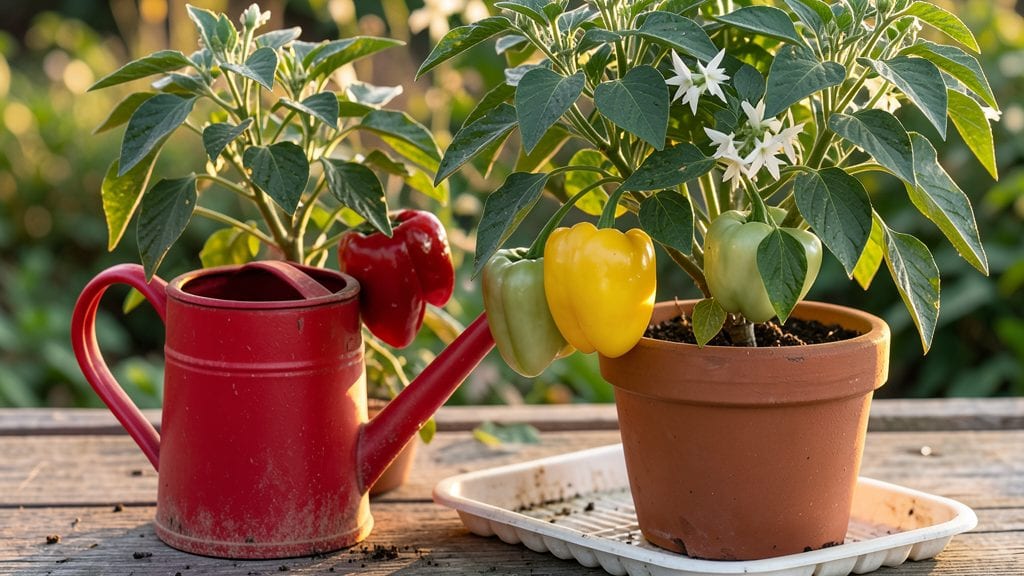
Your pepper plants are begging for help—those yellow leaves aren’t a death sentence, just a cry for better water habits. 🌱 I’ve nursed back more than a dozen overwatered peppers, and the fix is simpler than you’d think: stop guessing and start measuring.
The key is catching the problem early, before roots drown in soggy soil.
Overwatering sneaks up when soil stays damp for days, suffocating roots and starving leaves of oxygen. You’ll spot it first on older leaves turning yellow, then wilting even when soil feels moist.
The fix starts with a finger test: stick your hand in the soil—if it’s wet past 2 inches down, hold off on watering. Peppers hate soggy feet.
In just a few days, you’ll see the turnaround: trim any blackened roots, adjust your watering to once a week (or less in humid weather), and use a pot with drainage holes.
Within two weeks, those leaves will perk up again, and you’ll have a plant that’s actually thriving—not just surviving. The secret? Less water, more air around those roots.
This works for all peppers—jalapeños, bell peppers, even those finicky heirlooms—no matter your climate. The only rule? Don’t water until the top inch of soil feels dry. Your plants will thank you with glossy green leaves and a bounty of peppers by summer.
Root Causes of Overwatered Peppers
Overwatering pepper plants isn’t just a gardening mistake—it’s often the result of well-intentioned but misguided habits. Understanding the why behind soggy soil and struggling peppers is the first step to fixing the problem.
Below, we break down the most common culprits, backed by science, so you can adjust your approach and save your plants.
🌱 The silent killer of pepper roots
Pepper plants thrive in well-draining soil, but many gardeners unknowingly trap water in their pots or garden beds. Here’s why this happens:
- Compacted or heavy soil (like clay) holds excess moisture, suffocating roots by cutting off oxygen.
Without air pockets, roots can’t respire, leading to root rot (Phytophthora and Pythium fungi love this environment). - Small or shallow pots lack drainage holes or soil depth, causing water to pool at the bottom.
A general rule: Pepper plants need at least 12–18 inches of soil depth to develop strong roots. - Improper potting mix: Cheap, peat-heavy, or seed-starting mixes retain moisture for too long. Peppers prefer a chunky, airy mix (think 60% inorganic matter like perlite or vermiculite).
Actionable fix: Test your soil’s drainage by filling a pot with water—if it drains in under 30 minutes, it’s good. If not, amend with coarse sand, perlite, or coconut coir.
💦 When “more is better” backfires
Many gardeners assume peppers need daily watering, especially in hot climates. But peppers are drought-tolerant once established—they prefer consistent moisture, not soggy conditions. Here’s why overwatering becomes a habit:
- Mistaking wilting for thirst: Peppers often wilt in hot afternoons (a natural response to heat stress), but watering then can drown roots before they recover.
- Ignoring weather changes: Rainy seasons or humid days trick gardeners into thinking plants need less water—but excess rain + poor drainage = disaster.
- Automatic watering systems (like drip irrigation) left on timers without soil checks can drown plants overnight.
Actionable fix: Stick your finger 1–2 inches into the soil—if it’s damp, wait. Use a moisture meter for precision, and water deeply but infrequently (2–3 times per week in hot weather).
🏺 Not all containers are created equal
Some pots wick moisture or insulate soil, keeping it damp longer than intended. Common offenders:
- Terracotta pots (un glazed) can dry out quickly, but glazed ceramic or plastic pots trap humidity, creating a greenhouse effect that promotes rot.
- Fabric grow bags hold moisture near the roots for extended periods if not monitored closely.
- Self-watering containers (like wicking beds) require constant monitoring—if the reservoir runs dry, roots suffocate.
Actionable fix: Choose terracotta, coconut coir pots, or containers with drainage holes. If using self-watering systems, empty excess water daily and check soil moisture manually.
🍄 When microbes move in
Overwatered peppers become a buffet for pathogens that thrive in wet conditions. Key culprits:
- Root rot (Phytophthora, Pythium): Fungi attack roots in anaerobic (oxygen-lacking) soil, causing them to turn black and mushy.
- Damping-off (affects seedlings): Fungal spores in overly wet soil smother young stems, causing them to collapse.
- Bacterial leaf spot (Xanthomonas): Spreads via water splashing, leading to yellow, oily spots on leaves.
Actionable fix:
- Sterilize pots with a 10% bleach solution before reuse.
- Apply fungicide (copper-based or neem oil) if you spot signs of infection.
- Space plants for airflow—crowded peppers trap humidity.
🌡️ When the environment conspires against you
Not all peppers need the same water in summer vs. winter. Common climate-related mistakes:
- Summer heat: Evaporation speeds up, so soil dries faster—but overwatering to “compensate” can lead to runoff and poor absorption.
- Winter dormancy: Peppers slow growth in cool weather and need less water—yet gardeners keep watering on schedule.
- High humidity: Air already holds moisture, so watering on top just adds to the problem.
Actionable fix:
- Adjust watering by season: Less in winter, more in spring/summer (but deeply).
- Water in the morning to reduce evaporation and fungal risks.
- Mulch with straw or wood chips to regulate soil moisture.
Fix Overwatered Pepper Plants Fast
Overwatering your pepper plants can turn vibrant green leaves into sad, yellow messes—but don’t panic! With the right steps, you can revive them and prevent future soggy soil disasters.
Below, we’ll map the most common causes of overwatering to practical fixes, plus pro tips to keep your peppers thriving. Let’s get those plants back in fighting shape!
Before diving into solutions, identify why your peppers are struggling.
Overwatering symptoms often overlap with other issues (like nutrient deficiencies or pests), so rule these out first: - Mushy stems or blackened roots → Classic overwatering. - **Yellowing only on older leaves → Could be underwatering or poor drainage. - Wilting despite wet soil → Root rot is likely. - Yellowing and curling leaves → Possible fungal infection (e.g., powdery mildew).
If it’s 100% overwatering, proceed to the fixes below.
1. 🚰 Drain the Excess Water Immediately Problem: Soggy soil suffocates roots, cutting off oxygen and inviting rot. Fix:
- Stop watering right away—no more H₂O until the soil dries out.
- Move the pot to a dry, shaded spot (if in a container).
If in-ground, avoid watering that area for 3–5 days. - Check drainage: If your pot has no holes, transfer the plant to a well-draining container** ASAP. No drainage? Drill holes now—peppers hate wet feet!
💡 Pro Tip: If your pepper plant is in a saucer, empty it completely after watering. Stagnant water = root rot waiting to happen.
2. 🧹 Revive the Roots with Fresh Soil
Problem: Compacted, waterlogged soil blocks airflow and traps harmful bacteria. Fix: - Gently remove the plant from its pot (if container-grown) and loosen the root ball with your fingers.
Trim any black, mushy roots with clean scissors—healthy roots are firm and white. - Repot in fresh, well-draining soil. Mix 50% potting mix with 50% perlite or coco coir to improve aeration.
Avoid garden soil—it compacts and holds too much moisture. - For in-ground peppers: Loosen the top 4–6 inches of soil around the plant with a fork or trowel. Add a 2-inch layer of compost or sand to improve drainage.
⚠️ Warning: If roots are more than 50% rotted, your plant may not recover. Start fresh with a new seedling if needed.
3. 🌡️ Adjust Watering for a Drought-Tolerant Pepper
Problem: Peppers are drought-resistant but hate soggy conditions. Overwatering often means inconsistent moisture levels. Fix: - Water only when the top 1–2 inches of soil are dry.
Stick your finger in—if it’s damp, wait. - Water deeply but infrequently: Give peppers 1–1.5 inches of water per week (adjust for heat/humidity).
Use a soaker hose or drip irrigation to deliver water slowly at the base. - Avoid wetting leaves: Water at the soil level to prevent fungal diseases like blight.
🎯 Prevention Hack: Use a moisture meter or calibrated watering can to track soil moisture. No tools? The "squeeze test" works: Grip a handful of soil—if it crumbles easily, it’s dry enough to water.
4. 🌿 Boost Recovery with Proper Care
Problem: Weakened plants need extra love to bounce back. Fix: - Prune yellow leaves (but leave green ones—they photosynthesize!).
Use clean, sharp scissors to avoid spreading disease. - Fertilize lightly with a balanced, water-soluble fertilizer (10-10-10 or 5-5-5) only after roots show signs of recovery (new growth or firmer stems).
Over-fertilizing now can burn stressed roots. - Increase airflow: Space plants 18–24 inches apart and prune nearby foliage to improve circulation.
💪 Recovery Sign: Within 7–10 days, you should see new green leaves emerging. If not, reassess drainage or consider repotting.
Once your peppers are back on track, lock in these habits to avoid future yellow-leaf disasters:
| Mistake | Fix It With… | Why It Works |
|---|---|---|
| Watering on a schedule | Use the "finger test" (check soil moisture) | Soil dries at different rates based on weather. |
| Small pots with no drainage | Upgrade to 1-gallon+ pots with drainage holes | More root space + airflow = less rot. |
| Heavy clay soil | Amend with perlite, vermiculite, or compost | Lightens soil for better drainage. |
| Overhead watering | Switch to drip irrigation or a watering wand | Keeps leaves dry, preventing fungal growth. |
| Ignoring weather changes | Adjust watering for rain, heatwaves, or humidity | Peppers need less water in rain and more in extreme heat. |
🌡️ Climate Check:
- Hot/dry climates? Water early in the morning to reduce evaporation.
- Cool/humid climates? Water less frequently—soil stays damp longer.
Overwatering might’ve stalled your pepper plant’s growth, but with these fixes, you’re days away from a comeback. Remember: Peppers would rather be underwatered than overwatered—they’re tough little survivors! Monitor their progress, adjust as needed, and soon you’ll be harvesting juicy, vibrant peppers instead of yellowing leaves.
Need a quick reference? Bookmark this: ✅ Stop watering immediately. ✅ Repot in fresh, dry soil (if needed). ✅ Water only when soil is dry. ✅ Prune dead leaves and boost airflow.
Frequently asked questions
Why do my pepper plant leaves turn yellow first on the bottom?
Yellowing on older leaves is your pepper’s first sign of distress from overwatering. Roots suffocate when soil stays soggy, cutting off nutrients that travel upward. The plant sacrifices older leaves first to protect new growth. Check for mushy stems or black roots—classic overwatering symptoms.
How often should I water peppers to avoid soggy soil?
Peppers thrive on deep but infrequent watering. Stick your finger 1-2 inches into soil—water only when dry. In summer, 2-3 times per week is typical; reduce to once weekly in cooler weather. Always water at soil level, not leaves, to prevent fungal issues.
Can I save a pepper plant with black, mushy roots?
Trim away all blackened roots with clean scissors, then repot in fresh, well-draining mix (50% potting soil + 50% perlite). If more than 50% of roots are rotted, recovery is unlikely. For mild cases, withhold water for 3-5 days and monitor closely for new growth.
What’s the best pot for peppers to prevent overwatering?
Choose terracotta or fabric grow bags with drainage holes—these breathe best. Avoid plastic or glazed ceramic, which trap moisture. For in-ground plants, amend heavy clay soil with 2 inches of compost or coarse sand to improve drainage. Always ensure pots are at least 12 inches deep.
Will my overwatered peppers still produce fruit?
Yes! Once you fix drainage and withhold water, peppers bounce back surprisingly fast. Focus on new growth first—healthy leaves mean fruit will follow. Expect a 2-3 week delay in production after recovery, but saved plants often yield just as well as never-overwatered ones.