
Diseases
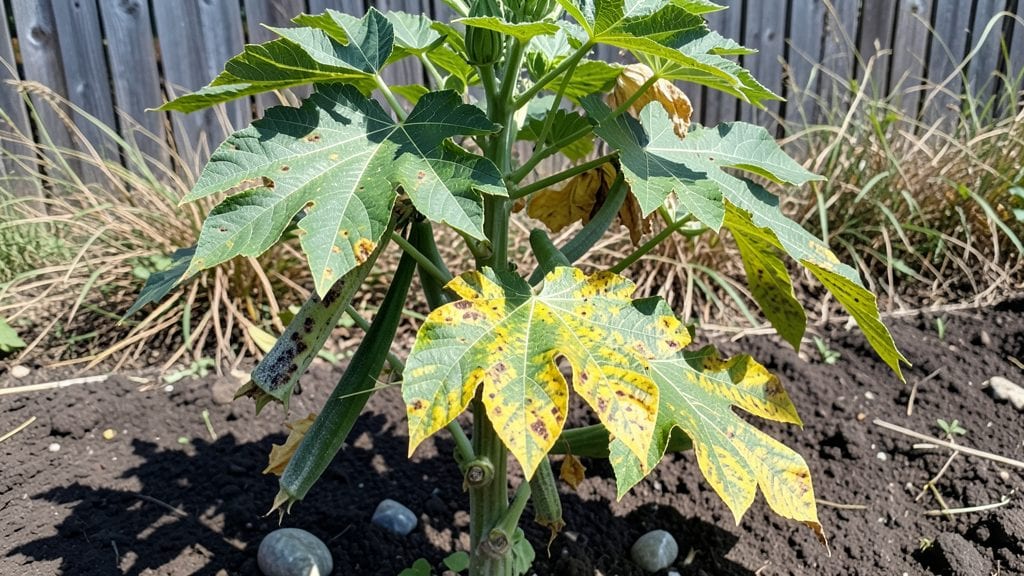
Okra plant diseases can turn your thriving crop into a sad, spotted mess if you don’t catch them early. 🌱 I’ve seen powdery white fuzz, blackened leaves, and wilting stems ruin entire plants—and learned how to stop them before they spread.
The key is knowing what to look for, acting fast, and using the right fixes.
Most problems start with too much moisture or poor airflow, but even heat-loving okra can get stressed. You’ll spot yellowing leaves (often fungal), blackened stems (bacterial rot), or holes in foliage (insect damage).
The good news? Organic sprays, copper fungicides, and pruning bad spots can save your plants before they’re history.
By the time you finish this guide, you’ll recognize early warning signs and know exactly which treatment to grab—whether it’s neem oil, baking soda spray, or simply improving airflow. Your okra will bounce back stronger than ever, and you’ll avoid the heartbreak of losing your harvest.
Works for home gardeners and large-scale growers alike—just adjust the scale of your fixes. Let’s get those plants healthy again!
Behind The Scenes Causes
Okra plants, with their delicate yet resilient nature, can fall victim to a variety of diseases that disrupt their growth and yield. Understanding why these issues arise is the first step toward prevention and treatment. Let’s break down the root causes—literally and figuratively—so you can protect your okra crop effectively.
Fungal diseases like target spot (Corynespora cassiicola), powdery mildew (Erysiphe cichoracearum), and Phytophthora root rot (Phytophthora spp.) thrive when okra plants are stressed by excess moisture, poor air circulation, and high humidity. Here’s why:
- Overhead Watering 💦: Splashing water onto leaves creates a damp environment—fungal spores love this.
Unlike soil-based watering, overhead irrigation spreads spores like wildfire, accelerating infections. - Stagnant Soil & Poor Drainage 🏞️: Compacted or clay-heavy soil traps excess water at the roots, inviting root rot and stem cankers.
Fungi like Phytophthora multiply rapidly in waterlogged conditions, cutting off nutrient uptake. - Close Planting & Crowding 🌿: When okra plants grow too close together, airflow is restricted.
Warm, humid microclimates form, giving fungi the perfect breeding ground. Powdery mildew, for example, spreads 10x faster in crowded patches. - Old Crop Debris 🗑️: Leftover plant material from previous seasons harbors fungal spores. If not removed, these spores overwinter and reinfect new plants the next growing season.
Actionable Fix: Space plants 18–24 inches apart, water at the base (not overhead), and rotate crops annually to break fungal cycles.
Bacterial diseases such as bacterial blight (Xanthomonas campestris pv. malvacearum) and leaf spot (Pseudomonas syringae) exploit physical wounds or weak plant defenses. Here’s how they gain entry:
- Insect Damage 🐜: Chewing insects (like aphids or beetles) create tiny openings in leaves and stems.
Bacteria sneak in through these wounds, triggering water-soaked lesions that expand into necrotic spots. - Poor Sanitation 🧼: Contaminated tools, hands, or even rainwater splashing from infected plants can spread bacteria. Xanthomonas survives on plant debris and thrives in warm, rainy conditions (70–90°F). - Stress from Environmental Factors ☀️🌧️: Heat stress, drought, or nutrient deficiencies weaken okra’s immune response.
Stressed plants are 3x more susceptible to bacterial infections because their natural defenses (like calloused tissue) fail to form properly. - Seedborne Pathogens 🌱: Some bacteria, like Pseudomonas, can lurk on seeds.
If infected seeds are planted, the disease spreads systematically through the plant’s vascular system, causing wilting and stunting.
Actionable Fix: Sterilize tools with rubbing alcohol, remove infected plants immediately, and avoid overhead irrigation during rainy seasons.
Viruses like okra mosaic virus (OMV) or cucumber mosaic virus (CMV) don’t spread on their own—they rely on insect vectors (aphids, whiteflies, or beetles) to jump from plant to plant. Here’s the chain reaction:
- Aphid Feeding 🐞: These tiny pests inject viral particles while feeding on sap. A single aphid can transmit CMV in under a minute.
Once infected, okra shows mosaic patterns, stunting, and curled leaves. - Mechanical Transmission 🤲: Gardeners unknowingly spread viruses when handling infected plants without washing hands or tools.
Even a small nick from pruning can transfer viral sap to healthy plants. - Weed Hosts 🌿: Many viruses (like OMV) overwinter in weeds such as pigweed or morning glory.
If these weeds grow near okra, insects will visit both, spreading the virus effortlessly. - Long-Distance Travel 🚗: Infected plant material (seeds, cuttings, or transplants) can transport viruses across regions. Always source certified disease-free seeds to avoid introducing new pathogens.
Actionable Fix: Use row covers to block aphids, remove weed hosts, and quarantine new plants for 2 weeks before introducing them to the garden.
Okra plants aren’t just fighting diseases—they’re battling environmental stressors that make them vulnerable. Key triggers include:
- Extreme Temperature Swings ❄️☀️: Okra prefers warmth (75–90°F).
Sudden drops below 50°F or heatwaves above 100°F shock the plant, reducing its ability to fight pathogens. Cold stress also slows nutrient uptake, making roots more prone to rot. - Nutrient Imbalances 🌱: Too much nitrogen promotes lush foliage but weak stems—ideal for fungal infections.
Conversely, phosphorus or potassium deficiencies weaken cell walls, making plants more susceptible to bacterial entry. - Poor Soil Health 🏚️: Compacted or acidic soil (pH < 6.0) limits root growth, reducing the plant’s ability to absorb water and nutrients.
Weak roots = easier entry for soilborne pathogens like Fusarium or Rhizoctonia.
Actionable Fix: Conduct a soil test, amend with compost, and ensure balanced fertilization (especially potassium for disease resistance).
Sometimes, the biggest culprit is us. Common mistakes that worsen okra diseases include:
- Ignoring Early Symptoms 🚨: A single yellow leaf or small spot can escalate into a full-blown epidemic if left unchecked. Fungal spores double every 4–6 hours in ideal conditions. - Overhead Irrigation at Night 🌙: Wet leaves stay damp overnight, creating the perfect fungal incubator. Nighttime watering increases disease risk by 40%. - Monocropping 🌾: Planting okra in the same spot year after year exhausts soil nutrients and allows pathogen buildup.
Rotate with non-host crops like beans or grasses to disrupt disease cycles. - Using Infected Mulch or Compost 🌿: Homemade compost with diseased plant material can reintroduce pathogens. Solarize soil (cover with clear plastic for 4–6 weeks) to kill pathogens before planting.
Actionable Fix: Remove and destroy infected plants (don’t compost them!), water in the early morning, and practice 3-year crop rotation.
Quick Fixes for Okra Ailments
Okra plants can fall victim to a variety of diseases, but the good news is that most issues can be managed—or even prevented—with the right approach.
Below, we’ve mapped out practical solutions for common okra diseases, from fungal infections to bacterial blights, along with prevention tips to keep your garden thriving. Think of this as your go-to troubleshooting guide for a healthier harvest.
🔥 Target: Powdery Mildew & Downy Mildew
Powdery mildew coats leaves in a white, powdery film, while downy mildew appears as yellow patches with fuzzy gray undersides. Both thrive in humid, poorly ventilated conditions.
How to Fix It:
- 🍳 Spray with Baking Soda Solution Mix 1 tbsp baking soda + 1 tsp dish soap + 1 gallon water in a spray bottle. Apply to both sides of leaves every 5–7 days until symptoms disappear. Baking soda raises the pH, creating an unfavorable environment for fungi.
- 👨🍳 Prune and Dispose Infected Leaves Remove heavily infected leaves immediately (don’t compost them!) and destroy them to prevent spread. Thin out crowded plants for better airflow.
- 🥘 Use Fungicidal Sprays (When Needed) For severe cases, opt for neem oil (2 tbsp per gallon of water) or a copper-based fungicide. Reapply after rain.
💡 Prevention Tips: ✔ Space plants 18–24 inches apart to reduce humidity. ✔ Water at the base (avoid overhead sprinkling). ✔ Rotate crops—don’t plant okra in the same spot yearly.
🍄 Target: Target Spot & Leaf Spot
These diseases show up as dark, concentric rings on leaves, causing them to yellow and drop prematurely.
How to Fix It:
- 🔪 Remove and Destroy Infected Leaves Snip off spots with sterilized scissors and dispose of them in a sealed bag (not compost).
- ⏰ Apply Copper Fungicide Early Spray copper fungicide (like Cheshunt Compound) preventively at the first sign of spots. Follow label instructions for frequency.
- 🌡️ Boost Plant Health with Compost Tea A weekly foliar spray of compost tea strengthens plant defenses. Mix 1 cup compost + 5 gallons water, steep for 24 hours, and strain before use.
💡 Prevention Tips: ✔ Avoid overhead watering—use drip irrigation instead. ✔ Plant resistant varieties like ‘Clemson Spineless’ or ‘Emerald.’
🍅 Target: Bacterial Leaf Spot & Blight
Symptoms include water-soaked spots that turn yellow/brown, often with a white bacterial ooze in humid conditions.
How to Fix It:
- 🚿 Clean Up Debris Immediately Remove and burn or deep-bury infected plant material to stop bacterial spread.
- 🧼 Use a Copper or Streptomycin Spray Mix 1 tsp copper sulfate + 1 gallon water or use streptomycin (follow label). Spray every 7–10 days until new growth appears.
- 🌱 Rotate Crops & Solarize Soil Plant okra in a different location next season. For severe cases, solarize soil (cover with clear plastic for 4–6 weeks in summer) to kill bacteria.
💡 Prevention Tips: ✔ Sterilize tools with rubbing alcohol between plants. ✔ Avoid wet foliage—water early in the day so leaves dry quickly.
🌿 Target: Fusarium & Verticillium Wilt
These soil-borne fungi clog plant vessels, causing yellowing, wilting, and stunted growth—often fatal.
How to Fix It:
- 🔄 Replace Infected Soil If wilt is severe, remove the plant and replace topsoil with fresh, sterilized mix. Solarization (see above) helps.
- 💧 Improve Drainage Amend soil with compost + perlite to prevent waterlogging, which fungi love.
- 🌱 Plant Resistant Varieties Choose ‘Parade’ or ‘Jumbo Green’ okra, which tolerate wilt better.
💡 Prevention Tips: ✔ Test soil for fungal pathogens before planting. ✔ Crop rotate—wait 3–4 years before replanting okra in the same spot.
🐜 Target: Virus Spread by Sap-Sucking Pests
Aphids and whiteflies transmit okra mosaic virus, causing mottled leaves and stunted pods.
How to Fix It:
- 🍳 Blast Off Pests with Soap Spray Mix 1 tbsp castile soap + 1 quart water and spray directly on pests (avoid flowers). Repeat every 3–4 days.
- 🕷️ Introduce Beneficial Insects Release ladybugs or lacewings (available at garden centers) to eat aphids naturally.
- 🌿 Use Row Covers Early Cover young plants with floating row covers to block pests before they spread viruses.
💡 Prevention Tips: ✔ Inspect plants weekly—catch infestations early. ✔ Plant companion crops like marigolds to repel pests.
If your plants are wilting, yellowing, or just looking sad, try these quick fixes:
- 💧 Check Watering – Okra needs 1–2 inches of water weekly, but drought stress makes plants vulnerable to disease.
- 🌿 Fertilize Lightly – Use a balanced 10-10-10 fertilizer at planting, then switch to low-nitrogen (like 5-10-10) when pods form.
- ☀️ Ensure Full Sun – Okra needs 6–8 hours of sun daily; shade invites fungal growth.
- 🌡️ Monitor Temperature – Okra thrives in 70–90°F; extreme heat or cold weakens plants.
Final Pro Tip: 🎯 Act fast! The sooner you treat a disease, the easier it is to save your okra. When in doubt, snip, spray, and isolate—your future harvest will thank you!
Frequently asked questions about okra plant diseases
What are the most common signs of fungal diseases in okra?
Look for white powdery coatings (powdery mildew), yellow spots with dark rings (target spot), or fuzzy gray patches on leaf undersides (downy mildew). Fungal issues often start on older leaves and spread upward. If you see these, act fast—fungi double in hours under humid conditions!
Can bacterial infections be cured once they appear?
Unfortunately, no—bacterial diseases like leaf spot or blight are usually incurable. The best approach is to remove infected plants immediately, sterilize tools, and treat remaining plants with copper spray to slow spread. Prevention (like proper spacing and sanitation) is your best defense.
How do I know if my okra has a virus?
Viral infections show as mottled or yellow-green patterns on leaves, stunted growth, and curled pods. Unlike fungal/bacterial issues, viruses can’t be treated—focus on removing infected plants and using row covers to block aphids (the main virus spreaders). Test new plants for 2 weeks before introducing them to your garden.
Is it safe to compost okra plants with diseases?
No! Never compost infected okra—fungal/bacterial spores or viruses can survive and reinfect your soil. Instead, bag and trash diseased plants (or burn them if possible). For severe cases, solarize soil (cover with clear plastic for 4–6 weeks) to kill pathogens before replanting.
What’s the fastest way to stop powdery mildew?
Mix 1 tbsp baking soda + 1 tsp dish soap + 1 gallon water, spray both sides of leaves at dawn, and repeat every 5–7 days. For stubborn cases, add 1 tsp neem oil to the mix. Thin plants to improve airflow—this cuts humidity where mildew thrives!