
Diseases
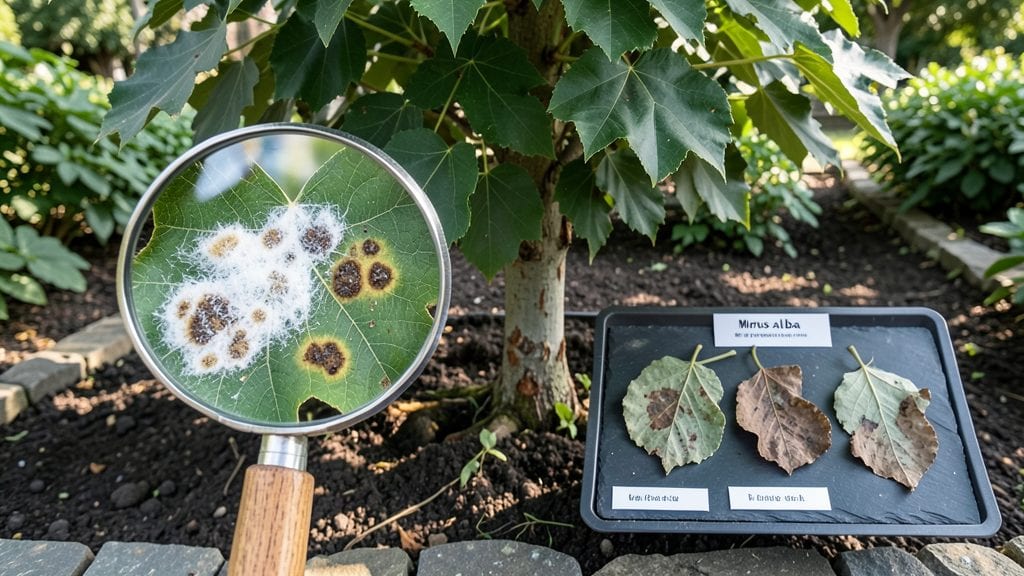
Mulberry plant diseases can turn your lush berry harvest into a sad, spotted mess if you don’t catch them early. 🌿 I’ve seen anthracnose blacken leaves overnight and powdery mildew turn branches into ghostly white skeletons—both of which I’ll help you fight before they ruin your tree.
The good news? Most mulberry problems have simple fixes once you know what to look for.
Fungal infections like anthracnose and powdery mildew love damp leaves and crowded branches, while bacterial issues such as canker appear as oozing sores on the bark. Mulberries also attract pests that spread disease, so proper spacing and sanitation are your first line of defense.
Resistant varieties like ‘Illinois Everbearing’ can save you headaches down the road.
You’ll learn to spot early symptoms—yellowing leaves, dark spots, or sticky sap—and how to treat them with organic sprays, pruning, or copper-based fungicides. The key is acting fast: a single diseased leaf left unchecked can spread to the whole tree in weeks.
With the right approach, your mulberry will bounce back stronger than ever.
Whether you’re dealing with a young sapling or a mature tree, these solutions work for all sizes. Let’s get your mulberry back to producing those juicy berries without the drama. Here’s how to tackle each problem step by step.
Root Causes Of Mulberry Ailments
Mulberry trees, like any living plant, are vulnerable to diseases when their natural defenses weaken. Understanding why these issues arise helps you take proactive steps to protect your trees.
Below, we break down the key triggers behind mulberry plant diseases—from environmental stress to biological invaders—so you can address them before they spread.
Mulberries thrive in specific conditions, and when those are disrupted, their immune system falters, making them susceptible to pathogens.
- Poor Drainage & Waterlogging Mulberry roots need well-draining soil to avoid suffocating in excess moisture.
When soil stays soggy for days, roots rot (a condition called phytoftora root rot), inviting fungal invaders like Botryosphaeria or Fusarium. Actionable fix: Amend clay-heavy soil with compost or sand, and ensure raised beds or containers have drainage holes.
- Extreme Temperature Swings Sudden shifts—like freezing winters or scorching summers—stress mulberry trees, weakening their bark and leaves.
Cold snaps can crack branches, creating entry points for bacterial canker (Pseudomonas syringae), while heat stress reduces chlorophyll production, making leaves more vulnerable to anthracnose (Colletotrichum). Pro tip: 🌡️ Mulch heavily in winter (4–6 inches of straw or wood chips) and provide afternoon shade in hot climates to moderate temperature shocks.
- Nutrient Deficiencies A lack of potassium (K) or calcium (Ca) weakens cell walls, making mulberries more prone to bacterial leaf spot or powdery mildew.
Yellowing leaves (chlorosis) often signal iron or magnesium deficits, which suppress the tree’s ability to fight off pathogens. Quick test: Soil pH should be 6.0–7.0 for mulberries. Use a balanced fertilizer (10-10-10) in early spring and foliar spray chelated iron if leaves show interveinal yellowing.
Diseases don’t just happen—they exploit opportunities created by wounds, poor hygiene, or neighboring infected plants.
- Physical Damage from Pruning or Pests Rough pruning cuts or saw kerf (the crushed wood from power tools) create open wounds where bacterial canker or silver leaf disease (Chondrostereum purpureum) can infiltrate.
Even insect damage (like mulberry leaf roller caterpillars) weakens leaves, giving anthracnose a foothold. Best practice: ✂️ Sterilize pruners with 70% isopropyl alcohol between cuts, and seal pruning wounds with pruning sealant (for cuts > ½ inch).
- Contaminated Tools or Soil Fungal spores like Verticillium or Phytophthora linger in old mulch, garden tools, or compost piles.
If you’ve had infected mulberries before, these pathogens may persist in the soil for years, reinfecting new plants. Critical step: 🧹 Solarize soil (cover with clear plastic for 4–6 weeks in summer) or plant marigolds (natural fungicides) to suppress soil-borne diseases.
- Overcrowded Plantings Mulberries need air circulation—when branches grow too densely, powdery mildew (Erysiphe) thrives in the humid microclimate.
Similarly, root competition from nearby trees stresses mulberries, making them prone to root rot. Solution: 🌿 Prune to open the canopy (remove 20–30% of dense growth) and space new mulberries 15–20 feet apart for mature trees.
Some diseases are passive (waiting for weak hosts), while others are aggressive (spreading via vectors like insects or wind).
- Fungal Spores Riding the Wind or Rain Pathogens like anthracnose (Colletotrichum) or rust (Puccinia) spread via splashing rain or windborne spores.
Wet foliage for >24 hours creates the perfect breeding ground. Defense strategy: 🌧️ Water at the base (avoid overhead sprinkling) and remove fallen leaves (where spores overwinter).
- Insect Vectors Carrying Bacteria Aphids, scale insects, or Japanese beetles don’t just eat mulberry leaves—they transmit bacterial leaf scorch (Xylella fastidiosa) or viruses like mulberry dwarf.
A single infestation can turn a healthy tree into a disease magnet. Attack plan: 🐞 Neem oil sprays (disrupts insect life cycles) or introduce ladybugs (natural predators) to control vectors early.
- Weakened Trees from Previous Infestations If a mulberry survived one disease (e.g., root rot), its immune system is compromised, making it more susceptible to secondary infections.
For example, a tree with silver leaf disease may later succumb to canker due to reduced sap flow. Recovery tip: 🏥 Rejuvenate with compost tea (rich in beneficial microbes) and avoid over-fertilizing with nitrogen (which promotes leafy growth but weakens roots).
Key Takeaway: Most mulberry diseases are preventable when you address the root causes—whether it’s drainage, hygiene, or pest control. By tackling these triggers head-on, you’ll give your trees the best shot at staying healthy and productive!
Quick Fixes for Mulberry Plant Troubles
Now that you’ve identified the culprit behind your mulberry plant’s woes, it’s time to roll up your sleeves and get it back to thriving! Below are practical, step-by-step solutions tailored to each disease, plus prevention tips to keep future issues at bay.
Think of this as your mulberry plant’s first-aid kit—simple, effective, and easy to follow.
1. Anthracnose or Powdery Mildew?
Prune and Spray Smart **🔥 Remove the Problem First - 🔪 Trim infected leaves (at least 6 inches below the damage) using sterilized pruners (wipe with rubbing alcohol between cuts). - 🗑️ Dispose of infected debris in a sealed trash bag—do not compost it!
🍳 Fungal Spray Recipes Choose one of these organic or chemical options based on severity:
- 🌿 Organic Option:
- Mix
- Spray early morning or evening (avoid direct sunlight) until leaves are damp.
- Reapply every 7–10 days until new growth appears.
- Use
🌡️ Prevent Future Outbreaks
- ✨ Improve airflow: Space plants 3–4 feet apart and prune to open the canopy.
- 💡 Water at the base (avoid overhead watering) and water early in the day so leaves dry quickly.
- 🎯 Mulch properly: Use 2–3 inches of organic mulch (straw or wood chips) but keep it away from the trunk to prevent rot.
2. Root Rot? Save Your Mulberry’s Foundation 👨🍳 Act Fast—This Is an Emergency
⏰ Stop watering immediately if the soil is soggy.
Let it dry out for 3–5 days. - 🪴 Repot if needed: If the roots are mushy and black, remove the plant, trim rotted roots with sterilized shears, and repot in fresh, well-draining soil (mix in perlite or sand).
🍳 Revive with Fungicide
- 💊 Chemical fix: Drench the soil with fungicide (like Mycorrhizal fungi or Benlate) as directed.
- 🌿 Organic fix: Mix 1 tbsp hydrogen peroxide (3%) + 1 gallon water and water the soil. Repeat every 5 days for 2 weeks.
🌡️ Prevent Waterlogged Soil Forever
- 💡 Plant in raised beds or sloped areas to improve drainage.
- ✨ Use pots with drainage holes if growing in containers.
- 🎯 Test your soil: Aim for well-draining, slightly acidic soil (pH 6.0–6.5).
3. Bacterial Leaf Spot or Canker? Cleanse and Isolate
🔥 Remove and Destroy Infected Parts
- 🔪 Prune infected leaves/stems (cut 1 inch below the damage) and sterilize tools between cuts.
- 🗑️ Burn or trash infected plant parts—do not compost.
🍳 Bacterial Spray Solutions
- 💊 Copper-based bactericide (like Copper Sulfate) is the gold standard—spray every 10–14 days.
- 🌿 Organic alternative: Mix 1 tsp baking soda + 1 quart water + a few drops of soap and spray weekly.
🌡️ Stop the Spread
- ✨ Avoid overhead watering—use drip irrigation instead.
- 💡 Sterilize tools after each use (rubbing alcohol or bleach solution).
- 🎯 Rotate crops if growing mulberries in a garden—don’t replant in the same spot for 3+ years.
4. Scale, Aphids, or Spider Mites Causing Stress?
🔪 Knock Them Off First
- 🍳 Blast with water: Use a strong hose spray to dislodge pests from leaves.
- 🪸 Handpick large infestations (drop into soapy water).
💊 Spray Solutions
- 🌿 Neem oil spray (2 tbsp neem oil + 1 tsp soap + 1 gallon water)—reapply every 5–7 days.
- 💊 Insecticidal soap (follow label instructions) for aphids and mites.
- 🔥 Horticultural oil (for scale insects)—apply in early spring before pests hatch.
🌡️ Prevent Future Pests
- ✨ Introduce beneficial insects (ladybugs, lacewings) to eat pests naturally.
- 💡 Use reflective mulch (aluminum foil or silver plastic) to deter whiteflies.
- 🎯 Inspect new plants before bringing them home—quarantine for 2 weeks.
- 💪 Fertilize lightly: Use a balanced fertilizer (10-10-10) or compost tea to boost recovery.
- ☀️ Provide shade if the plant is weak (use 50% shade cloth for a few weeks).
- 🌧️ Deep water (1–2 inches per week) but never waterlogged.
💡 Pro Tip:** The key to long-term health? Monitor regularly! Check leaves weekly for early signs of trouble—catching issues early means less work and faster fixes.
Frequently asked questions
What are the first signs that my mulberry tree has a fungal infection?
Look for powdery white coatings (powdery mildew), dark sunken spots on leaves (anthracnose), or yellowing leaves with black veins (leaf spot). These appear first on lower leaves and spread upward. Act fast—fungal spores multiply quickly in damp conditions.
Can I save a mulberry tree with bacterial canker?
Yes, but you must act immediately. Prune out all infected branches (cut 6 inches below the oozing cankers) and sterilize tools between cuts. Apply copper fungicide every 10-14 days and avoid overhead watering. Severe cases may require removing the tree to prevent spread.
Why does my mulberry tree get powdery mildew every year?
This stubborn issue thrives in humid, crowded conditions. Improve airflow by pruning to open the canopy, water at the base (not leaves), and space plants 3-4 feet apart. Apply a baking soda spray (1 tbsp baking soda + 1 tsp soap per gallon of water) every 7-10 days during outbreaks.
Are there mulberry varieties resistant to common diseases?
Yes! 'Illinois Everbearing' and 'Texas Improved' varieties show better resistance to fungal diseases like anthracnose. For bacterial issues, 'Albemarle' mulberries handle stress better. Always choose disease-free nursery stock and quarantine new plants for 2 weeks to prevent introducing pathogens.
How do I know if my mulberry tree's roots are rotting?
Check for black, mushy roots that smell foul. Pull back the soil—healthy roots are firm and light brown. If rot is confirmed, stop watering immediately, repot in fresh well-draining soil (mix in perlite), and treat with hydrogen peroxide solution (1 tbsp per gallon of water) every 5 days for 2 weeks.