
Pruning
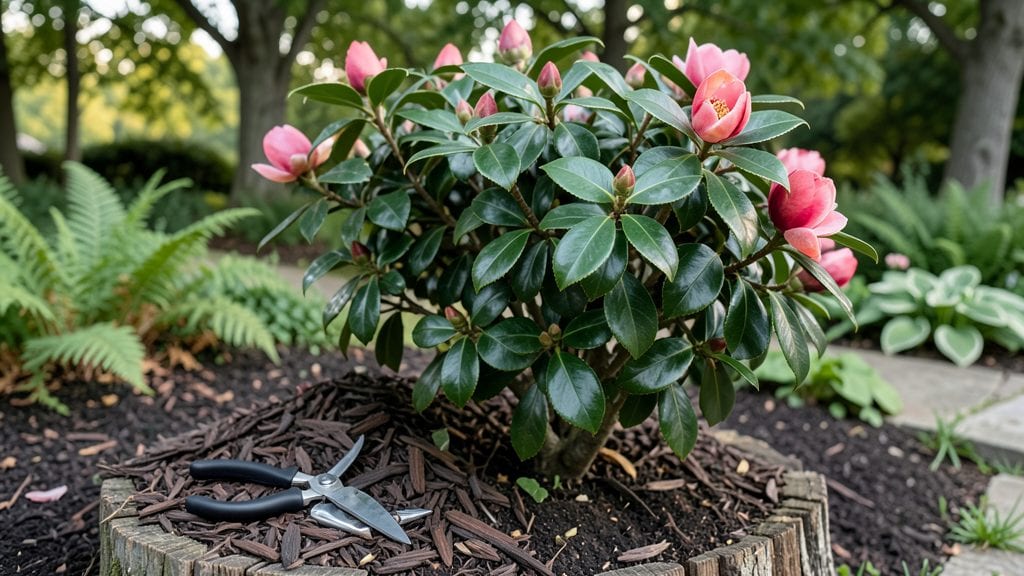
Pruning Japonica plants transforms them from occasional bloomers into year-round showstoppers with just three strategic cuts. 🌿 I learned this the hard way after my Camellia japonica sat bare for months—until I discovered the secret lies in timing and technique, not just trimming randomly.
The right approach encourages lush foliage and back-to-back blooms, while wrong cuts can leave you with a leggy, flowerless shrub.
Timing matters most—prune right after flowering in late spring or early summer when new growth signals the plant’s energy shift. You’ll need sharp pruners, a clean cutting surface, and a clear view of the plant’s structure.
The goal isn’t to shape like a topiary but to open the center for airflow and light, which triggers more blooms. Think of it as giving your plant a spa day: less stress, more flowers.
Each of those three precision cuts serves a purpose: removing dead wood first, then thinning crowded branches, and finally shaping to maintain the natural form. After pruning, your Japonica will reward you with thicker foliage and nonstop blooms—the kind that makes neighbors ask how you do it.
The key is patience; recovery takes a few weeks, but the payoff is worth it.
This method works for all Camellia japonica varieties, whether you’re dealing with a mature shrub or a young plant. The same principles apply to other Japonica types like gardenias or magnolias, just adjust the timing slightly based on their bloom cycles. Let’s get those blooms going!
Understanding Pruning Triggers
When your Japonica plant (like Hydrangea macrophylla or Camellia japonica) starts to look unruly or blooms less vigorously, it’s often a sign that its natural growth patterns are being disrupted—or worse, ignored.
Pruning isn’t just about aesthetics; it’s a response to biological cues that keep your plant healthy and productive. Let’s break down the root causes of why pruning becomes necessary, so you can address them with precision.
Plants like Japonica varieties grow through a balance of auxin (a growth hormone) and cytokinins (cell division regulators). When left unpruned, auxin dominates, encouraging rapid, uncontrolled growth—especially in warm seasons. This leads to:
- Leggy stems: Stems stretch thin and weak, seeking sunlight, which makes them prone to snapping or disease.
- Fewer blooms: The plant diverts energy to leaf production instead of flower buds, especially in Camellia japonica, where old wood bears flowers.
- Crowded foliage: Dense growth blocks airflow, creating a humid microclimate that invites fungal issues like powdery mildew.
Why it happens: Without pruning, the plant’s apical dominance (growth focused at the tips) isn’t interrupted, leading to a "wild" sprawl. Actionable fix: Target selective pruning in late winter/early spring to redirect energy to stronger, bloom-ready branches.
Japonica plants often bloom on old wood (last year’s growth) or a mix of old/new wood. Pruning at the wrong time—like mid-summer—can remove next year’s flower buds before they form. For example:
| Plant Type | Bloom Time | Critical Pruning Window | Risk of Wrong Timing |
|---|---|---|---|
| Hydrangea macrophylla (e.g., 'Nikko Blue') | Summer (new wood) | Late winter/early spring or right after blooming | Pruning too late removes next year’s buds. |
| Camellia japonica | Fall/winter (old wood) | Late winter/early spring only | Summer pruning = no flowers next season. |
Why it happens: Flower buds for old-wood bloomers (like camellias) form in the previous growing season. Cutting back in summer severs these buds prematurely. Actionable fix: Research your specific Japonica variety’s bloom cycle and prune only during its dormant phase.
Extreme heat, drought, or poor soil can trigger stress-induced pruning needs. For instance:
- Heat stress: High temperatures (above 85°F/30°C) cause Hydrangeas to drop buds or produce smaller blooms. The plant may "self-prune" by shedding leaves or flowers to conserve energy.
- Drought: Root systems struggle to supply water, leading to dieback (dead branches) or stunted growth. Pruning dead wood removes energy drains.
- Poor drainage: Waterlogged soil starves roots of oxygen, causing root rot. The plant may shed leaves or branches to survive, mimicking a "natural prune."
Why it happens: These stressors disrupt the plant’s photosynthesis and hormone balance, forcing it into survival mode. Actionable fix: Prune only dead or diseased wood during stress periods, and focus on improving soil/water conditions first.
When pests (like aphids or scale insects) or diseases (e.g., botrytis blight) attack, your Japonica plant may start dropping leaves or branches to contain the damage. Common signs:
- Yellowing leaves: Often a sign of aphid infestations or nutrient deficiencies from root damage.
- Blackened stems: Fungal infections (like phytophthora) rot wood from the inside out.
- Holes in foliage: Chewing insects (e.g., Japanese beetles) force the plant to allocate energy to regrowth.
Why it happens: The plant’s immune system "prunes" damaged parts to prevent systemic infection. Actionable fix: Remove only infected/damaged sections with sterilized tools, then treat the plant with neem oil or copper fungicide.
Even well-intentioned pruning can backfire. Common mistakes:
- Topping: Cutting stems flat across the top disrupts the plant’s growth hormones, leading to water sprouts (weak, vertical shoots).
- Over-thinning: Removing too many branches at once reduces the plant’s ability to photosynthesize, weakening it.
- Using dull tools: Jagged cuts invite disease. A clean cut heals faster and reduces stress.
Why it happens: Improper cuts create wound stress, and the plant must divert energy to healing instead of blooming. Actionable fix: Always use sharp, sterilized shears and make cuts at a 45-degree angle just above a leaf node.
Revive Your Japonica Blooms
If your Japonica plant isn’t thriving despite your best efforts, don’t panic—most issues have simple fixes. Below, we’ll map common problems to precise solutions, with step-by-step guidance and prevention tips to keep your plant lush and blooming year-round. 🌸✂️
Cause: Too little pruning or insufficient light, leading to sparse, stretched stems. Fix:
1️⃣ Trim Back Aggressively (Spring or Early Summer)
- 🔪 Use clean, sharp pruners to cut back one-third of the leggy stems to just above a leaf node or bud.
- 🌱 Focus on outer branches first to encourage bushier growth inward.
- ⏰ Do this before the plant flowers to avoid sacrificing blooms.
2️⃣ Boost Light Exposure
- 🌞 Move your Japonica to a sunnier spot (6+ hours of light daily). South- or west-facing windows are ideal.
- 💡 Supplement with a grow light (12–14 hours/day) if natural light is limited.
💡 Prevention Tip: Prune lightly every 4–6 weeks during the growing season (spring–fall) to maintain shape and density.
Cause: Over-pruning, poor nutrition, or lack of seasonal adjustments. Fix:
1️⃣ Adjust Your Pruning Timing
- 📅 Post-bloom pruning (late summer/early fall) is key—cut back spent flowers and shape the plant after blooming to encourage next year’s buds.
- ❌ Avoid heavy pruning in late fall/winter—this removes next year’s flower buds!
2️⃣ Fertilize Strategically
- 🌱 Use a balanced fertilizer (10-10-10 or 20-20-20) during spring and summer to support blooms.
- 🍃 Switch to a low-nitrogen, high-phosphorus formula (e.g., 5-10-10) when buds form to boost flowering.
- 💧 Water deeply before fertilizing to prevent root burn.
🎯 Prevention Tip: Deadhead faded blooms regularly to redirect energy to new flowers. Use a thin, sharp snip just above a leaf node.
Cause: Overwatering, underwatering, or root stress from improper pruning. Fix:
1️⃣ Diagnose the Water Issue
| Problem | Solution |
|---|---|
| 💧 Overwatered (soft, mushy leaves, yellowing) | ⏳ Let the top 2–3 inches of soil dry out between waterings. Repot if roots are rotting (smells sour, black/mushy). |
| 🌵 Underwatered (crispy edges, wilting) | 💦 Water deeply until it drains from the bottom. Use well-draining soil (add perlite or sand). |
2️⃣ Prune for Airflow
- 🌬️ Thin out crowded branches to improve airflow, reducing humidity-related diseases.
- ✂️ Remove any dead or diseased leaves/stems immediately with sterilized pruners (rub with rubbing alcohol).
🌡️ Prevention Tip: Use a moisture meter or the finger test (stick your finger 2 inches into soil—if dry, water). Prune only when necessary to avoid stress.
Cause: Root-bound plants, nutrient deficiency, or improper pruning cuts. Fix:
1️⃣ Repot or Prune Roots (If Root-Bound)
- 🏺 Check roots: If circling or packed tightly, repot into a slightly larger container with fresh, well-draining soil.
- 🌱 For container-bound plants, trim 10–20% of roots (healthy, white roots only) to encourage new growth.
2️⃣ Correct Pruning Cuts
- ✅ Always cut just above a leaf node or outward-facing bud (never at a joint or inward).
- ❌ Avoid tearing or crushing stems—use sharp pruners for clean cuts.
💪 Prevention Tip: Feed with compost or worm castings every 2–3 months for slow-release nutrients. Avoid heavy-handed pruning in winter.
With these targeted fixes, your Japonica will bounce back stronger—and with a little routine care, it’ll reward you with season-long blooms for years to come. Happy pruning! 🌺✨
Frequently asked questions
When is the best time of year to prune my Japonica shrubs?
For most Japonica varieties like Camellia japonica, late winter or early spring (just after flowering) is ideal. This timing allows you to remove dead wood while encouraging new growth for the season. For summer-blooming types like hydrangeas, prune right after their blooms fade to prepare for next year's flowers.
How do I know if I'm pruning too much or too little?
You're pruning too much if your plant loses more than one-third of its foliage or shows signs of stress like yellowing leaves or stunted growth. Too little pruning leads to leggy stems and reduced blooms. Aim for selective cuts—remove only dead, crossing, or overcrowded branches while maintaining the plant's natural shape.
What tools do I need for proper Japonica pruning?
Start with sharp bypass pruners for clean cuts on small branches, and loppers for thicker stems. Sterilize your tools with rubbing alcohol between cuts to prevent disease spread. A clean cutting surface and a ladder (for taller varieties) complete your basic kit.
Can I prune my Japonica in summer?
Only if your variety blooms on new wood (like some hydrangeas). For old-wood bloomers like camellias, summer pruning removes next year's flower buds. If you must prune in summer, do so lightly—just remove dead or diseased branches. The best approach is to wait until late winter/early spring for most Japonica types.
How do I prevent my pruned Japonica from getting diseases?
Always use sterilized tools and make cuts at a 45-degree angle just above a leaf node. Remove all pruned material from the area immediately. After pruning, apply a copper fungicide as a preventative measure, especially if your plant has dense foliage that traps moisture. Good airflow is your best defense!