
Pruning
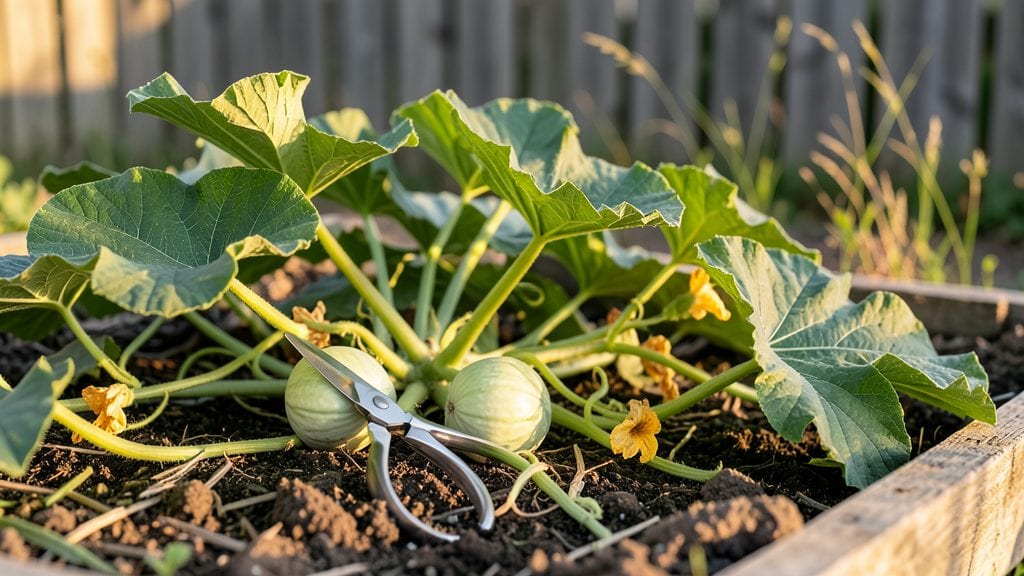
Pruning cantaloupe plants might seem counterintuitive—after all, why cut back a vine that’s already working hard to produce fruit? 🌱 The truth is, strategic trimming boosts sweetness, improves airflow, and prevents diseases that can ruin your harvest.
I’ve learned the hard way that skipping this step means fewer, smaller melons and plants that struggle under their own weight.
You’ll need just three tools: sharp pruning shears, a small hand trowel, and a pair of gloves. The key moves are removing suckers (those tiny shoots growing between the main stem and leaves), thinning overcrowded vines, and cutting back any diseased or yellowing foliage.
Most pruning happens in the first 6 weeks after planting, but ongoing maintenance keeps plants productive all season.
When done right, your cantaloupes develop deeper flavor and thicker rinds, while the plant directs energy toward fewer, larger fruits instead of spreading too thin. You’ll notice fewer pests hiding in dense foliage and better airflow that dries leaves faster after rain—critical for preventing fungal issues.
The best part? Even experienced gardeners often overlook this step, so mastering it gives you a real edge.
This method works for all cantaloupe varieties, whether you’re growing in warm climates or extending the season with row covers. Start small with one or two plants to practice, and soon you’ll be harvesting melons that put store-bought varieties to shame. Let’s get those shears ready!
📚 In This Guide
- What you need
- Instructions
- Tips and common mistakes
- Wrapping up and next steps
What you need
- ● Sharp pruning shears – Bypass pruners (4-6" blade) for clean cuts without crushing stems.
- ● Garden gloves – Durable, cut-resistant (e.g., nitrile-coated) to protect your hands from thorns and sap.
- ● Disinfectant (70% isopropyl alcohol or bleach solution) – 1 part bleach to 9 parts water to sterilize tools between cuts and prevent disease.
- ● Small trowel or hand fork – For gently loosening soil around roots if transplanting or adjusting vines.
- ● Watering can or hose with a gentle spray nozzle – To hydrate plants before and after pruning.
- ○ Plant growth regulator (optional) – e.g., hydrogen peroxide (3%) or seaweed extract to reduce stress post-pruning.
- ● Mulch (straw or shredded leaves) – To retain moisture and protect roots after trimming.
- ● Label markers – If pruning multiple varieties, mark plants to avoid confusion.
- ● Pruning saw (for thick vines) – Only if cantaloupe vines grow unusually large (rare for standard varieties).
- ● Wait until plants are 4-6 weeks old with 3-5 true leaves before the first prune.
- ● Choose a mild, overcast day to minimize plant stress (avoid midday heat).
- ● Ensure soil is moist but not waterlogged before and after pruning.
- ● Have a clear plan for trimming zones (see our 3-key trims guide!).
Step-by-Step guide to pruning cantaloupe plants
Pruning cantaloupes might seem counterintuitive, but these strategic cuts boost fruit size and sweetness.
🌱 Step 1: Remove Suckers for Stronger Vines
Start by identifying the main vine—this is the thickest, most vigorous stem growing directly from the plant's base. Look for smaller side shoots (suckers) that emerge from the leaf axils. These compete with your main vine for energy, so pinch them off with your fingers or clean pruners when they're about 2-3 inches long.
Here's the thing—don't wait until they're large. Small suckers are easier to remove and cause less stress. Focus on the first 3-4 main vines, keeping only the strongest one if multiple emerge. You'll see new leaves emerge from the main stem within a week—that's your signal everything is working.
✂️ Step 2: Trim Excess Leaves Near the Fruit
Once your cantaloupe starts flowering, shift focus to leaf management. Remove any leaves that shade the fruit clusters, especially those growing directly beneath developing melons. Use clean, sharp pruners to make cuts just above a leaf node or side shoot. This ensures better air circulation and prevents disease.
I know it seems weird to cut leaves, but trust me—this prevents rot and helps the fruit ripen faster. Aim to leave 3-4 leaves above each melon and 2-3 leaves below. You'll notice the remaining leaves turn a deeper green color within days, signaling improved energy flow to the fruit.
☀️ Step 3: Thin Overcrowded Fruit Clusters
When multiple melons form in a cluster, select the healthiest one—the largest, straightest fruit with the best color—and remove the others. Use your fingers to gently twist off smaller or misshapen melons. This might feel wasteful, but each remaining melon will grow 20-30% larger with proper space.
Timing matters here: do this when melons are about 3-4 inches in diameter. You'll see the remaining fruit swell noticeably within 7-10 days. This is the moment that matters—it's when your cantaloupes go from garden curiosities to sweet, vine-ripened treasures.
⏰ Step 4: Maintain Regular Check-Ins
Pruning isn't a one-time job—schedule weekly inspections during the growing season. Look for new suckers, yellowing leaves (a sign of overcrowding), or fruit that's outgrowing its space. Remove any vines that trail on the ground, as they're more prone to pests and disease.
Real talk: cantaloupes are heavy feeders, so they'll reward your pruning efforts with bigger, sweeter fruit. You might harvest 2-3 melons per plant instead of the usual 1-2. Just remember—less is more. The goal is to direct all the plant's energy into fewer, higher-quality fruits.
Tips & tricks for perfect cantaloupe pruning
These game-changing strategies will help you transform your cantaloupe harvest from average to exceptional.
Timing is Everything: In Step 1, when removing those 2-3 inch suckers, do it early in the morning when the plants are well-hydrated. The vines are more flexible and less likely to snap, making the process cleaner. I've found that pruning before 10am also reduces stress on the plant, giving it time to recover before the heat of the day sets in. This small adjustment can make all the difference in vine recovery speed.
Tool Selection Matters: While fingers work for small suckers, invest in a pair of clean, sharp pruners for the leaf trimming in Step 2. Dull blades can crush stems instead of making clean cuts, which leads to disease entry points. I sterilize my pruners with rubbing alcohol between plants to prevent spreading any potential pathogens. This might seem like overkill, but it's worth it for that perfect cantaloupe harvest.
Visual Cues for Perfect Pruning: When thinning fruit clusters in Step 3, look for melons that are slightly lighter in color on one side—this indicates they're receiving uneven sunlight. Keep the melon that's most evenly colored and shaped. Also, check the stem attachment point: it should be firm and slightly raised, not sunken or mushy. These visual cues help you select the winner that'll give you that sweet, ripe cantaloupe you're dreaming of.
Seasonal Adjustments: During hot summer months, you might need to increase your weekly check-ins in Step 4 to every 3-4 days instead of weekly. Heat stress accelerates vine growth and fruit development, so stay vigilant. I've seen cantaloupes go from 3-inch size to harvest-ready in just 5-7 days during peak summer—so those regular inspections pay off big time when the weather's hot.
Pro Tips for Prune Cantaloupe Plants
- These game-changing strategies will help you transform your cantaloupe harvest from average to exceptional.
- Timing is Everything: In Step 1, when removing those 2-3 inch suckers, do it early in the morning when the plants are well-hydrated.
- Tool Selection Matters: While fingers work for small suckers, invest in a pair of clean, sharp pruners for the leaf trimming in Step 2.
Frequently asked questions
Got questions about pruning cantaloupe plants? You’re not alone—this step can feel tricky, especially for first-timers! Below, we’ve rounded up the most common concerns and broken them down for clarity. Whether you’re unsure about timing, tools, or what to do if things go wrong, we’ve got you covered.
When is the best time to prune cantaloupe plants?
Prune cantaloupe plants early and often—focus on removing suckers (those small shoots between the main stem and branches) when they’re about 2–3 inches tall. This keeps energy flowing to fruit production. Avoid heavy pruning after flowering, as it can stress the plant and reduce yields. Morning pruning is ideal to let wounds heal before evening moisture sets in.
Do I really need to prune cantaloupe plants? Can’t I just let them grow wild?
While cantaloupes can grow without pruning, trimming suckers and dead leaves boosts fruit quality and quantity. Pruning improves airflow, reducing disease risk, and directs the plant’s energy toward larger, sweeter melons. If you’re short on time, prioritize removing suckers and yellowing leaves—this alone makes a difference!
What happens if I prune too much or too late?
Over-pruning or trimming after flowering can stunt growth or delay fruiting. Signs of over-pruning include stunted vines, fewer flowers, or small melons. If this happens, stop pruning immediately and focus on watering and fertilizing to recover. Late pruning (after fruit sets) may also reduce sweetness, as the plant diverts energy to repair instead of ripening.
Can I reuse pruned cantaloupe stems or leaves for compost?
Yes! Pruned cantaloupe stems and leaves are great for compost, but avoid adding diseased or pest-ridden plant parts. Healthy trimmings break down quickly and add nitrogen to your compost pile. Pro tip: Chop larger stems into smaller pieces first to speed up decomposition.
What’s the difference between suckers and runners in cantaloupe plants?
Suckers
are the small shoots that grow in the axils (where leaves meet the stem)—these should be removed to encourage fruit production. Runners (long vines) are part of the main plant structure and should not be pruned unless they’re dead or diseased. Think of runners as the plant’s “highways” for nutrients!
My cantaloupe plant looks sad after pruning. Did I mess up?
Don’t panic! A little wilting or slowed growth is normal after pruning, but severe drooping or yellowing could signal over-pruning or stress. If this happens, water deeply, provide shade for a few days, and avoid further trimming. With proper care, your plant should bounce back within a week.
Wrapping up and next steps
Pruning your cantaloupe plants might feel like a small task, but it’s a game-changer for sweeter, healthier fruit!
By removing runners, suckers, and overripe blossoms, you’re directing energy where it matters most—toward juicy, flavor-packed melons. 🌱 With the right timing and technique, you’ll be harvesting a bountiful crop in no time.
Now that you’re ready to prune like a pro, grab those shears and get to work! Next up? Keep an eye on your plants’ progress and adjust your care routine as needed—soon, you’ll be enjoying the fruits of your labor (literally!). Happy gardening! 🍉✨