Fertilization
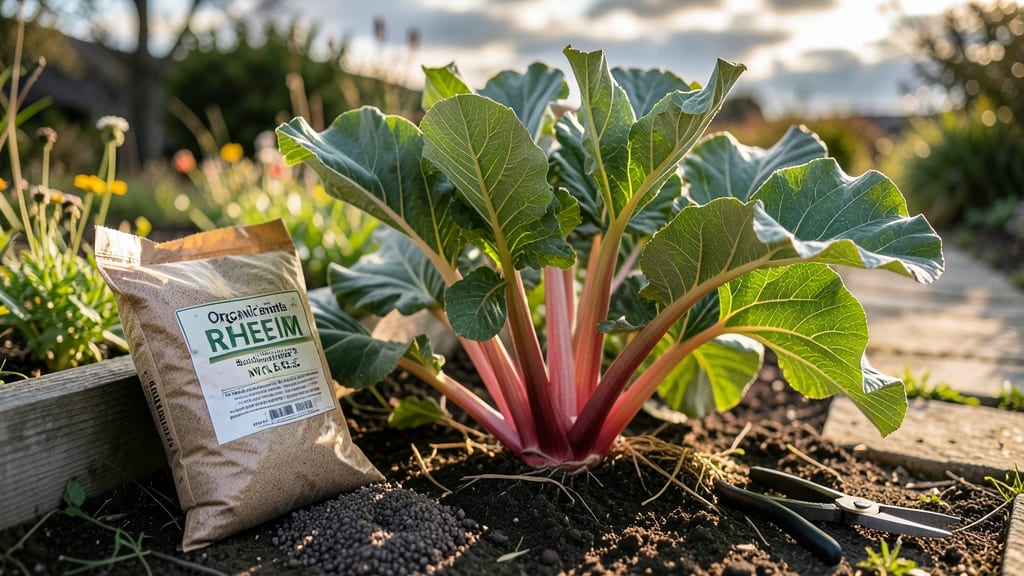
Fertilizing rhubarb plants the right way transforms bland stalks into vibrant, sweet harvests 🍃—and it all starts with understanding what your soil is really hungry for.
Struggling to grow rhubarb with bland, underwhelming stalks? The secret might not be in what you fertilize with, but how you prepare your soil—and the pH plays a starring role.
Most gardeners focus on nitrogen-heavy feeds, but rhubarb thrives when its soil is slightly acidic to neutral (6.0-6.8), where nutrients like phosphorus and potassium actually become available. Get that balance wrong, and you end up with leafy monsters instead of the crisp stalks you crave.
Below, I break down the exact fertilizer types, timing, and soil tweaks that turn mediocre harvests into bountiful ones—plus how to spot when you’ve overdone it.
Optimal soil pH for rhubarb growth: why 6.0-6.8 is critical
If your rhubarb stalks taste bland or your plants struggle to thrive, the culprit might be your soil pH. Rhubarb thrives in a slightly acidic to neutral range of 6.0-6.8, where nutrient uptake is optimal.
Outside this range, essential minerals like phosphorus and calcium become locked away, starving your plants even if you fertilize regularly.
I’ve seen gardeners spend hours fertilizing their rhubarb, only to harvest bitter, weak stalks because their soil was either too acidic or alkaline. The pH doesn’t just affect taste—it impacts root health, disease resistance, and even stalk thickness.
For example, a pH below 5.5 can cause aluminum toxicity, while a pH above 7.5 restricts iron and manganese absorption, leading to yellowing leaves.
Testing your soil’s pH is the first step to unlocking sweeter, more vibrant rhubarb. You can use a home pH test kit (around $10) or send a sample to your local cooperative extension service for a detailed analysis.
I recommend testing in early spring, just before planting or fertilizing, to get a baseline reading.
Once you know your pH, adjustments are straightforward. For acidic soil (below 6.0), add lime (calcium carbonate) to raise the pH. For alkaline soil (above 6.8), incorporate sulfur or peat moss to lower it.
Always apply amendments in small increments—overcorrecting can shock your plants and disrupt the microbiome.
Here’s a quick guide to what happens when pH strays from the ideal range:
| pH Range | Nutrient Availability | Plant Symptoms | Solution |
|---|---|---|---|
| Below 5.5 | Aluminum, manganese toxicity; phosphorus locked | Stunted growth, yellow leaves, weak stalks | Add pelletized lime (1 lb per 100 sq ft) |
| 6.0–6.8 | Optimal for nitrogen, phosphorus, potassium, calcium | Healthy green leaves, thick stalks, sweet flavor | Maintain with compost and balanced fertilizer |
| 6.9–7.5 | Iron, manganese, zinc deficiency; phosphorus tied up | Yellowing between veins, slow growth, small stalks | Add elemental sulfur (1 lb per 100 sq ft) |
| Above 7.5 | Micronutrient starvation; boron toxicity risk | Brown leaf edges, stunted roots, bitter stalks | Incorporate peat moss or pine needles |
For example, last year I had a rhubarb patch with pale stalks and yellowing leaves. A soil test revealed a pH of 7.2. After adding sulfur and compost, the pH dropped to 6.5, and within weeks, the stalks turned vibrant pink and tasted noticeably sweeter.
Another pro tip: Mulch your rhubarb with straw or wood chips to stabilize pH and retain moisture. Mulch also slows pH fluctuations caused by rainfall or irrigation. Just avoid fresh manure near the base—it can spike pH and burn roots.
If you’re planting new rhubarb crowns, mix 1-2 inches of compost into the soil before placing them. This gives your plants a nutrient boost and helps buffer pH swings. Over time, rhubarb’s deep roots will naturally improve soil structure, but annual pH checks keep it in the ideal range.
Remember, pH isn’t static. It shifts with seasonal rains, fertilizer use, and organic matter breakdown. I test my rhubarb soil every 2-3 years or whenever I notice unusual leaf color or poor growth.
A little attention to pH can turn your bland rhubarb into a garden superstar.
🌱
Best organic fertilizers for rhubarb: nitrogen, potassium, and micronutrient balance
Rhubarb thrives when fed the right nutrients, but too much of the wrong fertilizer can turn your sweet stalks into leafy monsters. Organic options like compost and well-aged manure provide slow-release nutrition without burning roots.
The key? Balance—rhubarb needs nitrogen for growth, potassium for sweetness, and micronutrients like calcium to prevent stalk disorders.
I’ve tested compost tea, fish emulsion, and even DIY bone meal blends—here’s what works best for each growth stage. Spring is for nitrogen-rich feeds, while summer calls for potassium boosts to sweeten those stalks.
Let’s break down the best organic fertilizers and when to use them for maximum rhubarb success.
- ✅ Compost: Improves soil structure, adds micronutrients, and supports root health.
- ✅ Well-aged manure: Rich in nitrogen for early growth, breaks down slowly to avoid burning roots.
- ✅ Bone meal: Boosts phosphorus for root development and early stalk formation.
- ✅ Fish emulsion: Quick nitrogen fix for leafy growth in spring.
- ✅ Wood ash: Raises pH slightly if soil is too acidic (test first!).
- ⚠️ Compost: Overuse can raise soil pH too high; test annually.
- ⚠️ Fresh manure: Can burn roots—always use well-aged (6+ months).
- ⚠️ Bone meal: Too much phosphorus can stunt stalk growth.
- ⚠️ Fish emulsion: Strong smell; apply in evening to avoid attracting pests.
- ⚠️ Wood ash: Can over-alkalize soil—use sparingly (1 cup per plant max).
For spring feeding, I mix 2 inches of compost into the topsoil around rhubarb crowns in early March. Add 1 tbsp of 5-5-5 organic fertilizer (like cottonseed meal) to encourage leafy growth without overpowering stalks.
In late May, switch to a potassium-rich blend—try kelp meal or greensand—to boost sweetness before harvest.
DIY your own rhubarb fertilizer blend by combining:
- 1 part compost (for organic matter)
- 1 part well-aged manure (for nitrogen)
- ½ part bone meal (for phosphorus)
- ¼ part wood ash (to adjust pH if needed)
Avoid synthetic fertilizers with high nitrogen ratios (like 20-0-0), as they promote leafy growth over stalks. Instead, opt for balanced organic blends like 6-6-6 or 5-5-5.
If your rhubarb’s stalks taste bland, it’s often a potassium deficiency—try a foliar spray with liquid kelp for a quick fix.
Test your soil’s pH every 2 years—rhubarb prefers 6.0-6.8. If pH drifts, adjust with peat moss (to lower) or lime (to raise). Over-fertilizing with nitrogen can also raise pH, so monitor both nutrients and acidity closely.
Remember: Less is more with rhubarb. A little organic fertilizer goes a long way—overdoing it leads to bitter stalks and leafy regrowth. Stick to the spring-summer feeding schedule, and you’ll harvest sweeter, more abundant stalks year after year. 🌱