Companion Plants
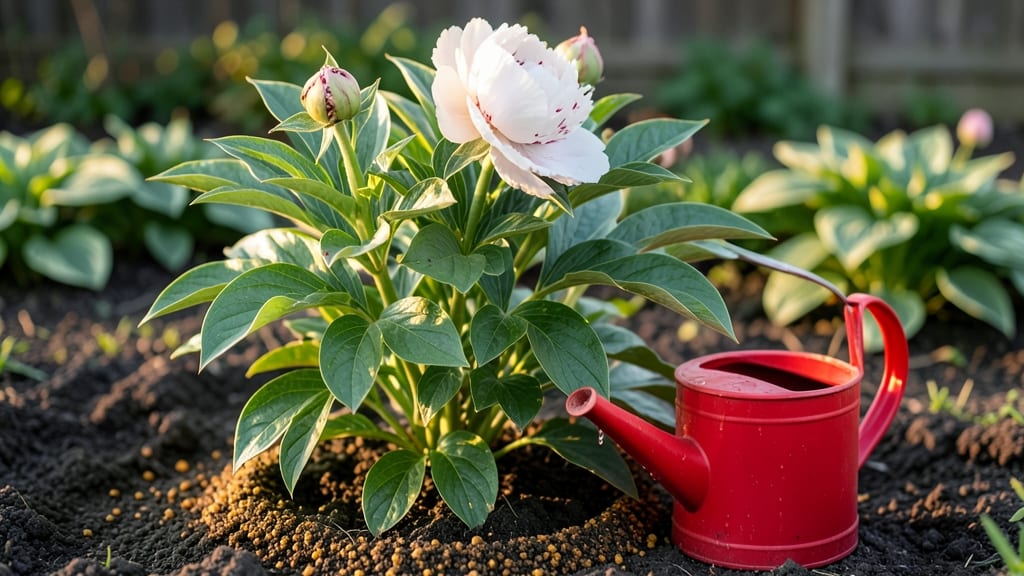
Feeding peony plants the right way turns those fragrant 🌸 blooms from a maybe into a jaw-dropping "wow" every spring.
Peony plants reward gardeners with lush, fragrant blooms—but only if their soil pH and nutrient timing are perfect. One wrong move can stunt growth or reduce flowers by half, and I’ve seen it happen more times than I’d like to admit.
The secret isn’t just what you feed them, but when—and trust me, timing matters more than you think.
Peonies thrive in Zone 6a when planted in early spring, but their hunger shifts with the seasons. Too much fertilizer in summer, and you’ll choke their roots; skip spring feeding, and you’ll end up with sad, sparse blooms.
The good news? With a few simple adjustments—like a light spring boost and a potassium push in late summer—you can keep your peonies flowering like they’re in a botanical garden.
Here’s how to feed them for vibrant blooms year after year, plus the telltale signs when you’ve overdone (or underdone) it. No guesswork, just results.
Peony soil requirements: the ideal pH and nutrient balance for peak blooms
Peonies thrive when their soil pH sits between 6.0 and 7.0, creating a slightly acidic to neutral environment. This range isn’t just ideal—it’s essential for nutrient uptake, especially for phosphorus and potassium, which fuel those iconic blooms.
If your soil leans too acidic (pH 5.5 or lower), peonies struggle to absorb critical nutrients, leading to weak stems and sparse flowers. Think of it like a lock and key: the right pH unlocks the nutrients peonies need to flourish.
Peonies also demand well-draining soil rich in organic matter. Heavy clay or sandy soil can suffocate roots or drain nutrients too quickly. Aim for a loamy texture—like a mix of garden soil, compost, and perlite—that holds moisture without waterlogging.
I’ve seen peonies in my own garden go from struggling to thriving after amending the soil with aged compost and a handful of worm castings.
Now, let’s talk nutrients. Peonies are heavy feeders but hate excess nitrogen, which can lead to lush foliage at the expense of blooms. Instead, focus on a balanced fertilizer with equal parts nitrogen, phosphorus, and potassium (like a 5-10-10 ratio).
Phosphorus builds strong roots, while potassium boosts disease resistance and flower production. My secret? A spring feeding of bone meal (for phosphorus) followed by a summer boost of potassium sulfate.
Testing your soil is the first step to success. Grab a soil pH test kit (digital or liquid) and take samples from multiple spots around your peony patch. If the pH is off, don’t panic—amendments like lime (to raise pH) or sulfur (to lower it) can adjust it in weeks.
I once had a peony bed with a pH of 5.2, and after adding lime, the blooms doubled in size within a season.
Organic matter is non-negotiable. Peonies need at least 20-30% organic content in their root zone. This could be compost, leaf mold, or well-rotted manure. Organic matter improves soil structure, retains moisture, and slowly releases nutrients.
I top-dress my peonies with compost every fall, and it’s made a noticeable difference in their vigor.
Watch out for nutrient deficiencies, which often show up as yellowing leaves (nitrogen deficiency) or weak stems (phosphorus shortage). A quick fix? Side-dress with fish emulsion for nitrogen or kelp meal for potassium. I’ve revived struggling peonies by mixing these into the soil around the base in early spring.
Peonies also benefit from micronutrients like iron, magnesium, and zinc, though they’re needed in smaller amounts. A chelated iron supplement can prevent yellowing between leaf veins, while Epsom salt (magnesium sulfate) supports chlorophyll production.
I add a teaspoon of Epsom salt to the soil in early spring, and my peonies stay a vibrant green.
One common mistake? Over-fertilizing. Peonies are perennials, not annuals, so they don’t need frequent feeding. Too much fertilizer—especially nitrogen—can lead to foliar growth at the expense of blooms. Stick to a light feeding schedule: once in early spring, once during bloom time, and that’s it.
My neighbor once fertilized his peonies monthly, and his plants produced almost no flowers—just big leaves!
Finally, mulch matters. A 2-3 inch layer of organic mulch (like straw or shredded bark) helps retain moisture, regulate soil temperature, and slowly release nutrients as it breaks down.
I use straw mulch because it’s lightweight and doesn’t compact like wood chips. Plus, it looks great and keeps weeds at bay.
Ready to test your soil? Grab a kit, take samples, and adjust as needed. Your peonies will thank you with bigger, brighter blooms next season. 🌸