Planting
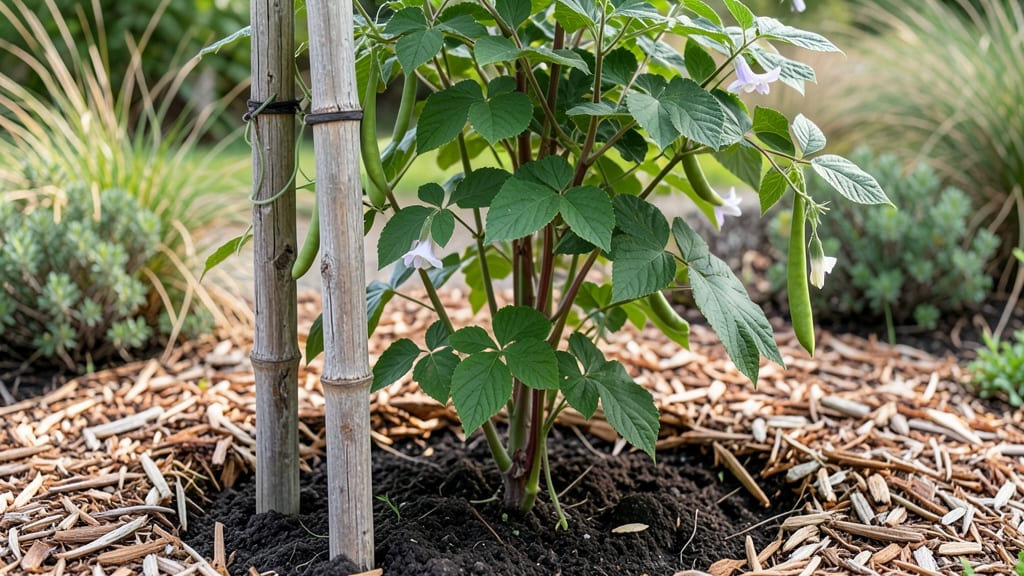
A plant support for climbing beans isn’t just helpful—it’s essential, or your vines will flop, fight for sunlight, and produce puny yields, as my pole beans tragically proved. 🌱 pods instead of the bushels I’d read about.
The right trellis doesn’t just keep plants upright; it maximizes airflow, reduces disease, and makes harvesting a breeze.
You’ll need just a few simple supplies: bamboo stakes, chicken wire, or a pre-made trellis kit, plus some twine or zip ties. For bush beans, a low cage or hoops work fine, but pole beans demand something taller—think 6 to 8 feet for varieties like Kentucky Wonder.
Install supports as soon as seeds sprout or when seedlings hit 4 inches tall, before they get top-heavy.
With the right setup, you’ll end up with beans climbing straight up, pods forming along the entire stem, and harvests that last weeks longer than unsupported plants. The trellis also keeps leaves off the damp soil, cutting down on rot and pests.
Plus, your garden beds stay tidy—no more tangled vines taking over the space.
Works for any climbing bean variety, from dwarf runner beans to towering scarlet runners, and adapts to containers or in-ground plantings. Once you try it, you’ll never grow pole beans without support again.
📚 In This Guide
- What you need
- Instructions
- Tips and common mistakes
- Wrapping up and next steps
What you need
- ● Trellis Structure: Bamboo poles (4–6 ft tall, ½–1 inch diameter) – 4–6 poles
- ● OR PVC pipes (½ inch diameter, cut to 5–6 ft) – 4–6 sections
- ● OR wooden stakes (2x2 inches, 5–6 ft long) – 4–6 stakes
- ● Support Framework: Twine or jute twine (100–200 ft, ¼ inch thick) – 1–2 spools
- ● OR garden twine (300–500 ft) – 1 spool
- ○ Zip ties (optional, for securing PVC or bamboo) – 10–20 ties
- ● Anchoring Supplies: Staple gun + staples (for attaching twine to wood) – 1 gun + 50 staples
- ● OR mallet + nails (for wooden stakes) – 1 mallet + 10 nails
- ● Basic Tools: Measuring tape (for precise spacing)
- ● Scissors or wire cutters (for trimming twine)
- ● Hammer or mallet (if using wooden stakes)
- ○ Optional Upgrades: Galvanized wire mesh (for a no-twine option)
- ● Decorative lattice panels (for a garden aesthetic)
- ● Concrete anchors (for heavy-duty stability in windy areas)
Sturdy trellis techniques for climbing bean varieties
Climbing beans need the right support to thrive—here’s how to build a simple, effective trellis that keeps plants healthy and productive.
🪴 Step 1: Choose the Right Trellis Design for Your Space
For pole beans, use 6-foot tall bamboo stakes or metal garden stakes spaced 12 inches apart in rows. These varieties naturally wrap around vertical supports, so a single stake per plant works perfectly. I like bamboo because it’s lightweight, affordable, and won’t rust like metal over time.
For bush beans (even though they’re not climbers), a low wire trellis made from 18-gauge wire stretched between 4-foot posts works well. Stretch the wire 12 inches above the soil—this keeps plants upright and makes harvesting easier. Avoid flimsy plastic trellises; they bend under the weight of mature pods.
☀️ Step 2: Install Supports Before Planting
Drive stakes or posts 6 inches deep into the soil 2-3 weeks before planting—this gives roots time to establish before the trellis takes the plant’s weight. For bamboo, split stakes if needed to wedge them firmly into the ground. If using wire, anchor posts with stakes or concrete to prevent leaning.
For a teepee-style trellis, tie 4 stakes together at the top with twine or zip ties to form a pyramid. This works great for yard-long beans and keeps them growing upward naturally. Space teepees 3 feet apart so plants don’t compete for support.
🌱 Step 3: Train Vines as They Grow
Once seedlings reach 4-6 inches tall, gently weave vines around the trellis or tie them loosely with twine. Avoid tight knots—beans grow fast, and restrictive ties can strangle stems. I use soft garden twine and loop it around the vine twice, leaving room to grow.
For pole beans, let vines climb naturally. If they spiral too tightly, untangle them weekly to prevent damage. Bush beans on wire trellises may need occasional pruning to keep them from sprawling—trim back leggy stems to encourage bushier growth.
✂️ Step 4: Maintain and Reinforce as Needed
Check trellises weekly for stability, especially after rain. Wind can loosen stakes, so re-secure any that wobble. If using wire, tighten sagging sections with zip ties—beans produce heavy pods, and a floppy trellis leads to broken stems.
Prune yellowing or overcrowded vines to improve airflow and reduce disease risk. Harvest pods regularly to encourage more production—overloaded plants struggle to support their own weight. If vines outgrow the trellis, extend supports with additional stakes or wire.
Tips & tricks for sturdy bean trellis construction
Building the right trellis makes all the difference for climbing beans—here are my go-to strategies for success.
Material Matters: I've learned the hard way that bamboo stakes are my favorite for pole beans because they're lightweight and won't rust like metal. For wire trellises, stick with 18-gauge wire—it's strong enough to handle mature pods without bending. Avoid plastic options; they simply can't support the weight. When using bamboo, split the stakes if needed to wedge them firmly into the ground for maximum stability.
Timing is Everything: That 2-3 week head start for installing supports before planting is crucial. It gives your bean plants' roots time to establish before the trellis takes over the support role. I've seen too many cases where stakes were installed too late, and the plants struggled to climb properly. For teepee-style trellises, space them 3 feet apart to prevent overcrowding—this gives each plant enough room to thrive without competing for support.
Tying Technique: When training vines in Step 3, use soft garden twine and make loose loops around the vine—twice is perfect. Tight knots can actually strangle the stems as they grow. For pole beans, let them climb naturally, but check weekly for any tight spirals that might need untangling. Bush beans on wire trellises need occasional pruning to keep them from sprawling—just trim back those leggy stems to encourage bushier growth.
Maintenance Secret: The weekly stability check is non-negotiable, especially after rain. Wind can loosen stakes surprisingly fast. I keep a supply of zip ties handy for wire trellises—they're perfect for tightening sagging sections. Remember, beans produce surprisingly heavy pods, so a floppy trellis means broken stems and lost harvests. If you see vines outgrowing their support, don't hesitate to extend with additional stakes or wire.
Pro Tips for Bean Plant Support
- Building the right trellis makes all the difference for climbing beans—here are my go-to strategies for success.
- Material Matters: I've learned the hard way that bamboo stakes are my favorite for pole beans because they're lightwe...
- Timing is Everything: That 2-3 week head start for installing supports before planting is crucial. It gives your bean...
Frequently asked questions
Got questions about keeping your climbing beans happy and healthy? Here are some of the most common concerns—and their solutions—to help you grow a thriving vine!
What’s the best time to install bean plant support?
Install supports before planting seeds or transplanting seedlings. For bush beans, a low cage or stakes work, but climbing varieties need sturdy trellises as soon as they sprout—usually within 2–4 weeks of germination. Early support prevents root disturbance later and encourages upward growth.
Can I reuse last year’s trellis for beans?
Yes, but with caution! Clean and disinfect wooden or bamboo supports with a 10% bleach solution to kill pests/diseases. Metal or plastic trellises can be reused if rust-free. Avoid overcrowding—rotate supports yearly to prevent soil-borne pathogens from lingering in one spot.
Why are my bean vines falling over even with a trellis?
Weak stems? Check for these fixes:
- Thin vines: Prune crowded or leggy growth to focus energy upward.
- Wind/sun exposure: Add extra ties or a windbreak if stems flop.
- Nutrient deficiency: Yellow leaves? Boost nitrogen with compost or a balanced fertilizer.
- Support height: Ensure trellises are tall enough (6–8 feet for pole beans).
Are there eco-friendly alternatives to plastic trellises?
Try these sustainable options:
- Bamboo stakes: Biodegradable and sturdy (split into sections for flexibility).
- Recycled pallet wood: Sand and assemble into A-frames or ladders.
- Living trellises: Train beans on sturdy sunflowers or cornstalks (harvest corn first!).
- Hemp rope: Natural and durable for tying vines.
How often should I tie bean vines to the trellis?
Check vines every 3–5 days during active growth (spring/summer). Use soft ties (e.g., fabric strips or hemp twine) to avoid damaging stems. Loosen ties as vines thicken—never leave them too tight, which can strangle the plant. Pro tip: Train vines in a spiral pattern for even support!
Wrapping up and next steps
Growing climbing beans is a rewarding experience—with the right bean plant support, you’ll enjoy lush foliage, higher yields, and healthier plants all season long!
Whether you opt for a simple trellis, sturdy stakes, or a DIY cage, the key is to choose a system that matches your bean variety and space. Don’t let a lack of support hold you back—get creative, stay consistent with maintenance, and watch your plants thrive!
Ready to take the next step? Start small with a single trellis or stake, then expand as your confidence (and garden!) grows. Happy planting—your future harvests are waiting! 🌱