
Pests
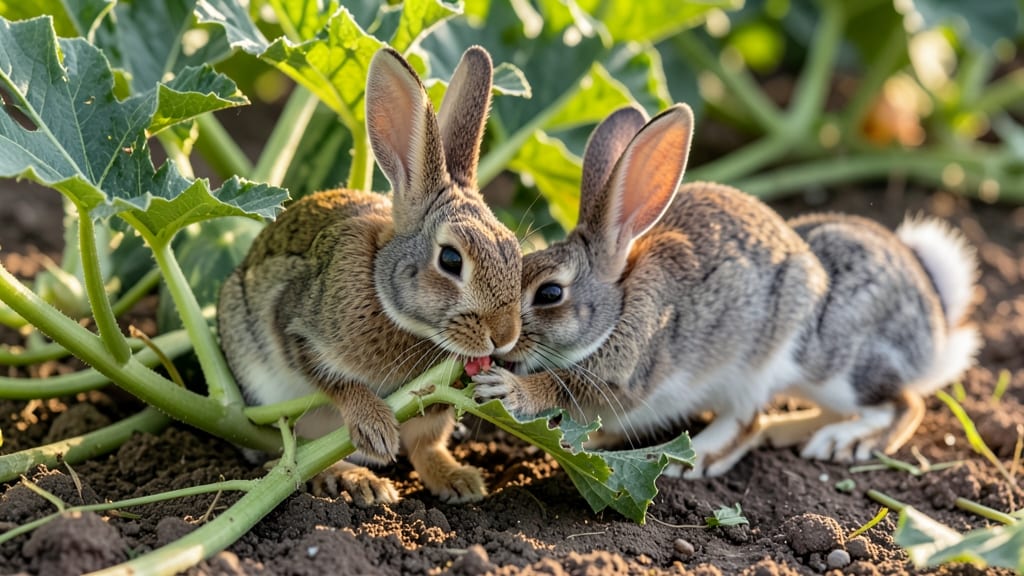
Rabbits often go for watermelon plants because they’re soft and packed with moisture—like nature’s salad bar. 🌱 Young shoots and leaves are especially vulnerable, as rabbits prefer tender growth over tougher mature plants.
If you’ve noticed your watermelon patch looking ragged, it’s likely not just rabbits: deer and squirrels also share this weakness. The key is acting fast—once the plants are established, they can recover better from nibbling.
This isn’t just about watermelons, either. Rabbits tend to avoid plants with strong scents (like herbs or citrus) or prickly textures, so understanding their preferences helps protect your entire garden. 💫
💡 In This Article
- Why Rabbits Target Watermelon Plants
- Protecting Watermelon Plants from Rabbit Damage
Why rabbits target watermelon plants
Watermelon plants rank high on a rabbit's menu because of their high moisture content (90%+) and tender, nitrogen-rich leaves. Rabbits are herbivores with a digestive system optimized for fibrous, water-rich plants—watermelon's young shoots provide both.
The plant's broad leaves and sprawling vines create easy access, unlike compact herbs or woody citrus stems that rabbits avoid. 🌱
Seasonal behavior plays a huge role: rabbits target watermelons most aggressively during spring and summer when new growth is plentiful. Young seedlings are particularly vulnerable because their leaves contain 30-50% more water than mature foliage, making them juicier and easier to digest.
Compare this to mature watermelon leaves, which develop thicker wax coatings and tougher cell walls—making them less appealing. The contrast is similar to how rabbits prefer fresh lettuce over wilted kale.
Botanically, watermelon plants lack natural rabbit deterrents like thorns (unlike roses) or strong aromatics (like mint). Their smooth, broad leaves provide minimal resistance when nibbled, while the plant's sprawling growth habit creates shade—an ideal hiding spot for rabbits to feed undetected.
This vulnerability extends to the vine structure, which rabbits can easily strip down to the stem, leaving plants stunted or dead.
What most gardeners don't realize is how plant maturity affects damage severity. Seedlings can be killed in days by persistent grazing, while established vines may recover if only leaves are removed.
The key difference lies in the plant's ability to regenerate: young leaves grow back in 7-10 days under ideal conditions, but severe early damage can permanently weaken the root system. 💫
Rabbits also show preference patterns based on plant availability. In mixed gardens, they'll prioritize watermelons over crops like tomatoes (which have hairy stems) or peppers (which contain mild capsaicin).
The contrast is striking when comparing watermelon's 92% water content to that of bell peppers at just 90% water but with 3% fiber—making peppers less appealing despite similar moisture levels.
Interestingly, domestic rabbits show even stronger preferences for watermelon plants than wild counterparts. Their diet is often supplemented with fresh greens, and watermelon's mild sweetness (from natural sugars) makes it particularly enticing.
This explains why backyard gardens often see more damage than wild fields, where rabbits have access to a wider variety of plants. 🔥