
Pruning
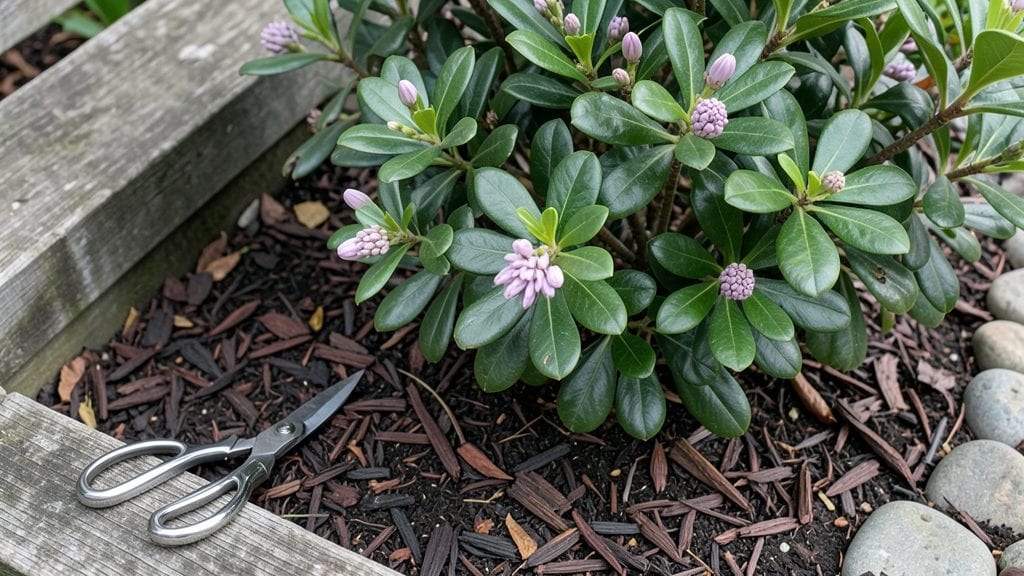
Pruning daphne plants transforms them from straggly bushes into fragrant, bushier powerhouses—if you do it right. 🌿 I’ve pruned daphnes for years, and I’ve learned that three strategic cuts (timed perfectly) make all the difference between a plant that’s barely holding on and one that bursts with spring blooms.
The key is knowing when to cut: right after flowering in early spring, mid-summer to shape, and late winter for rejuvenation. You’ll need sharp bypass pruners, rubbing alcohol for sterilizing cuts, and a clear day to avoid soggy wood.
Most people over-prune or cut at the wrong time—which is why daphnes often look sad after pruning.
After the right cuts, your daphne will reward you with denser foliage, more fragrant flowers, and stronger stems. The secret is cutting just above a leaf bud or outward-facing growth—never leaving stubs. Within weeks, you’ll see fresh green shoots where there was once bare wood.
This method works for all daphne varieties, from the compact Daphne odora to the sprawling Daphne mezereum. The same principles apply whether you’re pruning a container plant or a shrub in the garden bed. Let’s get those shears ready!
📚 In This Guide
- What you need
- Instructions
- Tips and common mistakes
- Wrapping up and next steps
What you need
- ● Bypass pruners – Sharp, clean, and sterilized (1 pair, blank">bypass-style for precision cuts). Avoid anvil pruners—they crush stems!
- ● Hand pruners (felco or equivalent) – For smaller stems (1 pair, 7–9" blade length).
- ● Loppers – For thicker branches (½"–1.5" diameter) (1 pair, blank">ratcheting or bypass for leverage).
- ● Disinfectant (70% isopropyl alcohol or bleach solution) – 1:10 bleach-to-water ratio (1 small spray bottle or cloth). Prevents disease spread!
- ● Garden gloves – Cut-resistant, breathable (1 pair). Daphne thorns are not kidding!
- ○ Sharpie or pruning sealant – For marking cuts (1 permanent marker or blank">wound dressing). Optional but helpful for tracking.
- ● Bucket or trash bag – For pruned debris (1 medium-sized container). Keep your workspace tidy!
- ● Extension pole – For high branches (1–3 ft, attachable to loppers). Saves your back!
- ● Horticultural oil or soap – For deep-cleaning tools (1 small bottle). Extends tool life.
- ● Pruning saw – For stubborn, thick wood (1 blank">bow or folding saw). Rarely needed but handy.
- ● Notebook & pen – To log pruning dates/shape goals. Track your daphne’s progress like a pro!
How to prune daphne plants for lush, year-round blooms
Here’s the pruning routine I swear by to keep daphne thriving—three strategic cuts that transform leggy plants into dense, fragrant bushes.
✂️ Step 1: Prune Immediately After Spring Blooming
Right after the spring flowers fade, cut back the spent blooms to just above the first set of healthy leaves below the flower cluster. This prevents seed formation and redirects energy into new growth. I use sharp bypass pruners to make clean cuts—never tear stems, or you’ll invite disease.
Watch for new shoots emerging within 2-3 weeks. These will form the plant’s summer growth. If you miss this window, you’ll lose the chance to shape the plant before the next blooming cycle. Daphne blooms on old wood, so never prune back into last year’s growth—you’ll sacrifice next year’s flowers.
✂️ Step 2: Light Summer Maintenance Pruning
In mid-summer, when the plant has 6-8 inches of new growth, do a light trim to remove any leggy or crossing branches. Cut back to an outward-facing bud or leaf to encourage bushier growth. I aim to keep the plant’s shape balanced—never let one side outgrow the other.
This is also the time to remove any dead or diseased stems. Daphne is prone to fungal issues if branches are overcrowded, so thin out congested areas. You’ll see fresh, vibrant foliage within 4-6 weeks—that’s your signal the plant is responding well.
✂️ Step 3: Final Pruning Before Winter Dormancy
In late fall, after the plant has stopped growing for the season, do a final trim to remove any weak, damaged, or overcrowded branches. Cut back to just above a leaf node or bud, but avoid heavy pruning—daphne needs some foliage to protect the buds over winter.
This is the only time I prune for shape rather than health. Step back and assess the plant’s form—aim for an open, airy structure that lets light reach the center. You’ll see fewer bare spots next spring, and the plant will bloom more vigorously. Never prune after mid-October, or you’ll risk exposing tender growth to winter frost.
⏰ Step 4: Post-Pruning Care for Recovery
After each pruning session, water the plant deeply to help it recover. Daphne has shallow roots, so 1 gallon of water every 3-4 days keeps it hydrated without soggy soil. I also apply a balanced, slow-release fertilizer in early spring to support new growth.
Keep the plant in partial shade to full sun, depending on your climate. In hotter regions, afternoon shade prevents leaf scorch. You’ll see fresh, healthy growth within 3-4 weeks—that’s your reward for timing the cuts right.
Tips & tricks for perfect daphne plant pruning
These three key strategies will help you avoid common pruning mistakes and keep your daphne thriving year after year.
The Timing Factor: Spring is the most critical window for pruning—right after the flowers fade but before new growth appears. I learned this the hard way after pruning too late and losing next year’s blooms. The 2-3 week window for new shoots to emerge is your golden opportunity to shape the plant before summer growth takes over. Mark your calendar for when your daphne finishes blooming, as this varies by variety and climate.
Tool Selection Matters: Sharp bypass pruners are non-negotiable for clean cuts that heal properly. I’ve tried everything from dull scissors to hedge shears, but nothing compares to the precision of proper pruners. Sterilize your tools with rubbing alcohol between cuts to prevent spreading disease—especially important when removing dead or diseased stems in Step 2. Never use your fingers or tear stems, as this creates jagged wounds that invite infection.
Growth Direction Strategy: When pruning in Step 2, always cut back to an outward-facing bud or leaf. This simple technique encourages bushier growth by directing new shoots away from the center. I visualize the plant’s shape like a rounded dome—each cut should work toward that goal. If you’re unsure which bud faces outward, make your cut at a 45-degree angle just above the bud you want to grow.
Seasonal Pruning Wisdom: The late fall pruning in Step 3 is about balance, not drastic cuts. Daphne stores energy in its leaves over winter, so preserve some foliage while removing only the weakest growth. I step back and look at the plant from all angles—this helps me spot overcrowded areas that need thinning. Remember, you can always prune more in spring, but you can’t un-prune damaged winter growth.
Pro Tips for Daphne Plant Pruning
- These three key strategies will help you avoid common pruning mistakes and keep your daphne thriving year after year.
- The Timing Factor: Spring is the most critical window for pruning—right after the flowers fade but before new growth appears.
- Tool Selection Matters: Sharp bypass pruners are non-negotiable for clean cuts that heal properly.
Frequently asked questions
Got questions about keeping your daphne plant thriving with the right pruning? You’re in the right place! Here are answers to the most common concerns—from timing to troubleshooting—so you can prune like a pro.
When is the best time to prune a daphne plant?
The ideal window is right after flowering (late spring) and again in early autumn. Avoid pruning in winter or during active growth—this can stress the plant or delay blooms. For Daphne odora, wait until after its fragrant spring flowers fade to encourage next year’s blooms. Pro tip: Never prune in summer—it’s when the plant is most vulnerable to heat stress.
How much can I trim back my daphne without harming it?
Daphne plants are hardy but respond best to moderate cuts. Aim to remove no more than 1/3 of the plant’s height in a single session. Focus on dead, diseased, or overcrowded branches first. For shaping, trim just above a leaf bud or side shoot—this encourages bushier growth. Over-pruning can stunt flowering or leave the plant vulnerable to pests.
What should I do if my daphne plant isn’t blooming after pruning?
If your daphne skips flowers, it’s often due to pruning at the wrong time or cutting back flowering stems too aggressively. Always leave at least 1-2 years’ worth of mature wood—new growth needs time to establish buds. For Daphne × transatlantica, prune lightly in autumn to avoid removing next year’s flower buds. If the issue persists, check for nutrient deficiencies (like low phosphorus) or poor drainage.
Can I propagate my daphne plant from pruned cuttings?
Softwood cuttings
(taken in summer) or semi-ripe cuttings (late summer/early autumn) root well. Dip the cut end in rooting hormone, then plant in a mix of sand and peat. Keep the soil moist but not soggy and place in partial shade. Roots should form in 4-8 weeks. Hardwood cuttings (winter) also work but take longer. Just avoid using over-mature wood—it’s less likely to root.
Do I need to sterilize my pruning tools for daphne plants?
Yes! Daphne plants are susceptible to fungal diseases like powdery mildew or botrytis. Always sterilize shears with rubbing alcohol (70%+) or a 10% bleach solution before and after pruning. Wipe tools dry to prevent rust. Disinfecting also reduces the risk of spreading diseases to other plants in your garden. A quick wipe with a vinegar-soaked cloth works in a pinch!
Wrapping up and next steps
Mastering daphne plant pruning is your ticket to lush, vibrant blooms year after year! With the right timing—spring, summer, and post-flowering cuts—you’ll encourage healthy growth and stunning flowers. Remember: sharp tools, clean cuts, and patience are your best friends.
Now that you’re armed with these 3 key pruning secrets, grab those shears and give your daphne the care it deserves! Ready to transform your garden? 🌿 Start with one plant today—you’ve got this!