Vegetables
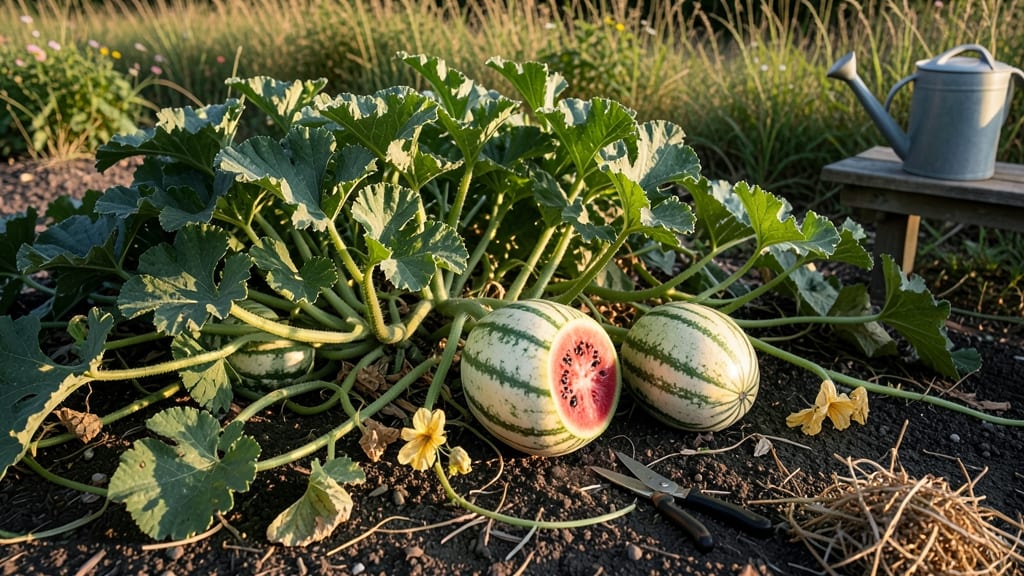
Growing a crimson watermelon plant from seed yields fruit so vibrant it looks like a sunset in your garden. 🌻 I’ve grown this variety for three summers now, and the key to success lies in mimicking its native heat-loving conditions—even in cooler climates.
The first step is choosing the right spot, because these plants demand full sun and rich, well-draining soil to produce those signature deep-red fruits.
You’ll need a long growing season (90 days minimum) and a space where vines can sprawl—at least 10 feet in any direction. Start seeds indoors 3-4 weeks before your last frost, then transplant seedlings after soil temperatures hit 70°F.
The secret to lush growth? Consistent moisture without waterlogging, and a balanced fertilizer every 3-4 weeks once vines begin to run.
By mid-summer, you’ll watch those sprawling vines climb and those first blossoms appear—followed by the thrill of spotting the first small, striped melons. The moment they turn a deep crimson and the tendril nearest the fruit turns brown, that’s your cue to harvest.
One bite, and you’ll understand why gardeners swear by this variety.
This method works for garden beds, raised planters, or even large containers—just adjust spacing and support. The only real challenge? Patience. But the payoff—a watermelon so sweet and crisp it tastes like summer—makes every day of waiting worthwhile.
📚 In This Guide
- What you need
- Instructions
- Tips and common mistakes
- Wrapping up and next steps
What you need
- ● Crimson watermelon seeds: 3–5 seeds (or 1–2 seedlings if starting from nursery stock). Choose Crimson Sweet or Crimson Tender varieties for vibrant red fruit.
- ● Growing containers or garden bed: For containers: 5–10 gallon pots (minimum 12" deep) with drainage holes. Use 2–3 pots per plant for larger varieties.
- ● For in-ground planting: Full-sun spot (6–8+ hours/day) with well-draining soil. Space plants 3–6 feet apart (check variety guidelines).
- ● High-quality potting mix or garden soil: Lightweight, well-draining blend with compost (avoid heavy clay). Add 1–2 cups perlite or vermiculite per 5 gallons for aeration.
- ● Organic fertilizer: Balanced 10-10-10 or watermelon-specific fertilizer (e.g., Espoma Garden-Tone). Start with 1 tbsp per plant at planting, then every 4–6 weeks.
- ● Hand trowel or transplanting spade (for digging holes or repotting).
- ● Watering can or hose with adjustable nozzle (gentle watering avoids seed/seedling displacement).
- ○ Garden twine & stakes (optional but helpful): Use 3–4 ft bamboo stakes per plant to support vines as they grow.
- ● Pruning shears: For trimming excess vines or dead leaves (sterilize with rubbing alcohol).
- ● Row cover or frost cloth (early season): Protects seedlings from frost (below 50°F/10°C).
- ● Warmth: Crimson watermelons thrive in 75–90°F (24–32°C) soil and air temps. Start seeds indoors 2–3 weeks before last frost or sow directly after soil warms to 70°F (21°C).
- ● Sunlight: Full sun (6+ hours/day) is non-negotiable—partial shade = smaller fruit.
- ● Water access: Consistent moisture (1–2 inches per week). Use drip irrigation to avoid wetting leaves (reduces disease risk).
- ● Pollinators: Bees love watermelons! Plant bee-friendly flowers (e.g., marigolds or sunflowers) nearby for better fruit set.
- ● Mulch: Straw or black plastic to retain moisture and suppress weeds.
- ● Epsom salt: 1 tbsp per gallon of water (monthly) boosts magnesium for vibrant red fruit.
- ● Trellis system: For container grows—saves space and improves air circulation.
- ● pH test kit: Ideal soil pH: 6.0–6.8. Adjust with lime (raise) or sulfur (lower) if needed.
Step-by-Step instructions for growing Crimson watermelon plants
Here's how to cultivate bold, disease-resistant Crimson watermelons from seed to a bountiful harvest.
🌱 Step 1: Start Seeds Indoors 3-4 Weeks Before Last Frost
Fill 2-inch deep seed-starting cells with moistened seed-starting mix, pressing lightly to create a firm surface. Crimson watermelon seeds need warmth to germinate, so place the tray on a seedling heat mat set to 80-85°F. Sow 2 seeds per cell, covering them with ½ inch of mix—too deep delays sprouting.
Mist the surface with a spray bottle until evenly damp, then cover the tray with plastic wrap to retain moisture. Check daily for condensation buildup, removing the wrap as soon as sprouts appear (5-10 days). Thin to the strongest seedling per cell once first true leaves emerge.
☀️ Step 2: Harden Off and Transplant After All Frost Risk Passes
Two weeks before your last frost date, begin hardening off seedlings by placing them outside in a sheltered spot for 1-2 hours daily. Gradually increase exposure over 7-10 daysfull sun (8+ hours daily), so choose a warm, sunny garden bed with 6-8 hours of direct sunlight.
Transplant seedlings 12-18 inches apart in rows spaced 5-6 feet apart to allow for vigorous vine growth. Dig holes slightly larger than the root ball, place each seedling in, and firm soil around the base. Water deeply immediately after transplanting to settle roots.
💧 Step 3: Maintain Consistent Moisture and Fertility
Watermelons need 1-2 inches of water weekly, delivered at the base to prevent foliar diseases. Use drip irrigation or soaker hoses to keep soil evenly moist—Crimson varieties are prone to cracking if moisture fluctuates. Mulch with 2-3 inches of straw or black plastic to retain soil moisture and suppress weeds.
Fertilize lightly at planting with 5-10-10 fertilizer, then side-dress with compost when vines begin to run. Crimson watermelons respond well to organic matter but avoid over-fertilizing—too much nitrogen produces leafy growth at the expense of fruit. Watch for yellowing leaves, a sign of over- or under-fertilization.
✂️ Step 4: Train Vines and Prune for Optimal Fruit Production
Crimson watermelons produce long, sprawling vines that benefit from trellising if space is limited. Install a 5-foot tall trellis or fence and guide the main vine upward, pruning side shoots to encourage upward growth. For ground planting, allow 2-3 main vines per plant and remove excess runners to focus energy on fruit development.
Remove any male flowers that appear before female flowers (they look identical but male flowers have a small stem). Female flowers have a tiny watermelon-shaped swelling at the base—these will develop into fruit. Thin fruit to 2-3 per vine once they reach 4-5 inches in diameter to ensure larger, sweeter melons.
⏰ Step 5: Harvest at Peak Ripeness for Maximum Sweetness
Crimson watermelons mature in 85-90 days, but harvest timing is critical for flavor. Wait until the tendril nearest the fruit turns brown and dry—a sure sign of ripeness. Gently press the watermelon's blossom end; it should feel firm with a hollow sound when tapped. The rind should also develop a dull, cream-colored stripe on the side facing the sun.
Use a sharp knife to cut the fruit from the vine, leaving 1-2 inches of stem attached. Handle watermelons carefully to avoid bruising, which shortens shelf life. Store at 50-55°F and 50-60% humidity for up to 2 weeks. Crimson varieties stay crisp and sweet longer than many heirlooms when stored properly.
Tips & tricks for perfect Crimson watermelon cultivation
A few key strategies will help you grow vibrant, disease-resistant Crimson watermelons that outperform typical varieties. Here's what I've learned from years of trial and error in my own garden.
Heat Mat Precision: That 80-85°F heat mat temperature is non-negotiable for Crimson watermelon seeds—any cooler and germination slows dramatically. I've found that placing the tray on a sunny windowsill with the heat mat underneath creates a microclimate that maintains consistent warmth. The moment you see those first sprouts (typically within 5-10 days), remove the plastic wrap immediately to prevent mold growth from condensation buildup.
Harden Off Gradually: The 1-2 hours daily hardening off period in Step 2 is where many gardeners rush the process. Instead of increasing exposure linearly, I recommend doubling the time every 2-3 days—so from 1 hour to 2, then 4, then full sun. This gradual approach prevents transplant shock that can stunt your Crimson watermelons' growth. Watch for wilting as your indicator—if leaves droop but perk up after watering, the plant is adjusting well.
Watering Strategy: The 1-2 inches weekly water guideline is perfect, but timing matters more than quantity. I water my Crimson watermelons early morning using soaker hoses to deliver moisture directly to the base. This prevents foliar diseases that plague Crimson varieties and ensures consistent soil moisture—critical for preventing those dreaded cracks in the fruit. The 2-3 inches of mulch creates a moisture reservoir that keeps roots happy between waterings.
Trellising Technique: When using that 5-foot trellis, I've found that training the main vine in a spiral pattern rather than straight up maximizes sunlight exposure and improves air circulation. For ground planting, focus on maintaining 2-3 main vines per plant—any more and you'll dilute energy that should go toward fruit development. The key is to prune aggressively: remove any side shoots that appear below the first fruit, as these compete for resources.
Pro Tips for Crimson Watermelon Plant
- A few key strategies will help you grow vibrant, disease-resistant Crimson watermelons that outperform typical variet...
- Heat Mat Precision: That 80-85°F heat mat temperature is non-negotiable for Crimson watermelon seeds—any cooler and g...
- Harden Off Gradually: The 1-2 hours daily hardening off period in Step 2 is where many gardeners rush the process. In...
Frequently asked questions
Got questions about growing your own crimson watermelon plant? You’re not alone! Here are answers to the most common queries to help you cultivate vibrant, sweet fruit from seed to harvest.
How long does a crimson watermelon plant take to grow from seed?
A crimson watermelon plant typically takes about 90–100 days to mature from seed to harvest, depending on your climate and growing conditions. Start seeds indoors 4–6 weeks before the last frost, then transplant seedlings outdoors after all danger of frost has passed. With proper care, you can enjoy fresh, juicy watermelons by mid-summer!
How much water does a crimson watermelon plant need?
Watermelons thrive with 1–2 inches of water per week, especially during flowering and fruiting stages. Avoid overhead watering to prevent disease—opt for deep, consistent watering at the base of the plant. Mulching helps retain moisture and keeps roots cool. Pro tip: Yellowing leaves or wilting vines may signal underwatering or overwatering—adjust as needed!
Why aren’t my crimson watermelons ripening?
If your watermelons aren’t ripening, check these common culprits: insufficient sunlight (watermelons need 6–8+ hours daily), poor pollination (hand-pollinate if bees are scarce), or immature vines (wait until tendrils turn brown and the watermelon sounds hollow when tapped). Also, ensure soil temps stay above 70°F (21°C) for optimal growth.
Can I grow crimson watermelons in containers?
Yes! Crimson watermelons can thrive in large containers (at least 5 gallons) with proper support (like trellises or cages) for vines. Use a lightweight, well-draining potting mix and place the container in a sunny spot. Just be aware that container-grown watermelons may produce smaller fruit—choose compact varieties like ‘Sugar Baby’ for best results.
How do I know when crimson watermelons are ready to harvest?
Look for these signs: The underside turns cream-colored (not white), the tendril near the fruit turns brown and dies, and the watermelon sounds hollow when tapped. For extra accuracy, check the field spot (the yellow patch on the rind)—it’ll turn from white to creamy yellow when ripe. Harvest with a sharp knife to avoid damaging the vine!
Wrapping up and next steps
Growing a crimson watermelon plant from seed to harvest is a rewarding journey that brings vibrant, sweet rewards in just 90 days! 🌱 With the right soil, sunlight, and care, you’ll enjoy juicy, deep-red fruit that’s perfect for summer feasts.
Whether you’re a beginner or a seasoned gardener, this fast-growing variety makes it easy to turn your green thumb into a harvest of happiness.
Ready to dive in? Start by planting your seeds this week—your future watermelon patch awaits! 🍉 For extra success, bookmark this guide or jot down your notes for reference as you nurture your plants. Happy growing, and may your garden be as fruitful as your efforts!