
Pruning
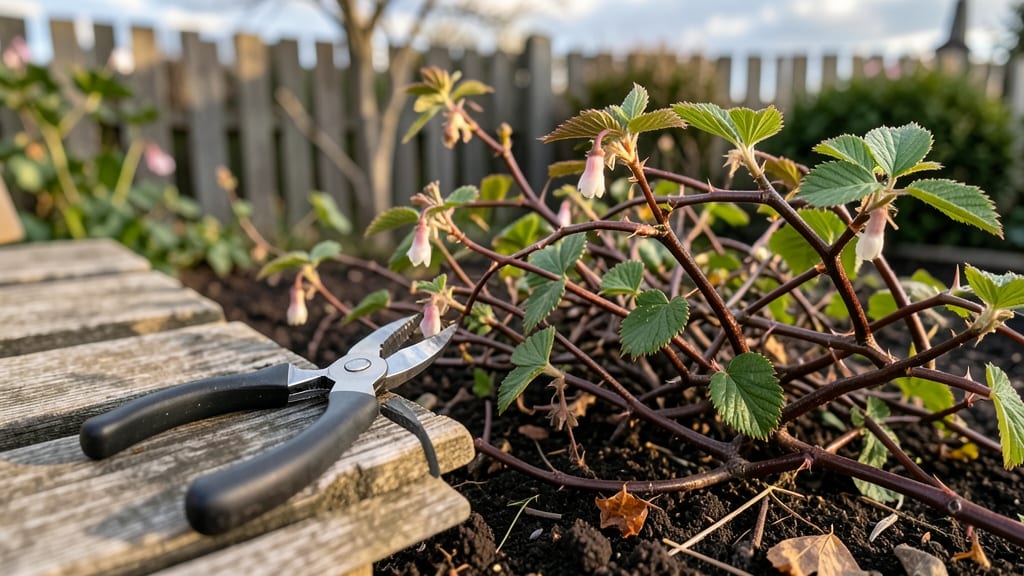
Pruning blackberry plants three times a year turns tangled thickets into productive powerhouses. ✨ I’ve spent years wrestling with blackberry canes—until I learned the simple seasonal trims that double my harvest and keep plants healthy.
The key isn’t just cutting back; it’s timing those cuts to match the plant’s natural growth cycle.
You’ll need just three tools: sharp pruning shears, loppers for thicker canes, and a clean cloth to wipe tools between cuts. Most pruning happens in late winter, summer, and early fall, but the exact timing depends on whether you grow primocanes (floral canes) or floricane (fruit-bearing) varieties.
My thornless primocanes, for example, need aggressive winter cuts to encourage new growth.
After pruning, you’ll see new shoots emerge within weeks, and those canes will produce fruit earlier and more abundantly. The plants stay compact, easier to manage, and resistant to disease—no more struggling through tangled messes.
By summer’s end, you’ll have a tidy, thriving bush that rewards you with fruit from June through October.
This method works for both home gardens and small-scale farms, whether you’re dealing with thorny varieties or thornless types. The secret is consistency—just 30 minutes every few months makes all the difference. Let’s get those canes in shape!
📚 In This Guide
- What you need
- Instructions
- Tips and common mistakes
- Wrapping up and next steps
What you need
- ● Pruning shears (secateurs) – Bypass-style (for clean cuts), sharp and sterilized, with a 4- to 6-inch blade for thick canes.
- ● Loppers – Long-handled (24-36 inches), rated for 2-inch cuts, for thicker canes or hard-to-reach branches.
- ● Gloves – Heavy-duty, cut-resistant (e.g., leather or reinforced fabric) to protect against thorns and scrapes.
- ● Disinfectant (70% isopropyl alcohol or bleach solution) – 1 part bleach to 9 parts water to sterilize tools between cuts and prevent disease spread.
- ● Rake or garden fork – For clearing debris and loosening soil around the plant base.
- ○ Pruning saw (optional but helpful) – Curved-tooth blade for large, woody canes that loppers can’t handle.
- ○ Markers or flags (optional) – Colored plant ties or stakes to tag canes for future reference (e.g., "keep" vs. "remove").
- ● Mulch (straw, wood chips, or pine needles) – 2-3 inches thick to protect roots and retain moisture post-pruning.
- ● Knee pads or a small stool – For comfort when working close to the ground.
- ● Safety glasses – To shield eyes from debris or sap splashes.
- ● Garden twine or zip ties – For securing canes to trellises or supports.
- ● Compost bin or bag – To collect pruned canes for composting (avoid diseased or pest-infested material!).
Step-by-step guide for pruning blackberry plants
Pruning blackberries isn’t just about keeping plants tidy—it’s the secret to bigger yields and healthier canes.
✂️ Step 1: Late Winter Pruning (Dormant Season)
Start in late winter, just as buds begin to swell but before new growth appears. This is when you’ll see two types of canes: last year’s fruiting canes (thick, brown, and woody) and this year’s primocanes (thin, green, and flexible). Use your pruning shears to cut the old fruiting canes down to the ground—no exceptions. These canes have already borne fruit and won’t produce again.
Next, thin out any weak or crossing primocanes, leaving only the strongest 6-8 canes per plant. You’re creating space for airflow and sunlight to reach the center of the plant. If you leave too many canes, they’ll compete for nutrients, and your harvest will suffer. I like to leave a few extra canes just in case, but never more than 10 total.
☀️ Step 2: Summer Pruning (Mid-Season Maintenance)
About 6-8 weeks after flowering, when the primocanes have grown to about 4-5 feet tall, it’s time for your second prune. Look for any primocanes that are growing too close together or crossing over others. Cut these back to the ground immediately—they’re stealing energy from your main canes. This is also the time to remove any suckers growing from the base of the plant.
Pay attention to the tips of your fruiting canes. If they’re growing too vigorously, pinch them back by about 1/3 to encourage the plant to focus energy on ripening the berries rather than growing more canes. You’ll know you’re doing it right when you see more berries forming along the canes rather than just at the tips.
⏰ Step 3: Post-Harvest Pruning (Fall Cleanup)
After your final harvest of the season, it’s time to tidy up. Remove any canes that have stopped producing or are diseased—these are easy to spot because they’ll be bare or have blackened cankers. Cut them back to the ground. This reduces the risk of pests and diseases overwintering in your plant.
Next, give your plant a light pruning to remove any dead or dying leaves. This improves airflow and helps prevent fungal diseases. I also like to add a 2-3 inch layer of mulch around the base of the plant (if using) to protect the roots from freezing temperatures. This step keeps your blackberries healthy and ready to burst into growth next spring.
Tips & tricks for pruning blackberry plants
Between us, I've learned these tricks the hard way after seeing blackberry plants struggle from overcrowding and neglect.
Timing is Everything: Late winter pruning is your golden window—buds should just be swelling, not breaking yet. If you prune too early, you risk damaging dormant buds; too late, and new growth starts, making it harder to identify last year's fruiting canes. I mark my calendar for mid-February in most climates, but check your local frost dates.
Visual Identification: The difference between fruiting canes and primocanes is night-and-day: fruiting canes are thick, brown, and woody (the ones that bore fruit last year), while primocanes are thin, green, and flexible (this year's growth). If you're unsure, gently scratch the cane—fruiting canes will have small scars where last year's berries grew.
Pruning Shears Matter: Don't use dull scissors or hedge clippers—they crush canes instead of making clean cuts. Invest in good-quality pruning shears with sharp blades. I also sterilize my shears with rubbing alcohol between cuts to prevent spreading disease from any infected canes you might encounter.
Mulching Strategy: That 2-3 inch layer of mulch in fall isn't just decoration—it's insulation. Organic mulch like straw or wood chips breaks down over winter, adding nutrients to the soil while protecting roots from temperature swings. I always add mine right after the final harvest cleanup to give roots maximum protection.
Pro Tips for Blackberry Plant Pruning
- Between us, I've learned these tricks the hard way after seeing blackberry plants struggle from overcrowding and neglect.
- Timing is Everything: Late winter pruning is your golden window—buds should just be swelling, not breaking yet.
- If you're unsure, gently scratch the cane—fruiting canes will have small scars where last year's berries grew.
Frequently asked questions
Got questions about pruning your blackberry plants? You’re not alone! Here are some of the most common concerns—and their answers—to help you keep your bushes thriving year-round.
When is the best time to prune blackberry plants?
Prune blackberries after harvest in late summer or early fall for summer-bearing varieties, and in late winter (before buds swell) for fall-bearing types. Avoid pruning in spring, as it can remove potential fruit buds.
How much should I cut back my blackberry bushes?
For summer-bearing varieties, cut back canes that fruited last year to the ground (they’re called "primocanes" this season). For fall-bearing types, prune all canes to 2-3 feet tall after harvest. Never remove more than ⅓ of the plant at once.
What if my blackberries aren’t fruiting after pruning?
Check for three key issues:
- Age: Young plants (1-2 years) need time to establish.
- Variety: Fall-bearing types fruit on second-year canes.
- Light/Sun: Shady spots reduce fruit production.
Can I prune blackberries in winter?
Yes! Late winter (just before buds break) is ideal for fall-bearing varieties. Cut canes to 2–3 feet tall to encourage new growth. But wait until spring for summer-bearing types—they fruit on new canes.
What should I do with the pruned canes?
Remove pruned canes from the area to prevent disease. Chop them into small pieces and compost (if disease-free) or dispose of them in yard waste. Avoid leaving old canes near the plant—they harbor pests and fungi.
Pro Tip:
Label your canes! Use flagging tape to mark primocanes (first-year growth) and floricanes (second-year fruiting canes) for easier identification during pruning. This trick saves time and stress!
Wrapping up and next steps
Mastering blackberry plant pruning is your ticket to a bountiful, year-round harvest—no more missed berries or tangled canes! By following the three-season trim strategy, you’ll keep your plants healthy, boost fruit production, and make maintenance a breeze.
Whether you’re a seasoned gardener or just starting, these steps will set you up for success.
Ready to take the next step? Grab your pruners, mark your calendar for the next trim cycle, and enjoy the sweet rewards of your hard work! 🍇✨