
Pruning
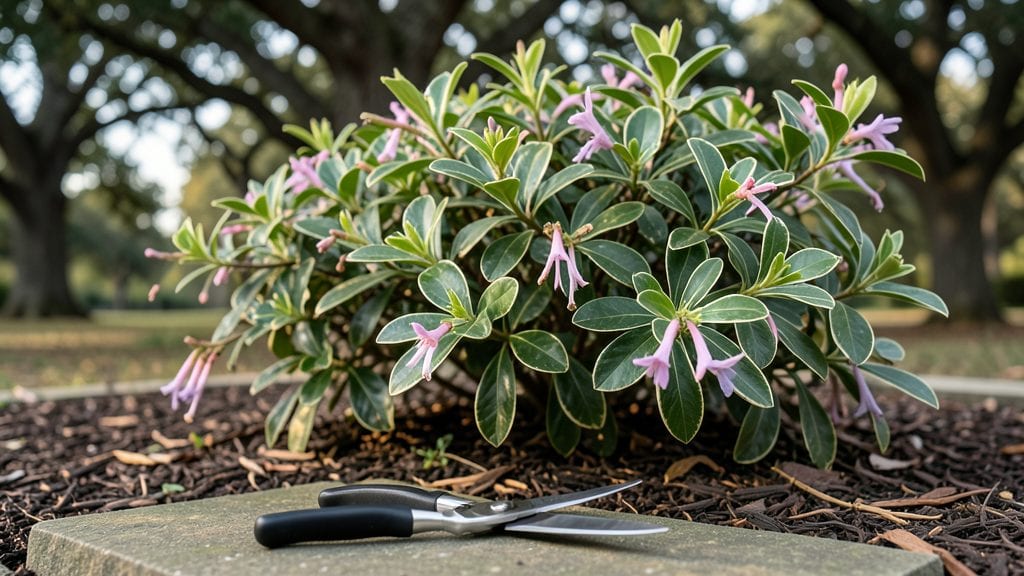
Pruning abelia plants transforms them from straggly shrubs into neat, blooming showstoppers—and the best time to tackle it is just before new growth starts in late winter or early spring. ✂️ I’ve watched my abelia go from a tangled mess to a velvety-green, flower-covered beauty by following this simple timing rule: prune when the buds swell but before leaves appear.
The key is cutting back about one-third of the oldest stems to the base, which encourages fresh, vigorous growth and more blooms.
You’ll need just three basic tools: sharp pruning shears for clean cuts, gloves to protect your hands from thorns, and a small bucket to collect clippings. Avoid pruning in fall or summer—late-season cuts can leave stems vulnerable to cold damage, while summer pruning can reduce next year’s flowers.
The secret to success? Focus on removing dead, crossing, or weak branches first, then shape the plant by thinning out the center to improve airflow.
After pruning, your abelia will reward you with bright pink or white flowers by late spring, followed by glossy foliage that stays vibrant all season. The first flush of new growth appears within 2-3 weeks, and if you fertilize lightly after pruning, you’ll get even more lush branches.
Just avoid heavy pruning in the first year—young abelias need time to establish their structure before aggressive shaping.
This method works for both semi-evergreen and deciduous abelias, whether you’re shaping a hedge or a single specimen. The same principles apply to container-grown abelias, though you’ll need to prune more frequently to keep them compact.
Here’s how to keep your plant thriving year-round without common mistakes like over-pruning or cutting into old wood.
📚 In This Guide
- What you need
- Instructions
- Tips and common mistakes
- Wrapping up and next steps
What you need
- ● Bypass pruning shears – Sharp, high-quality shears (e.g., Felco or Fiskars) for clean cuts on small to medium stems.
- ● Loppers – For thicker branches (½"–1½" diameter)—look for bypass or anvil types with a comfortable grip.
- ○ Hand pruners (optional but handy) – For precision trimming on delicate stems or tight spaces.
- ● Garden gloves – Thick, cut-resistant gloves (e.g., Mechanix or heavy-duty leather) to protect your hands.
- ● Disinfectant (70% isopropyl alcohol or bleach solution) – 1 part bleach to 9 parts water to sterilize tools between cuts and prevent disease.
- ● Rag or paper towels – For wiping down tools and cleaning sap off blades.
- ● Pruning saw (if needed) – For very thick branches (over 1½")—a curved blade works best.
- ○ Garden twine or ties – Optional but useful for securing branches during heavy pruning.
- ● Plant growth regulator (e.g., hydrogen peroxide spray) – Diluted 3% solution (1:10 ratio) to promote healing and reduce shock.
- ● Mulch or compost – To replenish soil after pruning and support recovery.
- ● Plant marker or labels – If you’re pruning multiple Abelia varieties, label them to avoid confusion.
- ● Safety glasses – Recommended if working near eyes or in windy conditions to protect from debris.
Step-by-Step guide to reviving your abelia with pruning
This is the method I use to keep my abelia bushes lush, blooming, and compact year after year.
✂️ Step 1: Prune Immediately After Flowering
Start your abelia pruning right after the flowers fade, usually in late spring or early summer. This timing ensures you don’t cut off next year’s blooms. I like to wait until the spent flowers turn brown and drop naturally—this is your cue that the plant has finished flowering for the season.
Use clean, sharp pruning shears to cut back about one-third of the oldest stems to the ground. These are the woody, thicker stems that no longer produce as many flowers. You’ll notice they’re often the ones that look bare or leggy compared to the newer growth. This aggressive cut encourages fresh, vibrant growth from the base.
✂️ Step 2: Shape the Bush in Late Winter
In late winter or early spring, before new growth begins, focus on shaping the abelia. This is when the plant is dormant, making it easier to see its natural form. I step back and look at the bush as a whole—imagine an open, rounded shape with good airflow in the center.
Trim back any overgrown or crossing branches to open up the center. Cut just above a leaf bud or outward-facing growth point to encourage outward growth rather than inward. Avoid cutting into old wood—you’ll know it’s too old if it’s thick and woody with no new growth. This step keeps the plant healthy and prevents disease by improving air circulation.
✂️ Step 3: Light Maintenance Pruning Mid-Summer
About mid-summer, give your abelia a quick check for any stray branches that have grown too long or out of shape. This isn’t a heavy pruning—just a light trim to maintain the form you established earlier. Look for branches that are growing too close together or rubbing against each other, as these can cause damage.
Pinch back the tips of new growth if the bush is getting too leggy. You’ll see this as long, thin stems with small leaves spaced far apart. Cutting these back encourages bushier growth and more flowers. I usually trim just above a set of leaves or a leaf bud, using my fingers to pinch rather than shears for small cuts.
✂️ Step 4: Clean Up Debris and Sanitize Tools
After every pruning session, remove all the clippings from the base of the plant. Leaving them there can attract pests or disease. I rake them up and dispose of them in the trash or compost bin—never leave them piled under the bush. This keeps your abelia healthy and reduces the risk of fungal issues.
Sanitize your pruning tools with rubbing alcohol or a 10% bleach solution to prevent spreading disease between cuts. I wipe down my shears after every few cuts, especially if I’ve been working with multiple plants. This small step saves a lot of trouble later by keeping your tools clean and sharp for the next pruning session.
Tips & tricks for perfect abelia plant pruning
Here's what I've learned after years of shaping my abelia bushes—these tricks make all the difference between a scraggly plant and one that blooms beautifully year after year.
The Timing Secret: In Step 1, when you're pruning after flowering, don't rush—wait until at least 80% of the flowers have turned brown and dropped naturally. This ensures you're not cutting off next year's blooms that might still be forming. I've seen people prune too early and end up with sparse flowering the following season.
Visual Cue for Step 2: When shaping your abelia in late winter, look for branches that cross each other or grow inward—they're the ones to trim first. I imagine the plant as a rounded vase shape, with all branches growing outward. This creates that perfect open center that prevents disease and allows sunlight to reach all parts of the bush.
Pinching Technique: For Step 3's mid-summer pinch, use your fingers to gently pinch just above a set of leaves rather than using shears. This encourages more branching and bushier growth. I've found this method creates more flowers than cutting with shears, which can sometimes damage the growing tips.
Tool Sanitization: Between every few cuts in Step 4, I wipe my shears with rubbing alcohol on a paper towel. This quick step prevents spreading disease between cuts, especially when working with multiple plants. I keep a small bottle of alcohol in my gardening tool bag for easy access during pruning sessions.
Pro Tips for Abelia Plant Pruning
- Here's what I've learned after years of shaping my abelia bushes—these tricks make all the difference between a scraggly plant and one that blooms beautifully year after year.
- The Timing Secret: In Step 1, when you're pruning after flowering, don't rush—wait until at least 80% of the flowers have turned brown and dropped naturally.
- Visual Cue for Step 2: When shaping your abelia in late winter, look for branches that cross each other or grow inward—they're the ones to trim first.
Frequently asked questions
Got questions about keeping your Abelia looking its best? Here are some of the most common concerns—plus quick, expert-backed answers to keep your plant thriving!
When is the best time to prune my Abelia?
The ideal time to prune Abelia is late winter or early spring (just before new growth starts) or right after flowering (late summer/early fall). Avoid heavy pruning in fall—it can stimulate tender new growth that won’t survive winter. Light shaping after blooms is fine!
How much can I trim back my Abelia?
You can safely prune Abelia by up to one-third of its total height in a single session. For dramatic shaping, spread pruning over 2–3 years to avoid stress. Over-pruning (cutting back more than ⅓) may reduce flowering or harm the plant’s structure.
Will pruning my Abelia affect next year’s flowers?
Pruning Abelia after flowering (late summer) encourages more blooms next year by promoting new growth. However, heavy pruning in late winter may delay flowering slightly. Balance shape and bloom goals—light trims year-round work best for continuous flowers!
My Abelia looks leggy after pruning—what went wrong?
Leggy growth often happens from over-pruning too late in the season (fall/winter) or cutting back too aggressively. Fix it by pruning just above a leaf node (where new growth emerges) and fertilizing lightly in spring. Avoid pruning Abelia in extreme heat—it stresses the plant.
Can I prune my Abelia into a hedge or topiary shape?
Yes! Abelia responds well to formal shaping, especially varieties like Abelia × grandiflora ‘Kaleidoscope’. Use hand pruners for detail and hedge shears for clean edges. Prune weekly during growing season to maintain shape, but avoid heavy cuts—focus on gradual refinement.
Wrapping up and next steps
Pruning your Abelia plant isn’t just about keeping it tidy—it’s your secret to vibrant blooms, lush growth, and a year-round showstopper! 🌸 By following the right timing, techniques, and tools, you’ll encourage healthy stems, prevent disease, and shape your plant with confidence.
Whether you’re a pruning pro or a curious beginner, a little effort now means big rewards later.
Ready to give your Abelia the TLC it deserves? Grab your shears, mark your calendar, and start pruning today! Your plant—and your garden—will thank you. 🌿✨