Pruning
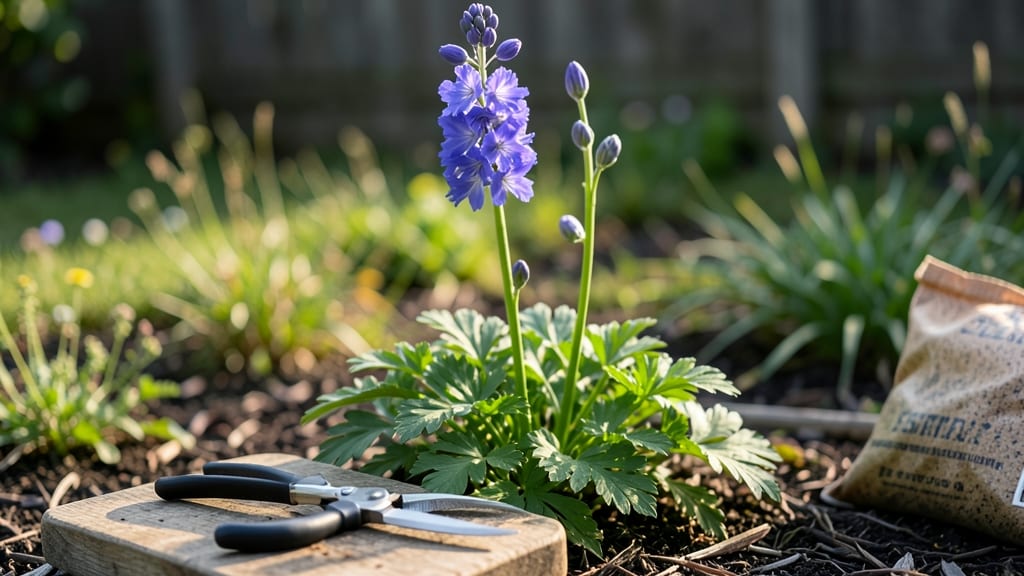
Pruning delphinium plants isn't just about tidying up—it's the secret to those stunning, towering blooms that make your garden the envy of the neighborhood. I learned the hard way that skipping this step means fewer flowers and leggy stems that flop over by midsummer.
The right cuts at the right time transform delphiniums from pretty to show-stopping.
You only need sharp pruners, a pair of gloves, and a clear morning to work. Timing matters most: deadhead spent blooms throughout summer and do a heavy prune in early fall to encourage fresh growth.
Most gardeners mess up by cutting too late or too aggressively—both lead to weak stems or no new blooms. I’ll show you the exact technique that keeps my delphiniums 6 feet tall and packed with blooms every season.
The payoff is immediate: pruned plants rebound with bold new shoots within weeks, and the blooms arrive earlier next year. You’ll end up with stems so sturdy they don’t need staking, and the flowers stay vibrant longer.
Even if you’ve killed delphiniums before, this method is foolproof—just follow the cuts and timing, and you’ll get results.
Works for both cottage garden delphiniums and dwarf varieties, and adapts to containers or borders. Once you master the trick, you’ll never let a single bloom go to seed without clipping it. Let’s get those shears sharp and start pruning!
📚 In This Guide
- What you need
- Instructions
- Tips and common mistakes
- Wrapping up and next steps
What you need
- ● Sharp pruning shears – Bypass pruners (4–6-inch blades) for clean cuts; sterilize with rubbing alcohol before use.
- ● Garden gloves – Nitrile-coated (for grip + protection against thorns).
- ● Disinfectant spray – 70% isopropyl alcohol or hydrogen peroxide (1 part per 10 parts water).
- ● Garden twine or plant ties – 3–4 feet per plant (for staking post-pruning).
- ● Sturdy stakes or cages – 5–6 ft tall (bamboo or metal; 1–2 per plant if needed).
- ● Compost or mulch – 2–3 inches (to replenish soil post-pruning).
- ● Watering can or hose – With a gentle spray nozzle (for post-pruning hydration).
- ● Hand pruners – For smaller stems or tight spots.
- ● Knee pad or stool – If your delphiniums are taller than you!
- ● Plant food (balanced 10-10-10) – 1 tbsp per plant after pruning for a boost.
- ● Spray bottle with water – To mist foliage on hot days post-pruning.
- ● Notebook & pen – To log pruning dates and plant responses.
Step-by-step instructions for pruning delphinium plants
Here's how to keep your delphiniums thriving with simple, effective pruning techniques.
Identify and Remove Spent Blooms
Start by inspecting each flower spike for blooms that have faded or are wilting. Delphiniums produce stunning vertical flower clusters, but each bloom only lasts a few days. Use clean, sharp pruning shears to snip off the entire spent flower head just above the next set of healthy buds. This redirects the plant's energy from seed production back into new growth and more blooms.
Look for flower heads that have turned brown or lost their vibrant color—these are ready to be removed. Avoid cutting into green, healthy stems, as this can damage the plant. I like to work in the morning when the stems are firm and less likely to tear. If you see any signs of disease or pests on the spent blooms, dispose of them in the trash rather than the compost.
Thin Overcrowded Flower Spikes
Delphiniums often produce multiple flower spikes from a single stem. If you notice spikes growing too close together, they'll compete for nutrients and light, resulting in weaker blooms. Use your pruning shears to cut back the smaller or weaker spikes to about 2 inches above the base. This encourages the remaining spikes to grow stronger and taller.
Focus on keeping the healthiest, most upright spikes. You'll know you're doing it right when you see new side shoots emerging from the base of the plant within a few weeks. These side shoots will develop into fresh flower spikes, giving you a second round of blooms later in the season. Avoid removing more than one-third of the plant's total flower spikes at once to prevent stress.
Cut Back Leggy or Weak Growth
If your delphiniums have developed long, thin stems with few leaves or blooms, they're likely leggy from insufficient light or overcrowding. Use your pruning shears to trim these weak stems back to 4-6 inches above the ground. This may seem drastic, but it encourages the plant to produce new, stronger growth from the base.
Leggy growth often appears in late summer when days grow shorter and temperatures rise. After cutting back, water the plant deeply to help it recover. You'll notice new shoots emerging within 2-3 weeks, and these will develop into sturdy stems with fresh blooms. If you're pruning in early fall, hold off on cutting back until after the first frost to allow the plant to store energy for next season.
Lightly Prune Foliage for Airflow
Delphiniums have large, lush leaves that can create a dense canopy, trapping moisture and inviting fungal diseases like powdery mildew. Use your pruning shears to thin out the lower leaves and any that are touching the ground. Remove only one-third of the foliage at a time to avoid shocking the plant. Focus on improving airflow around the center of the plant where stems and leaves overlap.
Look for leaves that are yellowing, spotted, or otherwise damaged. These should be removed immediately to prevent the spread of disease. After pruning, step back and inspect the plant from all sides. You're aiming for a balanced shape with enough leaves to support photosynthesis but not so many that airflow is restricted. This step is especially important in humid climates or during rainy seasons.
Clean Up and Prepare for Next Season
Once you've finished pruning, gather all the cuttings and dispose of them in the trash, not the compost, to prevent the spread of disease. Use a 10% bleach solution (1 part bleach to 9 parts water) to clean your pruning shears before and after use. This simple step prevents cross-contamination between plants.
After pruning, apply a 2-inch layer of mulch around the base of the plant to retain moisture and regulate soil temperature. Water deeply to help the plant recover from pruning. If you're in a colder climate, consider wrapping the base of the plant with burlap or straw in late fall to protect it from freezing temperatures. This preparation ensures your delphiniums will bounce back stronger next season.
Tips & tricks for pruning delphinium plants
These simple yet transformative tips will help you extend your delphiniums' blooming season and keep them thriving for years.
Timing is Everything: Prune in the morning when stems are firm and less prone to tearing. Early morning also allows any minor cuts to heal before the heat of the day. I've found that working in the cooler hours of the day reduces stress on the plant and makes the process much cleaner. If you must prune later in the day, be especially gentle with the stems to avoid unnecessary damage.
Tool Preparation Matters: Always clean your pruning shears with a 10% bleach solution before and after use to prevent disease spread between plants. I keep a small spray bottle of this solution handy in my gardening tool shed. Sharp shears are equally important—dull blades crush stems instead of making clean cuts. Test your shears on a scrap piece of wood first to ensure they're sharp enough for clean cuts through delphinium stems.
Visual Cues for Pruning: When thinning overcrowded flower spikes in Step 2, look for the healthiest spikes that stand upright and have vibrant green leaves. The ideal cut is about 2 inches above the base, which encourages new side shoots to develop. You'll know you're doing it right when you see fresh growth emerging from the base within 2-3 weeks. This visual feedback confirms you're on the right track.
Seasonal Considerations: The timing of your pruning makes all the difference. For late summer pruning, focus on removing spent blooms and thinning crowded spikes to encourage fall blooms. In early fall, hold off on cutting back leggy growth until after the first frost to allow the plant to store energy for next season. This seasonal approach ensures your delphiniums remain healthy and continue producing stunning blooms throughout their growing period.
Pro Tips for Pruning Delphinium Plants
- These simple yet transformative tips will help you extend your delphiniums' blooming season and keep them thriving fo...
- Timing is Everything: Prune in the morning when stems are firm and less prone to tearing. Early morning also allows a...
- Tool Preparation Matters: Always clean your pruning shears with a 10% bleach solution before and after use to prevent...
Frequently asked questions
Got questions about pruning delphiniums?
Here are the answers to the most common ones—so you can keep those towering blooms thriving!
When is the best time to prune delphiniums?
Prune delphiniums after the first flush of blooms in early summer (June-July) to encourage a second round of flowers. For perennials, cut back dead or faded stems to the base in late fall or early spring before new growth starts. Timing matters!
How much should I cut back delphinium stems?
For annuals, trim stems to 6–12 inches tall after flowering to redirect energy. For perennials, cut back one-third to halfway after blooms fade, but leave some foliage to protect the crown. Avoid over-pruning—delphiniums store energy in their roots!
What if my delphiniums don’t rebloom after pruning?
Reblooming depends on light, water, and soil health. If yours skips the second bloom, check for overcrowding or poor drainage. Divide clumps every 3–4 years or fertilize lightly with low-nitrogen, high-phosphorus feed to boost flowering.
Can I prune delphiniums too late in the season?
Yes! Pruning after Labor Day (late August/September) can stunt new growth before winter, leaving plants vulnerable to frost. If you must prune late, wait until after the first hard frost and cut stems to 4–6 inches tall to protect the crown.
Do I need to deadhead delphiniums if I’m not pruning for reblooms?
Deadheading (removing spent blooms) isn’t required for reblooms, but it keeps plants tidy and prevents seed pods from draining energy. If you’re growing delphiniums for seeds or don’t mind a wild look, skip it—but most gardeners prefer the polished vibe!
What if my delphiniums look leggy after pruning?
Leggy growth often means too much shade or over-pruning. Move plants to full sun (6+ hours/day) and prune selectively—trim only the longest, weakest stems to encourage bushier regrowth. A light balanced fertilizer can help too!
Wrapping up and next steps
Pruning your delphinium plants doesn’t have to be intimidating—it’s all about timing, technique, and a little TLC! 🌸 By deadheading spent blooms and trimming back leggy stems, you’ll encourage lush, year-round growth and those stunning towering blooms you love.
Remember, consistency is key, so grab those shears and enjoy the process!
Ready to transform your garden? Start small: pick just one plant to practice on this week, and watch your delphiniums thrive! For extra inspiration, join gardening forums or snap photos of your progress—your green thumb is about to shine brighter than ever.