Pruning
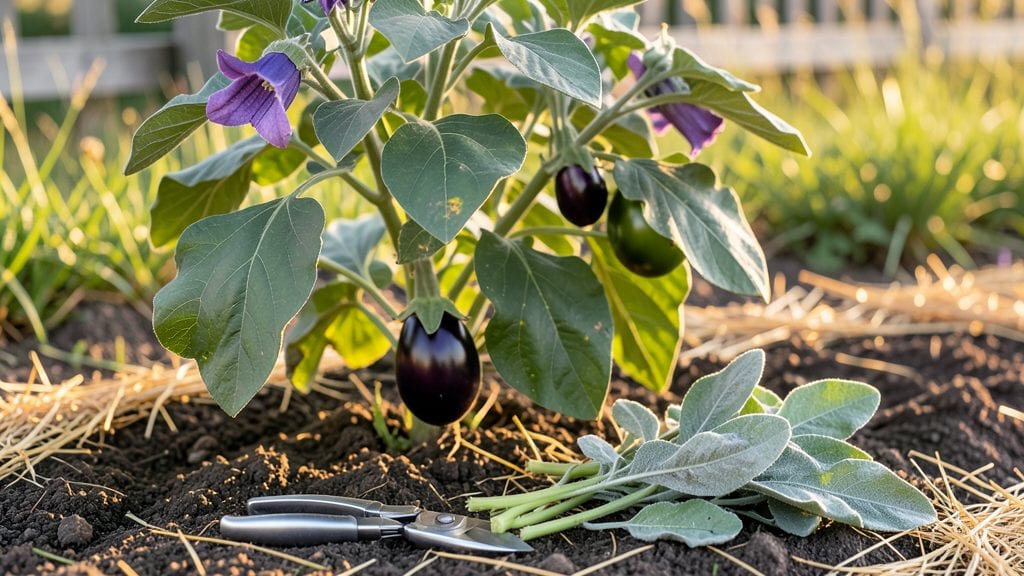
Pruning aubergine plants isn't just about trimming—it's the secret to turning one plant into a fruit-producing machine. ✨ I learned this after my first eggplant season when I ignored pruning and ended up with just three small fruits instead of a steady harvest.
The right cuts at the right time can double—or even triple—your yield while keeping plants healthy and disease-free.
You’ll need sharp pruning shears, a clean towel to wipe between cuts, and a sunny day when temperatures are above 65°F. Focus on three key trims: the first when plants hit 12 inches, the second when they’re 24 inches, and the third as flowers appear.
Each trim encourages bushier growth and more flower clusters, which means more fruit. Beginners often over-prune—stick to removing only the top two leaves after each trim to avoid shocking the plant.
What you’ll get is a plant that keeps producing fruit all season, not just a single flush. The fruit stays larger, the plant stays sturdy, and you’ll avoid the common problem of weak stems snapping under heavy loads.
My pruned plants last 3-4 months of production, while unpruned ones fizzle out after 6 weeks. The key is patience—each trim takes just 10 minutes, but the payoff is worth it.
This works for both patio containers and in-ground plants, though container-grown eggplants need slightly more frequent trims. The same principles apply whether you’re growing the classic Black Beauty or a compact Italian variety. Once you master the timing, you’ll never go back to letting eggplants grow wild.
📚 In This Guide
- What you need
- Instructions
- Tips and common mistakes
- Wrapping up and next steps
What you need
- ● Pruning shears or sharp bypass pruners – Choose sterilized, sharp tools (avoid dull blades to prevent crushing stems). A 5-inch to 7-inch size works best for most aubergine plants.
- ● Gloves – Wear gardening gloves (nitrile or leather) to protect your hands from thorns (some varieties have them!) and dirt.
- ● Disinfectant (70% isopropyl alcohol or bleach solution) – Clean your pruners before and after each use to prevent disease spread (1 part bleach to 9 parts water).
- ● Compost or mulch – Have a bucket or bin ready to collect pruned branches for composting.
- ○ Water spray bottle (optional but handy) – A 16-ounce spray bottle with water helps clean wounds and reduce stress on the plant.
- ● Hand pruners (smaller, for delicate trimming) – Great for fine-tuning smaller branches or suckers.
- ● Plant tie or twine – Useful if your aubergine plants need support after heavy pruning (especially for indeterminate varieties).
- ● Garden twine or stakes – Helps prop up the plant if it becomes top-heavy post-pruning.
- ○ Pruning sealant (optional) – A natural option like beeswax can help protect larger cuts, though aubergines often heal well without it.
- ● Notebook or camera – Document your pruning timeline and progress for future reference!
How to prune aubergine plants for continuous fruit production
Three well-timed cuts will transform your eggplant from a one-time producer into a steady harvest machine.
✂️ Step 1: Remove Suckers for Stronger Growth
Start by identifying the suckers—those small shoots growing between the main stem and branches. These compete for energy with your fruit. Use clean, sharp pruning shears to snip them off at the base, leaving no stub. I do this every 2-3 weeks during the growing season, always working in the morning when plants are hydrated.
Watch for new suckers forming in the leaf axils. The key is to remove them before they reach 2 inches tall, when they're still soft and easy to pinch. This redirects energy to existing flowers and fruit, giving you more harvests. If you miss a sucker, don't stress—just catch the next one.
✂️ Step 2: Prune Lower Leaves for Airflow
When your plants reach 18-24 inches tall, start removing the largest leaves from the bottom third of the plant. These leaves shade the lower stem and trap moisture, creating ideal conditions for fungal diseases. Use your fingers to gently twist leaves off rather than cutting—the stem heals faster this way.
Remove leaves until you can see 4-6 inches of bare stem between the soil and the first healthy foliage. This improves airflow and sunlight penetration to lower branches. I like to do this after a light rain when the plants are flexible and less likely to snap. Never remove more than 20% of the foliage at once—this can shock the plant.
✂️ Step 3: Trim Flower Clusters for Fruit Size
When you see 3-4 flowers forming in a cluster, remove all but the strongest one. This ensures your plant puts all its energy into developing a single, large eggplant rather than several small ones. Use your fingers to gently pinch off excess flowers at their base—no need for shears here.
Focus on the main stem and primary branches first, then work your way to smaller branches. This method gives you fewer but larger, more flavorful fruits. I always leave at least one flower per cluster on lower branches to ensure continuous production. After trimming, give the plant a light watering to help it recover.
⏰ Step 4: Late-Season Maintenance for Next Year
As temperatures drop below 60°F in fall, stop all pruning and let the plant focus on ripening existing fruit. Once frost threatens, cut the plant back to 6 inches above ground level to encourage new growth from the base next season. Use clean shears and make cuts at a 45-degree angle just above a leaf node.
Remove all remaining fruit and leaves, then compost them to prevent disease carryover. This clean-up gives your plant a fresh start in spring. I always mark the spot where I pruned so I know exactly where to plant next year. With proper winter care, your eggplant will reward you with even better harvests the following season.
Tips & tricks for pruning aubergine plants
Mastering these three pruning techniques will turn your eggplant into a continuous harvest machine—here's how to do it right.
Timing is Everything: I can't stress enough how crucial those 2-3 week intervals are for sucker removal in Step 1. Eggplants grow fast, and suckers can quickly become unmanageable. Set a reminder on your phone or tie a string around the stem as a visual cue. Morning is the best time because plants are turgid and less likely to snap when you're working with them.
Visual Cues for Perfect Pruning: When removing lower leaves in Step 2, aim for that 4-6 inch bare stem—it's your target. Think of it like creating a "skirt" around the base. If you're unsure, compare your plant to a reference photo before and after pruning. The goal is to let light reach the lower branches while maintaining the plant's overall structure.
Flower Cluster Strategy: In Step 3, focus on the main stem first—this is where the plant puts most of its energy. I always start at the bottom and work my way up, leaving the top clusters for last. This ensures your largest, most flavorful eggplants develop lower on the plant where they're easier to harvest. Pro tip: The "strongest" flower is usually the one with the most vibrant color and slightly larger size.
Seasonal Transition Wisdom: That 60°F threshold in Step 4 is your cue to stop all pruning activities. I've learned this the hard way—pruning too late in the season can stress the plant just when it needs to focus on ripening fruit. Mark your calendar when temperatures consistently drop below this point, and give your plants a well-deserved rest period.
Pro Tips for Pruning Aubergine Plants
- Mastering these three pruning techniques will turn your eggplant into a continuous harvest machine—here's how to do it right.
- Timing is Everything: I can't stress enough how crucial those 2-3 week intervals are for sucker removal in Step 1.
- Visual Cues for Perfect Pruning: When removing lower leaves in Step 2, aim for that 4-6 inch bare stem—it's your target.
Frequently asked questions
Got questions about pruning aubergine plants?
Here are answers to the most common concerns—from timing to troubleshooting—to help you grow healthier, more productive plants all year long!
When is the best time to prune aubergine plants?
Prune your aubergine plants early in the morning when temperatures are cool to reduce stress. Start when plants are 12–18 inches tall (around 4–6 weeks after transplanting) and continue every 4–6 weeks. Avoid pruning during heatwaves or after heavy rain to prevent disease risks.
How do I know which branches to cut?
Focus on removing suckers (small shoots growing between the main stem and branches) and any yellowing or diseased leaves. Keep only the top 2–3 main branches per plant, as these produce the most fruit. Thin crowded stems to improve airflow and sunlight penetration.
Can I prune aubergine plants too much?
Yes! Over-pruning can stress the plant, reduce fruit production, and leave it vulnerable to pests. Limit yourself to 20–30% of the foliage per trim. If you notice stunted growth or fewer flowers after pruning, you’ve likely gone too far.
What should I do if my aubergine plant looks weak after pruning?
Weakness after pruning often means the plant needs recovery time. Water deeply (but avoid overwatering), add a balanced fertilizer (like 10-10-10), and provide shade if temperatures exceed 90°F. Avoid pruning again for at least 2–3 weeks.
Is it okay to prune aubergine plants in winter?
If you’re growing aubergines in a warm climate (like zones 9–11), light pruning is fine to manage growth. However, in colder regions, wait until spring (after the last frost) to prune. Winter pruning can expose tender plants to frost damage.
Wrapping up and next steps
Pruning your aubergine plants isn’t just about keeping them tidy—it’s your secret weapon for bigger yields, healthier growth, and year-round harvests! 🌱 By mastering the three strategic trims (early shaping, mid-season maintenance, and late-season cleanup), you’ll transform your garden into a productivity powerhouse.
Remember, patience and consistency are key—your plants will reward you with plump, delicious fruits all season long.
Now that you’re armed with the know-how, roll up your sleeves and get pruning! Start with the first trim this week, and soon, you’ll be enjoying homegrown aubergines that put store-bought to shame. Happy gardening! 🌿✨