Transplanting
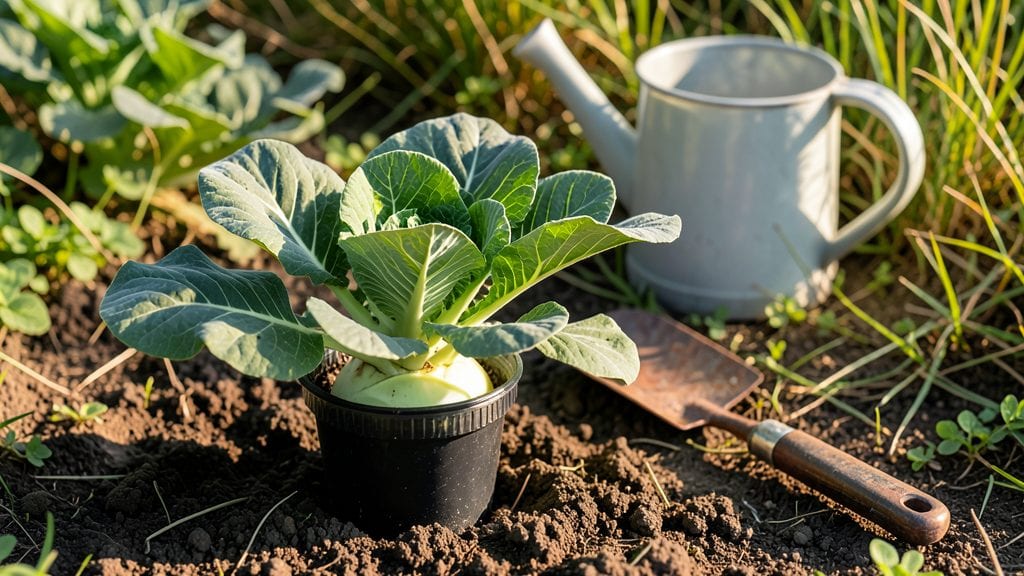
Planting kohlrabi seedlings is where your compact garden gets its most satisfying payoff—those plump, crisp stems ready in just 60 days.
I’ve learned the hard way that kohlrabi roots hate being disturbed, so getting them in the ground right means the difference between a harvest and a sad, stunted plant. The secret isn’t just the timing—it’s how you prep the soil and handle those delicate seedlings.
First, you’ll need well-draining soil mixed with compost (think 2 inches of compost per square foot) and a spot that gets full sun to partial shade.
Kohlrabi seedlings need to be planted 1 inch deep, spaced 12 inches apart in rows 18 inches apart—crowd them, and you’ll fight for stems instead of enjoying them. Cool weather (between 50-70°F) is ideal, so aim for early spring or late summer plantings.
Water deeply right after planting to settle the soil around the roots, then keep it consistently moist but never soggy.
Within 2-3 weeks, you’ll see those first true leaves unfurl, and by midseason, you’ll be harvesting stems at 2-3 inches thick—crisp, sweet, and perfect for salads or roasting. The key is patience; rush the growth, and you’ll get woody stems instead of tender harvests.
Here’s where most gardeners trip up: don’t let the soil dry out or the plants bolt. A mulch layer (straw or grass clippings) keeps moisture steady, and a light shade cloth on hot afternoons prevents stress.
Once you’ve mastered this, you’ll have kohlrabi growing like a weed—just the way it should.
📚 In This Guide
- What you need
- Instructions
- Tips and common mistakes
- Wrapping up and next steps
What you need
- ● Kohlrabi seedlings (6–12 plants, depending on space; choose varieties like 'Purple Vienna or 'White Vienna' for compact growth).
- ● Well-draining potting mix (2–3 gallons per seedling if starting indoors) or loamy garden soil (amended with compost for transplanting).
- ● Organic fertilizer (balanced 10-10-10 or compost tea for nutrient boost).
- ● Watering can or hose with a gentle spray nozzle (kohlrabi hates soggy roots!).
- ● Trowel or transplanting spade (for digging small holes, ~1 inch deeper than the seedling’s root ball).
- ● Garden gloves (to protect hands from prickly stems or rocky soil).
- ● Mulch (straw or shredded leaves) (1–2 inches thick to retain moisture and suppress weeds).
- ○ Row covers or mesh netting (optional for pest protection, especially from cabbage worms).
- ● Sunlight: 5–6 hours of full sun daily (partial shade in hot climates).
- ● Temperature: Transplant seedlings after the last frost when soil is at least 50°F (10°C).
- ● Space: 12–18 inches between plants (or 18–24 inches for larger varieties).
- ● pH-balanced soil: Aim for a pH of 6.0–7.0 (test with a soil kit if unsure).
Step-by-step instructions for planting kohlrabi seedlings
Here's how to establish strong, productive kohlrabi plants that thrive in tight spaces.
Prepare the Planting Site
Kohlrabi thrives in loose, well-draining soil with a pH between 6.0 and 7.0. Work the soil to a depth of 12 inches, breaking up any compacted layers with a garden fork. This ensures roots can spread freely without resistance. I always add 2 inches of compost to the top 6 inches of soil before planting—this improves moisture retention and provides essential nutrients without overwhelming the seedlings.
Choose a location that receives full sun to partial shade, with at least 4 to 6 hours of direct sunlight daily. Kohlrabi can tolerate light afternoon shade in hot climates, but too much shade will lead to leggy stems and poor bulb development. Test the soil moisture by squeezing a handful—if it doesn’t hold together but doesn’t crumble, it’s ready for planting. If it feels too dry, water deeply the day before transplanting to prevent shock.
Space and Plant Seedlings Correctly
Kohlrabi needs 12 to 18 inches between plants and 24 inches between rows to develop properly. This spacing prevents overcrowding, which leads to small, misshapen bulbs. Dig a hole for each seedling that’s just deep enough to accommodate the root ball without burying the stem. Gently remove the seedling from its container and loosen any circling roots with your fingers—this encourages outward growth.
Place the seedling in the hole, ensuring the top of the root ball sits just below soil level. Press the surrounding soil firmly around the base to eliminate air pockets, then water deeply to settle everything. Avoid disturbing the soil surface afterward—kohlrabi roots are shallow and sensitive to disruption. If you’re planting in 4 to 6 weeks before the first frost, use a row cover to protect young seedlings from pests and temperature swings.
Water and Maintain Even Moisture
After planting, water the seedlings deeply once a week, providing 1 to 1.5 inches of water each time. Kohlrabi bulbs swell rapidly when soil moisture is consistent, so let the top 1 to 2 inches of soil dry out between waterings—this prevents cracking and ensures firm, tender bulbs. Use a drip irrigation system or soaker hose to deliver water directly to the root zone, avoiding overhead sprinkling, which can spread disease.
Mulch around the base with 2 to 3 inches of straw or shredded leaves to retain moisture and suppress weeds. Keep the mulch 2 inches away from the stems to prevent rot. Watch for signs of stress—wilting or yellowing leaves signal either underwatering or overwatering. If the soil feels dry 1 inch down, it’s time to water; if it’s soggy, hold off until the surface dries slightly.
Fertilize for Optimal Bulb Development
Apply a balanced, organic fertilizer (such as 5-5-5) at planting time, following label instructions for application rates. Kohlrabi is a heavy feeder, so side-dress with 1 tablespoon of 10-10-10 fertilizer per plant when bulbs begin to form—this is usually 4 to 6 weeks after transplanting. Work the fertilizer into the top 2 inches of soil, keeping it 3 inches away from the stem to avoid burning roots.
If you notice slow growth or pale leaves, the plants may need a nitrogen boost. A liquid fish emulsion applied every 3 weeks can revitalize struggling seedlings. However, avoid over-fertilizing—excess nitrogen leads to leafy growth at the expense of bulb development. Always water thoroughly after fertilizing to help nutrients penetrate the soil and reach the roots.
Monitor and Harvest at Peak Maturity
Kohlrabi bulbs are ready to harvest when they reach 2 to 3 inches in diameter, typically 50 to 60 days after transplanting. Press a finger gently into the bulb—if it yields slightly, it’s at peak tenderness. Harvest in the morning when bulbs are firm and crisp. Use a sharp knife or pruning shears to cut the bulb cleanly, leaving the leaves attached to the plant if you plan to harvest more later.
Leave the leaves in place for 1 to 2 weeks after harvesting the bulb—they continue to photosynthesize and support future growth. If you notice the bulbs becoming woody or developing a bitter taste, harvest immediately. Kohlrabi doesn’t store well, so use or cook with it within 3 to 5 days for the best flavor and texture. Regular harvesting encourages more production, so check plants every 3 to 4 days during peak season.
Tips & tricks for planting kohlrabi seedlings
These insights will help you cultivate thriving kohlrabi plants that maximize yield in limited garden space.
Soil Preparation Insight: When loosening soil to a depth of 12 inches, pay special attention to the top 6 inches where you'll incorporate 2 inches of compost. This layer is critical because kohlrabi roots develop primarily in the upper soil profile. Use a broadfork to break up compaction without disturbing the soil structure too much—this prevents root damage while improving drainage. I've found that adding a handful of perlite to this layer enhances aeration, particularly in heavier clay soils.
Seedling Placement Technique: The 12 to 18 inches between plants might seem generous, but it's essential for bulb formation. Kohlrabi bulbs swell rapidly when they have adequate space to expand. When loosening circling roots, be gentle—you're not trying to prune them, just encourage outward growth. I recommend placing seedlings slightly deeper than their original container level, as this helps stabilize them against wind and provides better moisture retention during establishment.
Watering Strategy: The once-weekly deep watering regimen requires precision. Use a rain gauge or measuring cup to deliver exactly 1 to 1.5 inches of water each time. I've noticed that morning watering (between 6-9 AM) minimizes evaporation and prevents fungal issues. For container gardening, reduce the spacing between waterings to every 3-4 days, as pots dry out more quickly. The key is maintaining consistent moisture without waterlogging—the top 1-2 inches of soil should feel slightly dry but not completely arid.
Fertilization Timing: The 4 to 6 week window for side-dressing with 10-10-10 fertilizer corresponds perfectly with the bulb formation stage. I recommend splitting this application into two doses: half at 4 weeks and half at 6 weeks. This staggered approach prevents nutrient burn while supporting steady growth. When applying liquid fish emulsion every 3 weeks, dilute it to half strength for the first application—this gradual introduction helps seedlings acclimate to the nitrogen boost without shocking their root systems.
Pro Tips for Planting Kohlrabi Seedlings
- These insights will help you cultivate thriving kohlrabi plants that maximize yield in limited garden space.
- Soil Preparation Insight: When loosening soil to a depth of 12 inches, pay special attention to the top 6 inches wher...
- Seedling Placement Technique: The 12 to 18 inches between plants might seem generous, but it's essential for bulb for...
Frequently asked questions
Got questions about planting kohlrabi seedlings? You’re not alone—this versatile veggie has a few quirks! Here are answers to the most common queries to help you grow a thriving crop with confidence.
When is the best time to plant kohlrabi seedlings?
Plant seedlings 2–3 weeks after your last frost date when soil is at least 50°F (10°C). Kohlrabi thrives in cool weather—avoid transplanting in extreme heat (above 80°F/27°C), as it can bolt or develop bitter flavors. For a fall harvest, plant again in late summer (6–8 weeks before first frost).
How long does it take for kohlrabi seedlings to grow after transplanting?
Expect 4–6 weeks from transplanting to harvest-ready bulbs (when they’re 2–3 inches wide). Leaves can be harvested earlier for greens! Monitor size closely—kohlrabi bulbs stop growing once they reach maturity, so don’t wait too long.
Can I plant kohlrabi seedlings too close together?
Yes—but spacing matters! Seedlings need 6–12 inches apart in rows spaced 18–24 inches apart. Overcrowding leads to small, misshapen bulbs and poor air circulation (which invites disease). If your garden is tight, opt for dwarf varieties like ‘Purple Vienna’ (they tolerate closer spacing).
Why are my kohlrabi seedlings wilting or yellowing after transplanting?
Common culprits:
- Transplant shock: Water deeply the day before and after planting to reduce stress.
- Overwatering: Yellow leaves? Check soil moisture—kohlrabi prefers consistently moist but well-drained soil.
- Pests: Flea beetles or cabbage worms can chew leaves. Use row covers or neem oil if needed.
- Nutrient deficiency: Add compost or a balanced fertilizer if leaves turn pale green.
What can I plant instead of kohlrabi if I’m struggling with seedlings?
If kohlrabi seems finicky, try these easy alternatives with similar growth habits:
- Turnips: Fast-growing, edible greens and roots (great for beginners!).
- Radishes: Ready in 3–4 weeks—perfect for small spaces.
- Broccoli raab (rapini): Cold-hardy, leafy, and thrives in cool weather.
- Daikon radishes: Larger roots but just as forgiving as kohlrabi.
All these tolerate similar growing conditions but may be more forgiving for new gardeners!
Wrapping up and next steps
Planting kohlrabi seedlings is a rewarding way to grow a nutritious, space-saving crop—even in small gardens! 🌱 With the right soil prep, spacing, and care, you’ll soon enjoy crisp, versatile bulbs packed with flavor. Remember: consistency in watering and thinning ensures strong roots and bountiful harvests.
Now that you’re ready to plant, take the next step! Start with just a few seedlings to test your garden’s conditions, and soon you’ll be harvesting homegrown kohlrabi to enjoy raw, roasted, or in salads. Happy growing—your future meals will thank you! 🥬✨