Watering
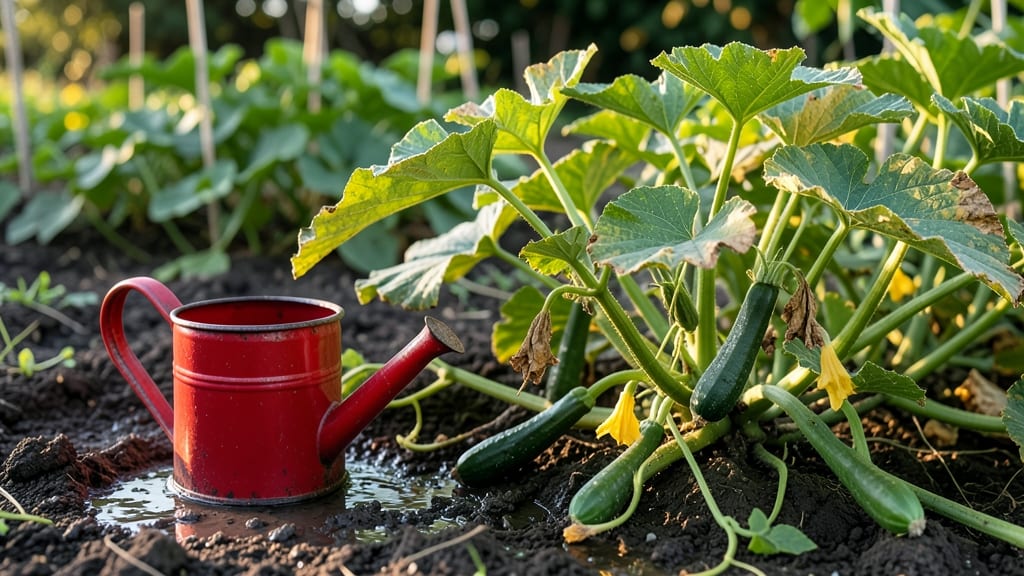
Overwatering squash plants turns your thriving vines into sad, drooping messes faster than you'd think. 🌱 I've seen it happen—one week of heavy watering, and suddenly your squash plants look like they're wilting from exhaustion, not thirst.
The good news? You can revive them with just a few adjustments to your routine.
The problem starts when roots drown in soggy soil, cutting off oxygen and inviting rot. Squash plants need 1-1.5 inches of water per week, but many gardeners double that without realizing it.
Yellowing leaves, mushy stems, and slow growth are your first warnings—don’t ignore them. The fix is simpler than you’d expect: let the soil dry out between waterings and improve drainage.
Here’s what works: Pull back on watering immediately and let the top 2-3 inches of soil dry out before adding more. Mix in compost or perlite to loosen heavy soil, and consider raised beds if your garden stays waterlogged.
Within 5-7 days, you’ll see leaves perk up again as roots recover.
Once you’ve revived them, keep squash plants happy with deep but infrequent watering—focus on the roots, not the leaves. Mulch helps too, locking in moisture without smothering the plants. Stick with this, and your vines will bounce back stronger than ever.
Root Causes of Too Much Water
When your squash plants start wilting despite a soggy soil bed, the issue likely stems from overwatering—a common yet often misunderstood problem. Unlike drought stress, which causes crispy edges, excess moisture disrupts critical plant functions, leading to nutrient deficiencies, root rot, and even death. Here’s why it happens:
Squash thrives in well-draining soil, but heavy clay, compacted dirt, or amended mixes (like too much peat moss) can create a waterlogged environment. When soil can’t release excess water, roots suffocate from a lack of oxygen—a condition called hypoxia.
Over time, this weakens the plant’s ability to absorb nutrients, causing:
- Yellowing leaves (chlorosis) due to iron/manganese deficiency in waterlogged conditions.
- Stunted growth as roots prioritize survival over vine expansion.
- Soft, mushy stems from fungal infections like Pythium or Phytophthora, which thrive in saturated soil.
Actionable fix: Test your soil’s drainage by digging a 6-inch hole, filling it with water, and timing how long it takes to drain. Ideal? Less than 1 hour. Slow? Amend with perlite, coarse sand, or compost to improve aeration.
Squash plants have shallow, fibrous root systems that spread widely but not deeply. When you water inconsistently—like heavy doses followed by dry spells—the roots struggle to stabilize. This creates:
- Osmotic stress: Excess salts from fertilizers or tap water accumulate in saturated soil, making it harder for roots to absorb water.
- Root burn: Overwatering combined with high soil salinity can scorch root tips, reducing water uptake.
- Weak structural support: Waterlogged cells in stems and leaves become plasmolyzed (collapsed), causing droop even when soil is wet.
Actionable fix: Stick to a consistent schedule—water deeply 2–3 times per week (adjust for climate) rather than daily shallow sprinkles. Use drip irrigation to deliver water at soil level, reducing evaporation and runoff.
Squash plants (especially summer varieties like zucchini) hate cold, wet feet. When nighttime temperatures drop below 60°F (15°C) while soil stays soggy, roots enter a state of physiological drought—even if the ground looks moist. This happens because:
- Cold soil slows microbial activity, reducing nutrient breakdown (e.g., nitrogen becomes locked in organic matter).
- High humidity + overwatering = fungal blooms, like downy mildew, which clogs leaf stomata and blocks transpiration.
- Root respiration drops, as enzymes like cytochrome oxidase (critical for energy production) become inactive in waterlogged, chilly conditions.
Actionable fix:
- Mulch with straw or leaves to insulate roots and regulate soil temp.
- Avoid watering in the evening—opt for morning sessions to allow foliage to dry before nighttime humidity spikes.
- If temps dip, use row covers to create a microclimate that stays above 65°F (18°C).
Squash vines spread aggressively, but when plants are too close together (e.g., <18 inches apart), their roots tangle and compete for oxygen in the soil. This creates anaerobic pockets where:
- Ethylene gas builds up, a plant hormone that triggers senescence (premature aging) in leaves.
- Beneficial microbes (like mycorrhizae) suffocate, reducing nutrient exchange between roots and soil.
- Water pools between vines, creating ideal conditions for root rot pathogens.
Actionable fix: Thin plants to 2–3 feet apart and hill soil around the base to encourage deeper root growth. If space is limited, use container gardening with large pots (15+ gallons) and ensure each plant has its own drainage system.
Pro tip: 💡 Check your watering habits—many gardeners overestimate how much squash needs to drink. A good rule: 1 inch of water per week (including rainfall) is plenty for established vines. Use a moisture meter to avoid guesswork!
Revive Your Squash Vines Now
Overwatering can feel like a silent killer for squash plants—one day they’re thriving, the next, their leaves are yellowing, stems are mushy, and roots are drowning. But don’t panic! With the right steps, you can nurse your plants back to health and prevent future waterlogging disasters.
Below, we’ll break down cause-specific fixes and prevention tips to get your squash vines back on track.
Cause: Too much water starves roots of oxygen, leading to nutrient deficiencies and leaf discoloration.
How to Fix It:
- Let the Soil Dry Out 🔥
- Stop watering immediately and allow the top 2–3 inches of soil to dry completely. Stick your finger in—if it’s soggy, wait.
- Pro Tip: Use a moisture meter for accuracy, especially in heavy clay soils.
- Improve Drainage 🏗️
- Amend the soil with compost or perlite to loosen compacted areas. This helps water drain faster.
- If planting in containers, ensure pots have drainage holes and elevate them slightly.
- Fertilize Lightly 🌿
- Once the soil is dry, feed your plants with a balanced, water-soluble fertilizer (like 10-10-10) to replenish lost nutrients.
- Avoid high-nitrogen fertilizers—they can worsen root stress.
Prevent It:
- Water deeply but infrequently—aim for 1–1.5 inches per week, adjusting for rain.
- Choose well-draining soil mixes (avoid pure clay or sand-heavy blends).
Cause: Waterlogged soil suffocates roots, leading to fungal infections like Phytophthora or Pythium.
How to Fix It:
- Trim Damaged Areas ⏰
- Use sterilized pruners to cut away soft, blackened stems or leaves. Dispose of them in the trash (not compost).
- Warning: If rot spreads to the crown (base of the plant), the squash may not recover—consider replanting.
- Repot or Relocate 🏡
- If in a container, repot the plant in fresh, dry soil with added perlite or vermiculite.
- For in-ground plants, dig a trench around the base to improve drainage or mound soil to create a raised bed.
- Apply Fungicide (If Needed) 🛡️
- Spray with a copper-based fungicide or neem oil to prevent further fungal spread.
- Organic Option: Mix 1 tsp baking soda + 1 quart water + a drop of dish soap for a DIY spray.
Prevent It:
- Avoid watering at night—damp leaves invite fungal growth.
- Mulch with straw or wood chips (2–3 inches) to regulate soil moisture without smothering roots.
Cause: Overwatering disrupts the plant’s ability to absorb water, leading to transpiration stress (even when soil is wet).
How to Fix It:
- Adjust Your Watering Schedule 💧
- Water only when the top inch of soil is dry. Squash plants prefer consistent moisture, not soggy conditions.
- Morning watering is best—it gives leaves time to dry before evening.
- Check for Pests 🐜
- Inspect leaves for aphids or squash bugs, which can stress plants. Blast them off with water or use soapy water spray.
- Support Weak Vines 🌿
- If vines are floppy from stress, stake or trellis them gently to prevent breakage as they recover.
Prevent It:
- Use drip irrigation or soaker hoses to deliver water directly to roots (avoids leaf wetness).
- Group plants with similar water needs—squash, cucumbers, and melons have alike thirst levels.
| Problem | Immediate Fix | Long-Term Fix |
|---|---|---|
| Yellow leaves | Stop watering, add compost | Test soil drainage |
| Mushy stems | Trim rot, repot, fungicide | Improve soil aeration |
| Drooping vines | Water only when dry, stake plants | Mulch + drip irrigation |
| Slow growth | Fertilize lightly, prune crowded leaves | Rotate crops next season |
Final Thought: Overwatering is reversible—your squash plants just need a chance to breathe and recover. Start with drainage fixes, monitor soil moisture, and soon you’ll be harvesting plump, healthy squash again! 🎉
(Need more help? Drop your specific symptoms below—we’re happy to troubleshoot!)
Frequently asked questions about reviving waterlogged squash
Why do my squash leaves turn yellow when I water them daily?
Daily watering creates waterlogged soil, suffocating roots and blocking nutrient uptake. Yellow leaves (chlorosis) signal iron/manganese deficiency from poor oxygen flow. Let the top 2-3 inches dry out between waterings—squash needs 1-1.5 inches per week, not daily doses.
Can I save a squash plant with mushy stems from overwatering?
Trim blackened stems immediately with sterilized pruners and repot in fresh, dry soil mixed with perlite. Apply copper fungicide if rot spreads. If the crown (base) is mushy, the plant likely won’t recover—replace it. Prevent future rot by watering at soil level (drip irrigation) and avoiding evening watering.
How do I know if my squash plants are getting too much water?
Watch for these signs: drooping vines (even when soil is wet), yellowing leaves starting at the bottom, mushy stems, or white mold on soil. Stick your finger 2 inches deep—if it’s damp, hold off on watering. A moisture meter helps avoid guesswork in heavy clay soils.
Will mulch help prevent overwatering in squash plants?
Yes! Straw or wood chip mulch (2-3 inches) regulates soil moisture by reducing evaporation while letting excess water drain. It also insulates roots from temperature swings. Just keep mulch 2 inches away from stems to prevent rot. Pair it with drip irrigation for best results.
Can container-grown squash handle overwatering better than in-ground plants?
Containers actually make overwatering worse—potted soil dries faster on top but stays soggy below without drainage holes. Always use pots with drainage holes and elevate them. For containers, water only when the top 1 inch feels dry—check with your finger. Perlite in potting mix helps prevent compaction.